 blog
Reliable Garage Door Operation for Professional Installation
Table of Contents
- What Reliable Garage Door Operation Means After Professional Installation
- Belt Drive vs Chain Drive Openers: Which Runs Quieter and Longer
- Professional Garage Door Installation Benefits You Can Measure
- Average Cost of Garage Door Opener Installation and What Changes It
- Safety Features and Smart Controls That Keep Operation Predictable
- A Professional Installation Checklist for Reliable Garage Door Operation
- Troubleshooting Common Post-Install Issues Before They Cost You
- Frequently Asked Questions
Last Updated: September 14, 2026
What Reliable Garage Door Operation Means After Professional Installation
Reliable garage door operation is the ability of a door and its opener to open, close, reverse, and hold position consistently, cycle after cycle, without adjustment or repair. This guide from American Eagle Garage Doors LLC breaks down the hardware and installation decisions that determine whether a new door still runs smoothly years from now or stalls within months.
Judging a new installation by day one is a mistake. Reliability shows up later: how the opener handles cold mornings, how springs hold tension, and whether safety sensors stay aligned through temperature swings.
Four systems decide whether a professionally installed door stays dependable:
- The opener: drive type, motor type, and lifting capacity
- The counterbalance system: torsion or extension springs sized to the door
- The hardware: rollers, hinges, cables, and track alignment
- The safety and control layer: photo-eye sensors, force sensitivity, and rolling code technology
Get any one wrong and the whole system suffers.
The Four Systems That Decide Reliability
The opener gets blamed for most problems, but it is usually reacting to something else. A door that binds in the track forces the opener to work harder every cycle. Springs that lose tension make the motor lift more weight than rated. Misaligned photo-eye sensors stop the door mid-travel and look like an opener fault.
Reliability is a system property, not a component property. A licensed technician balances all four: spring tension against door weight, opener force sensitivity against track resistance, and sensor placement against the door's travel path. Skip that and even premium hardware underperforms.
Belt Drive vs Chain Drive Openers: Which Runs Quieter and Longer
Belt-drive openers run quieter and suit attached garages; chain-drive openers cost less and tolerate heavier doors. Which runs longer comes down to duty cycle, wear points, and how the opener is matched to the door.
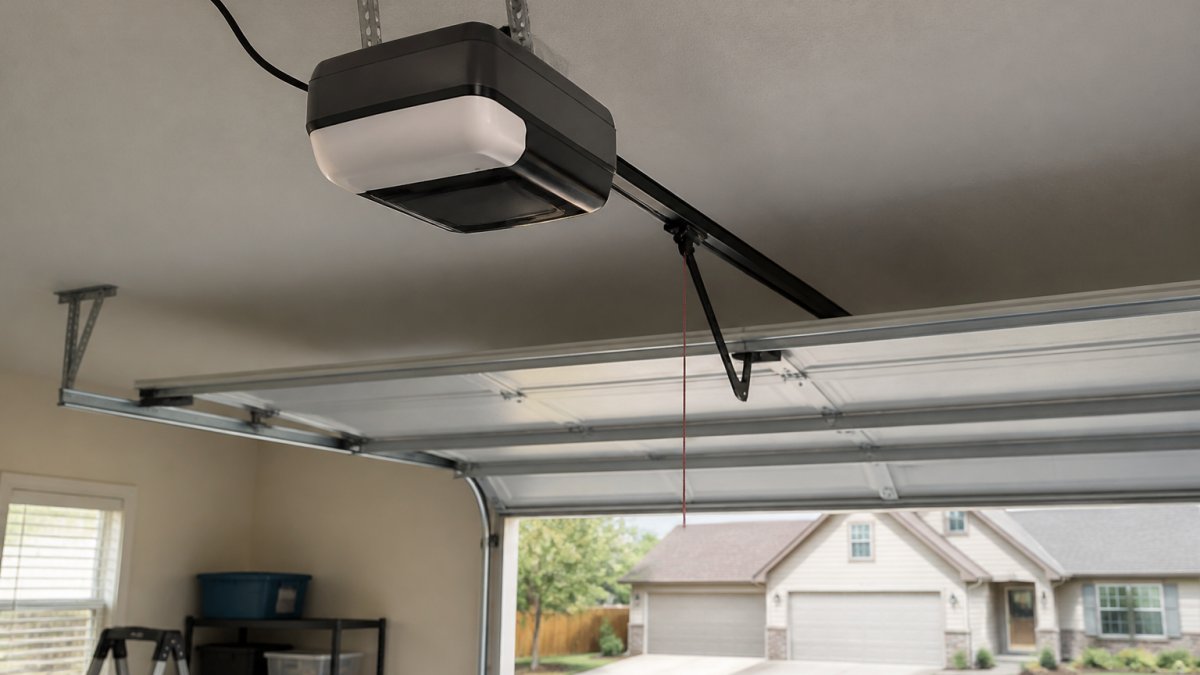
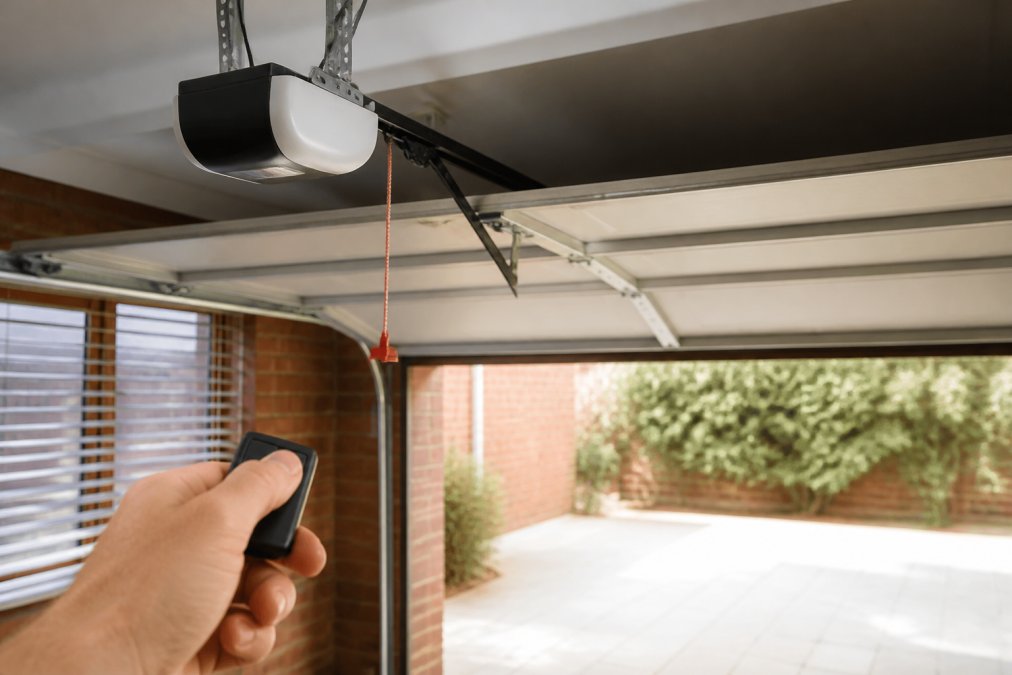
A belt-drive opener uses a reinforced rubber belt instead of a metal chain. Fewer metal-on-metal contact points mean less noise, making belt drive the default when a bedroom or living room shares a wall with the garage. Belts need occasional tension checks but no lubrication, though they can stretch and stiffen in cold climates.
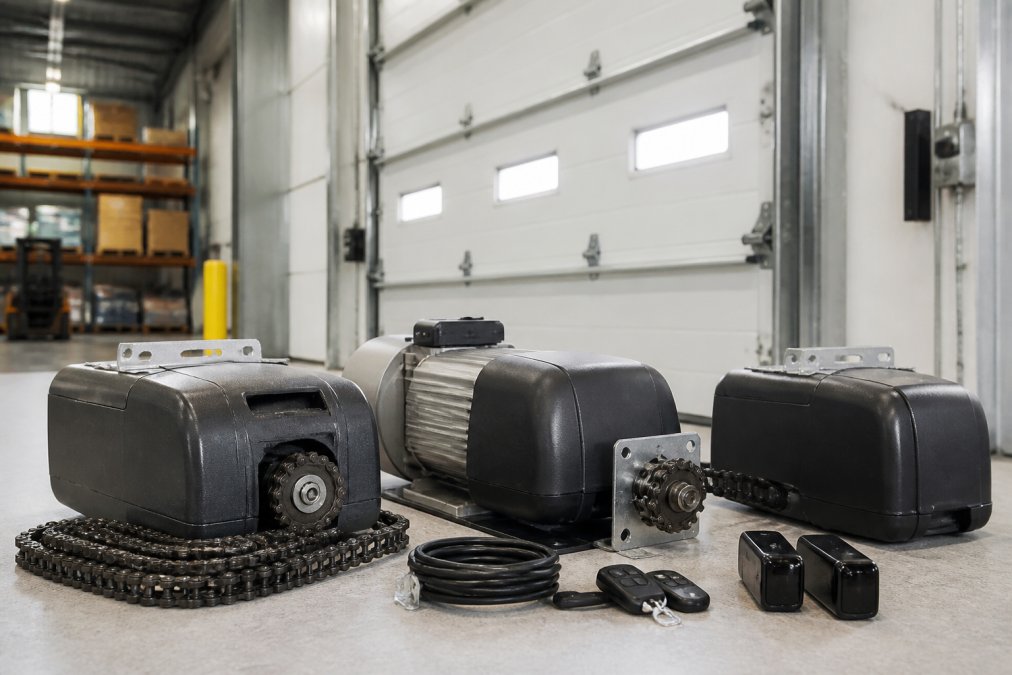
A chain-drive opener uses a steel chain over a sprocket. It handles heavier doors and longer duty cycles, common on detached garages. Expect periodic lubrication and more rattle, but chains are the most forgiving drive type when a door is slightly out of balance.
| Drive Type | Noise Level | Best For | Maintenance | Typical Failure Point |
|---|---|---|---|---|
| Belt drive | Quietest | Attached garages, homes with living space above | Tension checks | Belt stretch and cold-weather stiffening |
| Chain drive | Louder | Detached garages, heavier doors | Periodic lubrication | Chain stretch, sprocket wear, rail sag |
| Direct drive | Quiet, few moving parts | Homeowners who want minimal upkeep | Minimal | Motor or control board |
| Screw drive | Moderate | Moderate-duty residential use | Light lubrication | Screw and trolley wear |
Duty Cycle: The Number Most Buyers Never Check
Duty cycle is the most useful reliability spec on an opener label, and the one most buyers skip. Expressed as a ratio, 1:2 or 1:4, it means the opener can run one minute of every two, or one of every four. A smaller second number means more frequent use.
A standard residential opener is rated for a handful of cycles per day; a heavy-duty or commercial unit for many more. If your household opens the door a dozen or more times a day, a light-duty opener will not last as long as its warranty suggests. Match duty cycle to actual usage, not price.
Where Each Drive Type Actually Fails
Failure points are well understood by technicians:
- Belt drive: The belt is the wear item, it stretches, can fray at the splice, and slips with a hesitation at the start of travel.
- Chain drive: Chains stretch, sprockets wear, and the rail can sag on long spans; a chain past its adjustment limit will skip under load.
- Direct drive: With the fewest moving parts, the motor and control board become the failure points, fewer wear items, but pricier electronic repairs.
- Screw drive: The screw and trolley wear against each other, and the drive gets noisier than belt or direct drive over time.
Where Direct-Drive and DC Motors Fit In
Direct-drive openers eliminate the chain and belt entirely. The motor couples straight to the drive mechanism, so fewer parts wear, and the unit runs close to belt-drive quiet with less maintenance. The catch is cost and limited compatibility with older door setups.
Motor type matters too. AC motors are simple, durable, and inexpensive but start and stop abruptly. DC motors ramp up and down smoothly, offer variable speed, and draw less standby power, which is why most new openers with battery backup and smart features use them. For quiet travel, pair a DC motor with belt or direct drive.
Matching the Opener to the Door
The opener does not lift the door alone, the springs do most of the work. An oversized opener wastes money and can mask a spring problem; an undersized one strains every cycle and fails early. Size the opener to the door's weight and height, then confirm the springs match that weight. When all three align, drive type becomes a noise-and-maintenance preference rather than a reliability gamble.
Professional Garage Door Installation Benefits You Can Measure
Professional installation benefits show up as fewer callbacks, correct spring sizing, and a door that stays balanced for years, measured by how long the system runs without adjustment.
A licensed technician brings three things a DIY install usually lacks:
- Correct spring sizing: Torsion and extension springs are matched to door weight and height. An undersized spring wears out early; an oversized one puts excess load on the opener.
- Track alignment: Rollers must sit level in the track with correct overhead clearance. A track that is off by a fraction of an inch causes binding that compounds over thousands of cycles.
- Force sensitivity calibration: The opener's force settings are tuned to the door's actual weight, so the safety reverse engages at the right threshold instead of straining the motor.
There is also a warranty consideration. Many opener manufacturers require professional installation to honor full warranty coverage, and a documented install protects you if a component fails early. For commercial properties the stakes are higher: a loading dock door that fails mid-shift costs far more than the installation.
Average Cost of Garage Door Opener Installation and What Changes It
Garage door opener installation cost depends on the opener you choose, the door's weight and height, and whether existing wiring and framing can be reused. Any quote that gives one number without seeing the door is guessing.
Typical Cost Ranges
For a standard residential install where the door, track, and springs are in good shape, cost falls into three bands:
- Opener-only replacement (reusing existing hardware): the lowest band, driven almost entirely by the opener's price and a short labor window.
- Opener plus new springs and hardware: a mid band, because springs are the most labor-intensive part of the job and must be matched to door weight.
- Full system install (new opener, springs, track hardware, and safety sensors): the highest band, and the one that most closely resembles a from-scratch professional installation.
Commercial and loading-dock installations sit well above residential ranges because of duty-cycle requirements, three-phase power, and workplace safety compliance. Commercial quotes should always be itemized separately.
What Moves the Price Up or Down
Several factors move the price up or down:
- Opener type: Belt and direct drive generally cost more than basic chain drive.
- Motor and features: DC motors, battery backup, Wi-Fi connectivity, and smart garage hub compatibility add to the unit price.
- Door weight and size: A heavier or taller door may need a higher-horsepower opener and stronger springs.
- Existing infrastructure: New wiring, outlet placement, or framing changes add labor.
- Removal and disposal: Taking out an old opener and hauling it away is often a separate line item.
- Ceiling height and headroom: Low-clearance or unusually high ceilings can require special rail or mounting hardware.
- Permits and inspections: Some jurisdictions require a permit for electrical work, and that cost is sometimes passed through.
How to Audit a Quote Line by Line
Because pricing varies this much, get a written estimate based on your actual door. American Eagle Garage Doors LLC provides free estimates, so you can see the breakdown before committing. Check for these line items:
- Opener model number and horsepower
- Spring type and cycle rating (if springs are included)
- Track, rollers, and hinge hardware (new or reused)
- Safety sensor replacement or reuse
- Labor hours and any trip charges
- Removal and disposal of the old unit
- Warranty terms on parts and labor separately
Financing, Rebates, and Warranty Value
Two cost levers are easy to overlook. Some manufacturers and installers offer financing on larger jobs, spreading the cost without changing the total. And a higher-cycle spring or longer warranty costs more up front but reduces cost per year of ownership, the cheapest install is not always the cheapest to own. Divide each quote's total by the components' expected service life for a rough cost-per-year figure, then weigh the warranty coverage.
Safety Features and Smart Controls That Keep Operation Predictable
Safety features keep a garage door from becoming a hazard, and modern openers build in several layers. The most important is the photo-eye, a pair of sensors at the bottom of the track that project an invisible beam across the opening. If anything breaks the beam while the door is closing, the door reverses immediately (Federal Register).
Other safety and control features worth knowing:
- Force sensitivity: The opener measures resistance and reverses if it meets an obstruction, protecting people, pets, and the door itself (Federal Register).
- Rolling code technology: Each remote press generates a new code, so a captured signal cannot be replayed to open your door (the FTC).
- Battery backup: Keeps the door working during a power outage, which matters if the garage is your main entry.
- Keypad entry: A wired or wireless keypad lets you open the door without a remote.
- Wi-Fi connectivity and home automation: A smart garage hub lets you open, close, and monitor the door from a phone, and integrates with broader home automation systems.
The reliability angle is simple: safety sensors that drift out of alignment cause the most common "door won't close" complaint. Mounting them securely and keeping the lenses clean prevents most of those calls.
A Professional Installation Checklist for Reliable Garage Door Operation
A professional installation checklist is the difference between a door that works today and one that works in five years. Use this list to verify the job was done right.
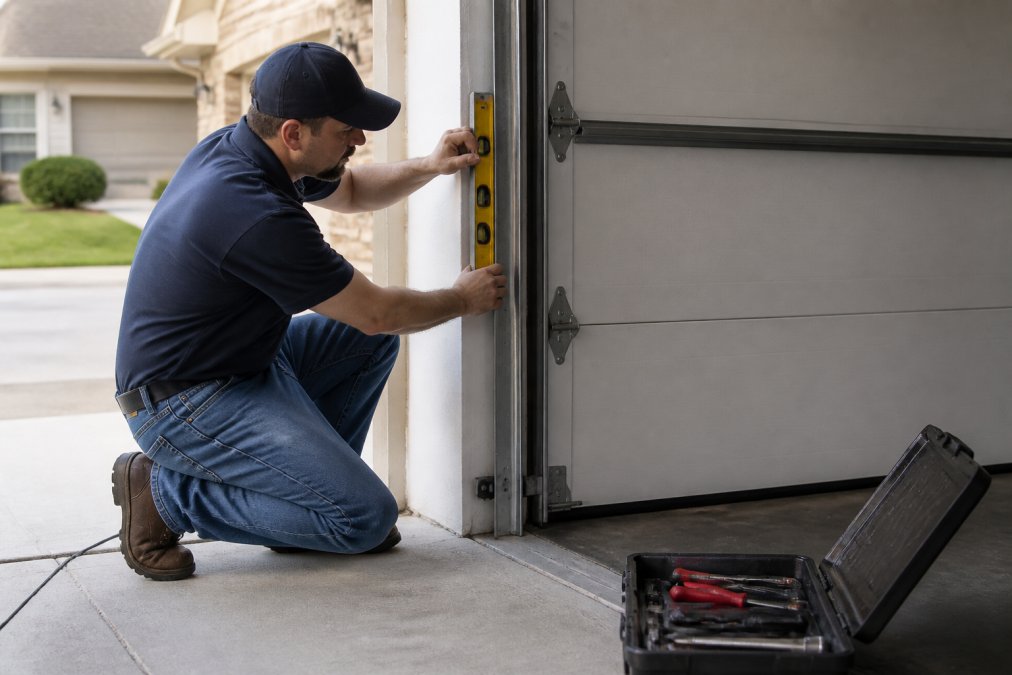
- Springs sized to the door's actual weight and height
- Track aligned level, with correct overhead clearance
- All rollers seated and moving freely
- Cables inspected and properly tensioned
- Opener force sensitivity calibrated to the door
- Photo-eye sensors aligned and tested with an obstruction
- Manual release tested so the door can be operated by hand
- Remotes and keypad programmed and range-tested
- Battery backup verified if equipped
- Warranty coverage and cycle ratings documented
Run through this list before you sign off. A technician who expects you to check is a technician who did the work properly.
Troubleshooting Common Post-Install Issues Before They Cost You
Most post-install problems trace back to a short list of causes. Here is how to read the symptoms.
| Symptom | Likely Cause | First Fix |
|---|---|---|
| Door reverses before closing | Misaligned or dirty photo-eye | Clean lenses, realign sensors |
| Grinding or scraping noise | Track alignment or worn rollers | Inspect track, replace rollers |
| Door feels heavier by hand | Spring tension loss | Have springs checked by a technician |
| Opener strains or stops mid-travel | Force sensitivity set too low | Recalibrate force settings |
| Remote works intermittently | Weak battery or antenna issue | Replace battery, check antenna |
If the door reverses, start with the sensors. If it grinds, check the track and rollers. If it feels heavy when you disengage the opener and lift it by hand, stop using it and call a technician, a failing torsion or extension spring under load is dangerous to work on without the right tools.
An annual preventative maintenance visit catches these issues before they strand your car or shut down a loading dock. Lubricating moving parts, checking track alignment, and testing the safety reverse extend the life of every component.
A garage door that fails at the wrong moment, whether it is a stuck car on a work morning or a loading dock that will not close, is a problem you feel immediately. American Eagle Garage Doors LLC handles both residential and commercial doors, with expert repair and installation services, free estimates, and competitive pricing. If you want reliable garage door operation backed by professional work and warranty coverage, call American Eagle Garage Doors LLC today and get a free estimate for your door.
Frequently Asked Questions
Which garage door opener is the most reliable?
Reliability depends more on the match between opener and door than on any single brand. A belt-drive opener with a DC motor and battery backup suits most attached garages because it runs quietly and keeps working during a power outage. Chain-drive units cost less and handle heavier doors, while direct-drive designs cut moving parts. What matters most is correct horsepower for the door weight, proper track alignment, and safety sensors that stay adjusted, all of which professional installation gets right the first time.
Is it better to choose a belt-drive or chain-drive garage door opener?
Belt drive vs chain drive openers comes down to noise, maintenance, and door weight. Belt-drive openers use a rubber belt instead of a metal chain, so they run far quieter and need less lubrication, which matters if a bedroom sits above the garage. Chain-drive openers cost less upfront and tolerate heavier doors, but they rattle and need periodic greasing. For most residential doors, a belt-drive unit with a DC motor delivers the smoothest, most dependable daily operation.
How does professional installation impact the reliability of a garage door system?
Professional installation sets the balance, tension, and travel limits that decide how long a door lasts. A licensed technician checks torsion spring tension, aligns the track, sets force sensitivity so the door reverses on contact, and programs rolling code remotes correctly. Poorly set limits strain the opener motor and wear springs early. American Eagle Garage Doors LLC offers free estimates on installation and repair work, so homeowners can confirm the scope before any work begins.
How long should a high-quality garage door opener last?
Most quality openers last 10 to 15 years, and belt-drive or direct-drive models with DC motors often reach the upper end because they have fewer wearing parts. Lifespan depends on cycle count, not calendar age; a household running the door six times a day wears an opener far slower than a commercial loading dock cycling dozens of times daily. Preventative maintenance, including lubrication, sensor checks, and balance testing, is what keeps a unit running reliably through those years.