 blog
Quiet Garage Door Openers for Attached Garages
Table of Contents
- Why Noise Matters in Attached Garages
- Belt Drive vs Chain Drive Garage Door Openers
- Key Features to Look for in a Quiet Garage Door Opener
- How to Add WiFi to Your Existing Garage Door Opener
- Garage Door Maintenance Tips for Quiet Operation
- Installation Considerations for Attached Garages
- Professional Installation vs. DIY: What Affects Noise Levels
- Frequently Asked Questions
Last Updated: September 28, 2026
Why Noise Matters in Attached Garages
A loud garage door opener disrupts your home's peace. For homeowners with bedrooms directly above or adjacent to the garage, that noise becomes a daily frustration. Early mornings, late nights, and unexpected arrivals all trigger the sound that echoes through walls and ceilings.
The issue isn't just comfort. Excessive vibration from an older opener can damage the garage structure over time. Torsion springs, extension springs, and the track system all absorb shock waves that compound with each cycle. A quiet garage door opener prevents this degradation while keeping your household calm.
The right opener makes a measurable difference in daily life, and installation quality determines whether you actually achieve that quietness.
Belt Drive vs Chain Drive Garage Door Openers
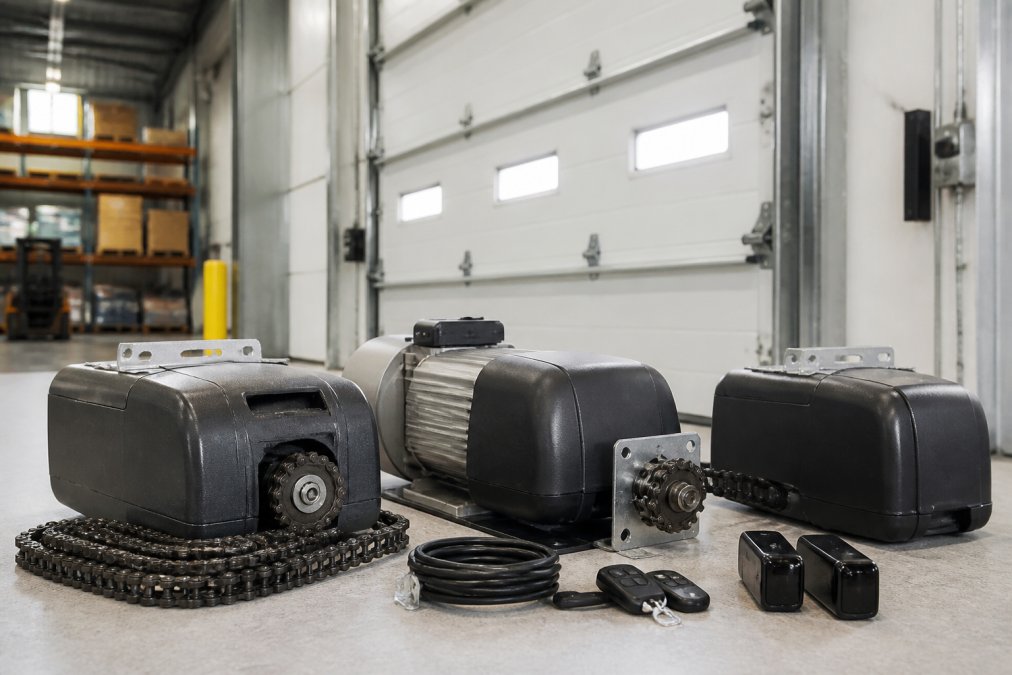
The most important choice is your opener type. Belt-drive openers use a rubber belt instead of a metal chain, which eliminates the rattling and clanking that defines chain-drive systems. A belt-drive opener is inherently quieter because the rubber absorbs vibration that metal chain transfers directly to the housing and track.
Chain-drive openers remain popular because they cost less upfront. But for attached garages, the noise trade-off rarely makes sense. Chain-drive systems produce 70+ decibel levels during operation, comparable to a loud alarm clock. Belt-drive systems typically operate at 50-60 decibels, closer to normal conversation volume.
The real difference emerges over time. Chain-drive systems degrade faster because metal-on-metal friction accelerates wear. Belt-drive openers maintain consistent noise levels for years. If you're installing a new opener in an attached garage, belt-drive should be your starting point.
Wall-mount and ceiling-mount options both work with belt-drive systems. The mounting choice depends on your overhead clearance and garage layout, but the belt mechanism itself remains the quietest option available.
Key Features to Look for in a Quiet Garage Door Opener
Beyond the drive type, specific features separate a tolerable opener from a genuinely quiet one. Soft start and stop technology prevents the sudden jerks that create noise spikes. When the door begins opening or closing, gradual acceleration reduces the mechanical shock to the system.
Vibration Isolation and Noise Dampening: The Installation Factor
Vibration isolation is where most homeowners see the biggest improvement, yet it's also where installation quality determines success or failure. Modern quiet garage door openers include rubber bushings, elastomer mounts, and vibration-absorbing pads that sit between the motor housing and the mounting brackets. These materials, typically neoprene, natural rubber, or polyurethane compounds, absorb movement energy before it reaches your garage walls, frame, and the living spaces above or adjacent to the garage.
The mechanism is straightforward: when the motor engages, it creates oscillation at specific frequencies. Without isolation, that vibration transfers directly through steel bolts and brackets into the garage structure, which acts as a resonance chamber and amplifies sound throughout your home. Isolation materials dampen these frequencies by converting kinetic energy into heat dissipation within the rubber compound.
However, isolation only works if installed correctly. A professional installer positions the opener with three critical practices:
-
Proper bracket spacing and alignment, The mounting brackets must be positioned perpendicular to the garage frame, not at angles. Angled brackets reduce contact area and compromise dampening effectiveness.
-
Correct bolt tension, Bolts must be tight enough to prevent movement but not so tight that they compress the rubber isolation pads into ineffectiveness. Over-tightening is a common DIY mistake that eliminates the dampening benefit entirely.
-
Isolation pad placement, Pads must sit between every bolt and the garage structure. Missing even one isolation point creates a direct vibration path that undermines the entire system.
Most homeowners don't realize that a chain-drive opener with excellent isolation can outperform a belt-drive opener installed without proper isolation. The drive type matters, but installation precision matters more. A belt-drive system installed with loose bolts and missing isolation pads will be noisier than a chain-drive system installed to specification.
Long-term noise degradation also depends on isolation maintenance. Over 3-5 years, rubber isolation pads compress and harden from repeated vibration cycles and temperature fluctuations. A professional installer can replace these pads during routine maintenance, restoring the original dampening performance. Most homeowners never perform this maintenance, which is why their openers gradually become noisier over time, not because the motor degrades, but because the isolation system fails.
Smart Home Integration and Ecosystem Compatibility
A quiet opener loses value if you can't use it conveniently. Smart home automation through Wi-Fi connectivity lets you open and close the door from your phone, eliminating the need to carry a remote. Real-time alerts notify you when someone opens the door, adding security to the convenience.
Beyond basic Wi-Fi, modern openers now integrate with specific smart home ecosystems. Matter protocol support ensures compatibility across platforms, if your opener supports Matter, it will work with HomeKit, Alexa, and Google Home simultaneously without requiring separate apps or workarounds. This is the emerging standard for 2026, as it eliminates the vendor lock-in that plagued earlier smart openers.
HomeKit integration (Apple's ecosystem) offers encrypted, local control without cloud dependency. Your iPhone, iPad, or Apple Watch can open the door, and HomeKit automations can trigger the opener based on location, time, or other home conditions. HomeKit also allows you to share access with family members through iCloud, with granular permission controls.
Alexa integration (Amazon's ecosystem) provides voice control and works across Echo devices throughout your home. Alexa routines can incorporate the garage door opener as part of broader automation sequences, for example, "Alexa, I'm home" could unlock the front door and open the garage simultaneously.
Google Home integration functions similarly to Alexa, with voice commands and routine automation. Google's ecosystem integrates tightly with Nest devices, so if you have Nest cameras or thermostats, a Google Home-compatible opener creates a unified control interface.
The practical difference: a Matter-compatible opener gives you flexibility to switch ecosystems later without replacing the hardware. An opener locked into a single ecosystem (HomeKit-only, Alexa-only) limits your options if your home automation preferences change.
Rolling code technology prevents remote hacking by changing the access code with each use. Battery backup ensures the door operates even during power outages, a critical safety feature for attached garages where the door blocks your only exit route.
How to Add WiFi to Your Existing Garage Door Opener
Many homeowners want smart home features without replacing their entire opener. Adding WiFi to an existing garage door opener is possible through retrofit kits, though compatibility depends on your current system's age and design.
Smart home adapters connect to your existing opener's motor unit and communicate through your home Wi-Fi network. Installation typically takes 30 minutes for someone comfortable with basic electrical connections.
Garage Door Maintenance Tips for Quiet Operation
Maintenance directly impacts noise levels. A well-maintained opener stays quieter longer than a neglected one. Track alignment matters most. Misaligned tracks force the rollers to work harder, creating grinding sounds and excessive vibration.
Installation Considerations for Attached Garages
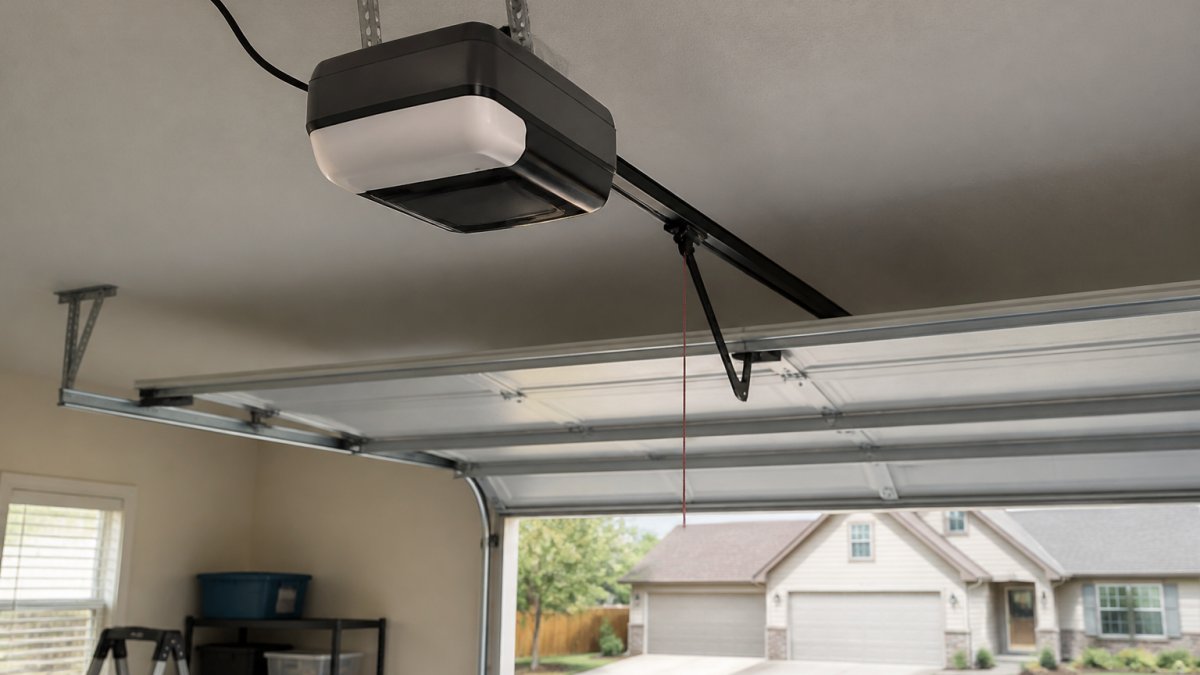
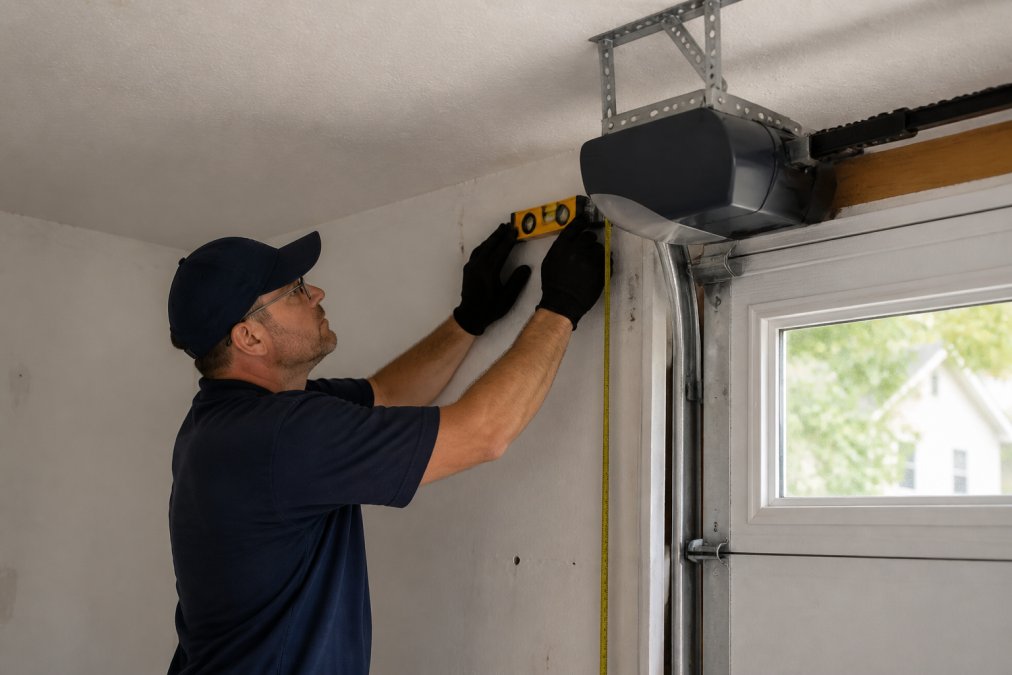
Attached garages present unique installation challenges that affect noise performance. Low ceiling clearance limits your mounting options. A ceiling-mount opener requires 12+ inches of clearance above the door's fully open position. If your garage has low ceilings, a wall-mount opener becomes necessary, positioning the motor to the side of the door frame.
Professional Installation vs. DIY: What Affects Noise Levels
DIY installation saves money but frequently compromises quiet operation. The difference comes down to precision in three specific areas: force calibration, track alignment, and isolation system setup. Each directly determines how quiet the system operates.
Force Calibration and Door Balance
An improperly balanced door requires the opener to work harder, generating excess noise and accelerating wear on springs and motors. Professional installation includes force calibration, a process where the installer measures the door's weight and spring tension, then adjusts the opener's motor force to apply just enough power to lift the door smoothly without excessive strain.
Track Alignment and Roller Binding
Track alignment is where DIY installations most often fail, and it's the primary source of noise that develops over time. Perfectly straight tracks require precision measurement and adjustment. Even slight misalignment, as little as 1/8 inch over a 16-foot span, creates grinding noises and vibration that grow worse with each cycle.
Isolation System Installation
As discussed in the features section, vibration isolation only works if installed correctly. DIY installers frequently under-tighten bolts (leaving the isolation pads ineffective), over-tighten bolts (compressing the pads into uselessness), or skip isolation pads entirely to save time and cost.
Warranty and Long-Term Performance
Professional installation typically includes guarantees on workmanship. If noise problems develop within the warranty period (usually 1-2 years), the installer addresses them at no cost. This creates accountability for proper calibration and alignment.
Frequently Asked Questions
Are belt-drive garage door openers quieter than chain-drive?
Yes, belt-drive openers are significantly quieter than chain-drive models. Belt-drive systems use rubber or polyurethane belts instead of metal chains, which reduces vibration and noise during operation. Chain-drive openers produce more mechanical sound due to metal-on-metal contact. For attached garages where noise travels into living spaces, a belt-drive quiet garage door opener is the better choice.
What is the quietest type of garage door opener?
Belt-drive openers with vibration-dampening technology are the quietest option available. Look for models featuring soft start and stop functions, nylon rollers, and shock-absorbing materials. Jackshaft openers mounted on the side of the door also run quietly because they eliminate the ceiling-mounted motor noise. DC motors are quieter than AC motors, making them ideal for attached garages.
Can I make my existing garage door opener quieter?
Yes. Regular maintenance like lubricating the chain or belt, checking track alignment, and replacing worn nylon rollers reduces noise significantly. You can also add vibration-isolation pads under the motor mount or install additional sound-dampening materials around the opener. If your opener is old, upgrading to a modern quiet garage door opener with belt-drive and soft-start technology will provide the most dramatic improvement.
Do I need professional installation for a quiet garage door opener?
Professional installation is strongly recommended. Proper installation affects noise levels, safety, and longevity. Technicians ensure correct motor mounting, track alignment, and tension calibration, all critical for quiet operation. Poor DIY installation can result in vibration, misalignment, and increased noise over time. Professionals also handle safety features like force sensitivity and emergency release correctly.
If your attached garage's door opener creates noise that disrupts your home, the solution starts with the right equipment and expert installation. American Eagle Garage Doors LLC specializes in quiet garage door opener installation for attached garages, with free estimates and professional service that ensures your door operates smoothly for years. Contact us today to discuss which opener type and installation approach works best for your specific garage layout and noise concerns.