 blog
5 Best Garage Door Openers for Residential Homes
Table of Contents
- How We Picked the 5 Best Garage Door Openers
- Quick Comparison: 5 Best Residential Garage Door Openers
- 1. LiftMaster 8500W: Best Wall-Mounted Opener for Quiet Performance
- 2. Chamberlain B970: Best Smart Opener with Battery Backup
- 3. Genie SilentMax 1000: Best Belt Drive for Ultra-Quiet Operation
- 4. Ryobi GD200: Best Budget Chain Drive with Smart Features
- 5. Sommer Direct Drive 1042V004: Best Space-Saving Direct Drive
- Garage Door Opener Installation Cost: DIY vs Professional
- Frequently Asked Questions
Last Updated: September 15, 2026
How We Picked the 5 Best Garage Door Openers
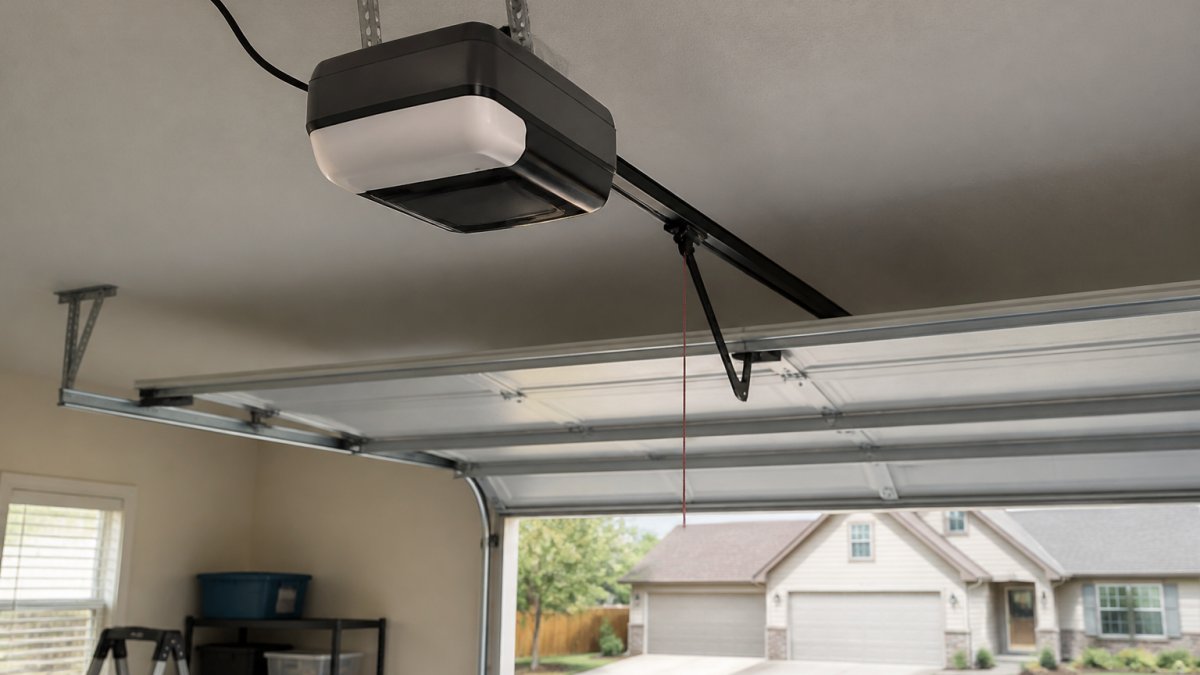
Choosing among the 5 best garage door openers for residential homes comes down to four things: drive type, lifting capacity, smart features, and how much noise your household can tolerate. This guide ranks each model on those criteria, based on manufacturer specifications. A garage door opener is the motorized unit that raises and lowers a sectional garage door using a chain, belt, screw, or direct-drive mechanism paired with a wall control and safety sensors.
We weighted four factors: drive system (belt, chain, wall-mount, direct drive), noise level, smart home integration, and safety features like rolling code technology and battery backup.
Quick Comparison: 5 Best Residential Garage Door Openers
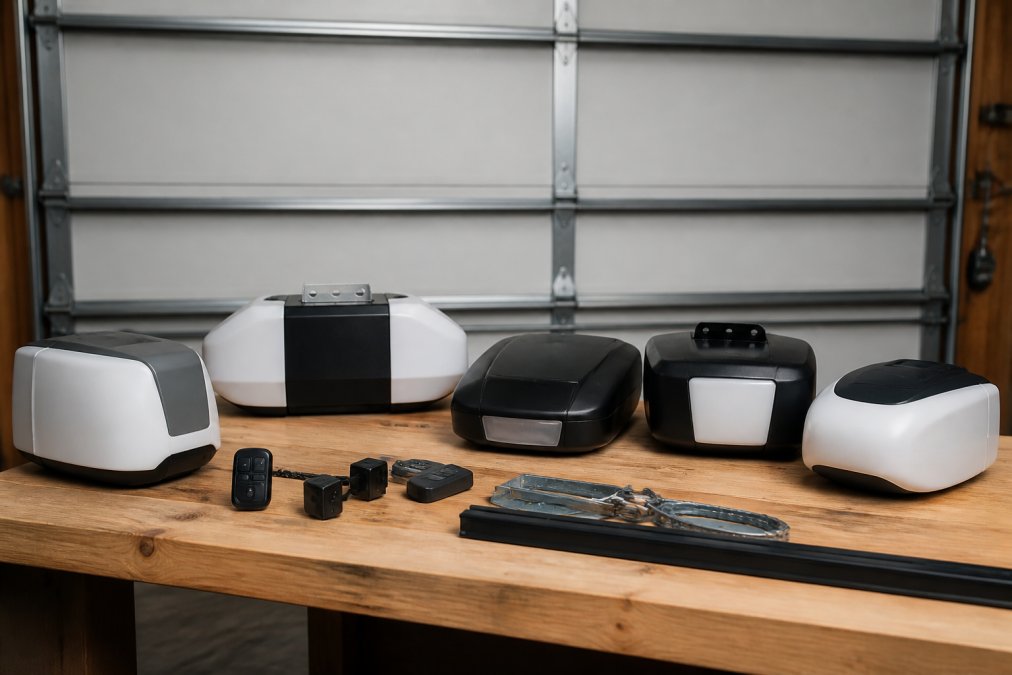
Here is how the five models stack up before we break each one down.
| Model | Drive Type | Best For | Standout Feature |
|---|---|---|---|
| LiftMaster 8500W | Wall-mounted | Quiet, ceiling-free garages | Jackshaft design, myQ built in |
| Chamberlain B970 | Belt drive | Smart control + backup power | Battery backup, Wi-Fi |
| Genie SilentMax 1000 | Belt drive | Ultra-quiet operation | Steel-reinforced belt |
| Ryobi GD200 | Chain drive | Budget buyers | Modular smart hub |
| Sommer Direct Drive 1042V004 | Direct drive | Tight spaces | No belt or chain to wear |
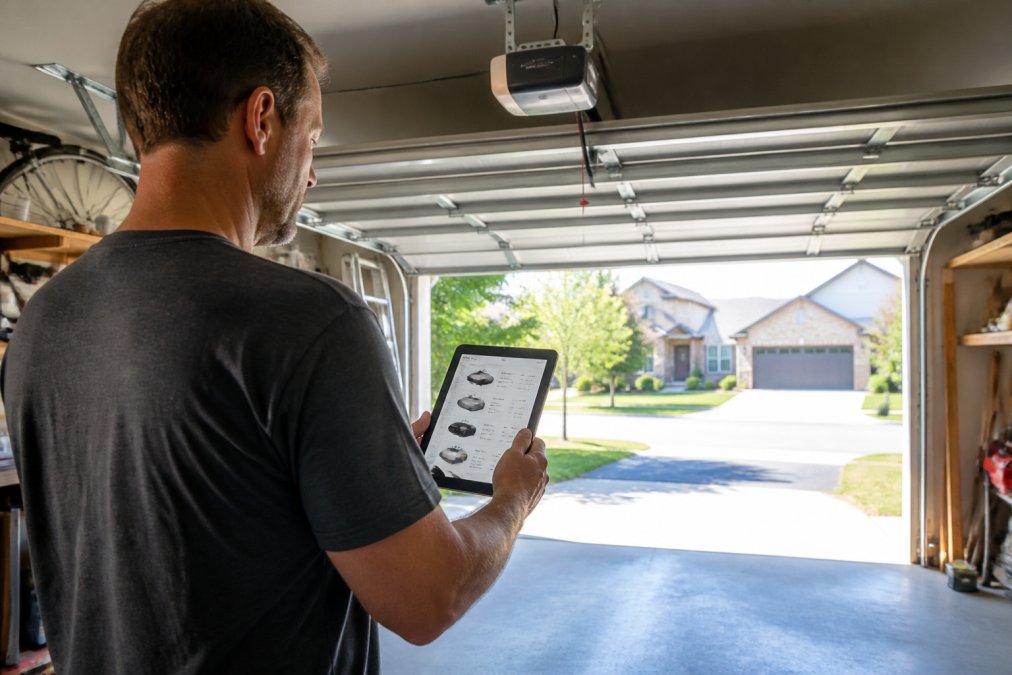
1. LiftMaster 8500W: Best Wall-Mounted Opener for Quiet Performance
The 8500W mounts on the wall beside the door rather than the ceiling, which frees overhead space and cuts noise dramatically. Its jackshaft design uses a DC motor that turns the torsion bar directly, so there is no rail rattling above your car. For garages with high ceilings, storage racks, or a car lift, this is the layout that makes sense.
It includes built-in myQ Wi-Fi connectivity for smartphone app control and remote access, plus LED lighting and rolling code technology for security. The trade-off: it requires a torsion-bar door and professional calibration of the force adjustment and travel limits.
2. Chamberlain B970: Best Smart Opener with Battery Backup
Chamberlain's B970 pairs a steel-reinforced belt drive with an integrated battery backup, so the door still opens during a power outage. That matters more than most buyers expect: a dead opener with a car trapped inside can be a significant inconvenience.
The myQ app handles remote access, scheduling, and voice control through compatible smart speakers. Wi-Fi connectivity is built in, no hub required. The belt runs quieter than a chain, though not as silent as a wall-mount unit.
3. Genie SilentMax 1000: Best Belt Drive for Ultra-Quiet Operation
If quiet is your only priority, the SilentMax 1000 is the belt drive to beat. Genie's steel-reinforced belt removes the metal-on-metal contact that makes chain drives noisy, and the DC motor soft-starts and soft-stops to reduce vibration.
It pairs with Genie's Aladdin Connect system for smartphone app control, and it includes safety sensors and a wireless keypad entry. The limitation is lifting capacity: it suits standard single and double residential doors, not heavy custom doors.
4. Ryobi GD200: Best Budget Chain Drive with Smart Features
The GD200 is the value pick. It is a chain drive, so expect more noise than a belt, but Ryobi's modular design lets you add a Wi-Fi hub, battery backup, and extra lighting later instead of paying for everything upfront.
For a homeowner who wants smart home integration on a tight budget, this is the most flexible entry point. The chain needs periodic lubrication, and the module system means a few extra installation steps.
5. Sommer Direct Drive 1042V004: Best Space-Saving Direct Drive
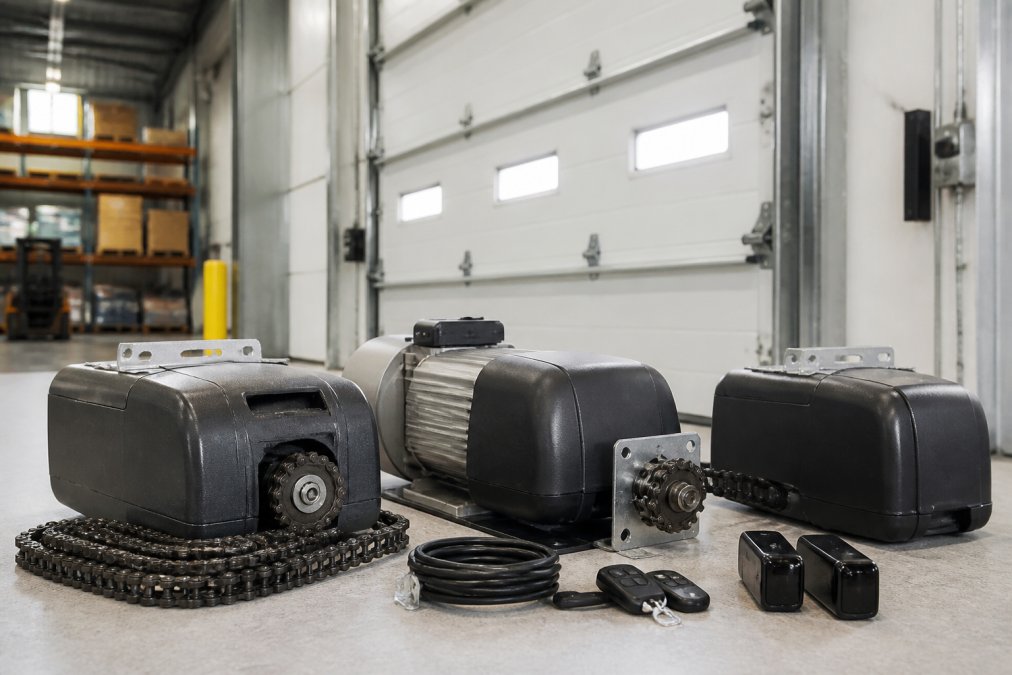
Sommer's direct drive eliminates the belt, chain, and screw entirely. The motor travels along a fixed rail, which means fewer moving parts to wear out and a very compact ceiling footprint.
It is the quietest option for low-clearance garages where a traditional rail will not fit. The catch: it is less widely stocked, so parts and service take longer to source.
Belt Drive vs Chain Drive Garage Door Opener: Which Is Right for You?
Belt drive openers use a rubber belt and run quietly, making them the better choice when a bedroom sits above the garage. Chain drive openers use a metal chain, cost less, and tolerate heavier doors, but they are noticeably louder.
Wall-mount and direct-drive units sidestep the belt-versus-chain question altogether by removing the overhead rail. If noise is your main complaint, skip the debate and go wall-mount.
How to Add Wi-Fi to an Existing Garage Door Opener
You can add Wi-Fi to an existing garage door opener without replacing it. A smart controller, such as a myQ or Aladdin Connect bridge, wires into the opener's wall terminals and connects to your home network.
- Confirm your opener has push-button wall terminals.
- Mount the controller near the opener and connect the two signal wires.
- Pair the controller with its smartphone app over Wi-Fi.
- Test open, close, and status alerts from the app.
Most openers built after 1993 use safety sensors and rolling code technology, so they work with these add-on modules. Older units may not.
Garage Door Opener Installation Cost: DIY vs Professional
Most buying guides stop at the sticker price of the opener. The real cost is the opener plus labor plus whatever your time and risk tolerance are worth. Here is how to think about that trade-off.
What drives the labor cost. Four variables set the price of a professional install:
- Like-for-like replacement. Swapping an existing opener for a new one of the same drive type is the simplest job, the rail, wiring, and mounting points are already there.
- New installation. Adding an opener to a door that never had one means running wiring, mounting a header bracket, and installing a ceiling outlet if one is missing. This is the most labor-intensive scenario.
- Drive type. Chain and belt units install from the ceiling with standard hardware. Wall-mount and direct-drive units involve the torsion bar and require precise force and travel-limit calibration.
- Door condition. An unbalanced door, worn springs, or a damaged track must be corrected before or during the install, and that work is billed separately.
DIY: what you save and what you take on. A DIY install saves the labor charge, but it requires comfort with structural mounting into ceiling joists or a header, wiring low-voltage safety sensors, and setting the force adjustment and travel limits correctly. Budget a full day for a first-time install, and expect a second trip to the hardware store. The two failure modes are a door that reverses before it closes (travel limits set wrong) and a motor that strains or overheats (force set too high). Both are fixable, but both are also reasons why a DIY job can sometimes incur additional costs.
Professional: what you actually pay for. Beyond the labor itself, a professional install typically includes calibration of the force and travel limits, verification that the safety sensors reverse the door on contact, a check of the door's balance, and a workmanship warranty on the installation. That warranty matters: if the opener fails a month later because of a mounting or calibration error, a DIY install leaves you diagnosing it yourself.
When to call a pro instead of DIY.
- Any wall-mount or direct-drive unit that touches the torsion bar.
- A door that is out of balance, binding, or has visibly worn springs.
- A garage with no existing ceiling outlet or no accessible wiring path.
- A door heavier than a standard double-car insulated door.
Repair vs. replace: the decision most guides skip. An opener that is 10 to 15 years old and needs a major repair, a failed logic board, a stripped gear, a dead motor, is usually not worth fixing (homedepot.com).
Frequently Asked Questions
Who makes the best residential garage door opener?
LiftMaster and Chamberlain consistently rank at the top for reliability and smart features. LiftMaster's 8500W is a favorite for its wall-mounted design and ultra-quiet DC motor, while Chamberlain's B970 offers built-in Wi-Fi and battery backup. Both brands are known for durable construction and long warranty coverage, making them solid choices for most homes.
How do I choose the right horsepower for my garage door opener?
Most residential sectional garage doors need a 1/2 or 3/4 horsepower opener. If your door is heavier (insulated, wood, or over 7 feet tall), go with 3/4 horsepower or higher. A 1/2 horsepower unit is fine for standard single-car doors. Check your door's weight and size, and consider a DC motor for smoother, quieter operation.
Are smart garage door openers worth the investment?
Smart openers add convenience and security. You can open or close your garage from your smartphone, get alerts if left open, and grant temporary access to deliveries. Features like MyQ and rolling code technology also improve home security. If you already have a smart home setup, a smart opener integrates seamlessly and is often worth the extra cost.
Can I add Wi-Fi to my existing garage door opener?
Yes, you can add Wi-Fi to most existing openers with a smart controller like Chamberlain's MyQ Garage or a universal Wi-Fi hub. These devices connect to your opener's terminals and your home Wi-Fi network, letting you control the door via a smartphone app. Installation is straightforward and doesn't require replacing the opener.
A garage door opener that is undersized, misaligned, or installed without proper force adjustment will fail early, and no warranty covers a bad install. American Eagle Garage Doors LLC handles opener repair and installation for both residential and commercial doors, backed by free estimates, competitive pricing, and prompt, professional service. If your opener is grinding, reversing, or simply old, call us today and we will tell you honestly whether it needs repair or replacement.