 ultimate-guide
Garage Door Spring Replacement Cost in Greeley
Table of Contents
- What Drives Garage Door Spring Replacement Cost in Greeley
- Signs of a Broken Garage Door Spring
- DIY vs Professional Garage Door Spring Replacement
- How to Add WiFi to an Existing Garage Door Opener
- Spring Lifespan, Cycle Ratings, and Warranty Coverage
- Maintenance Checklist to Prevent Future Spring Snaps
- Frequently Asked Questions
Last Updated: September 13, 2026
What Drives Garage Door Spring Replacement Cost in Greeley
Garage door spring replacement cost in Greeley depends on spring type, door weight, cycle rating, and whether you need emergency service. Quotes can swing widely for the same job because those four variables change the parts, the labor, and the urgency involved.
Two springs do the heavy lifting on a standard residential garage door, and when one snaps, the door becomes unsafe to operate. Below, we'll break down what actually moves the number, how to spot a broken spring before it strands your car, and when a professional call beats a DIY attempt.
Torsion vs. Extension Springs: Why the Type Matters
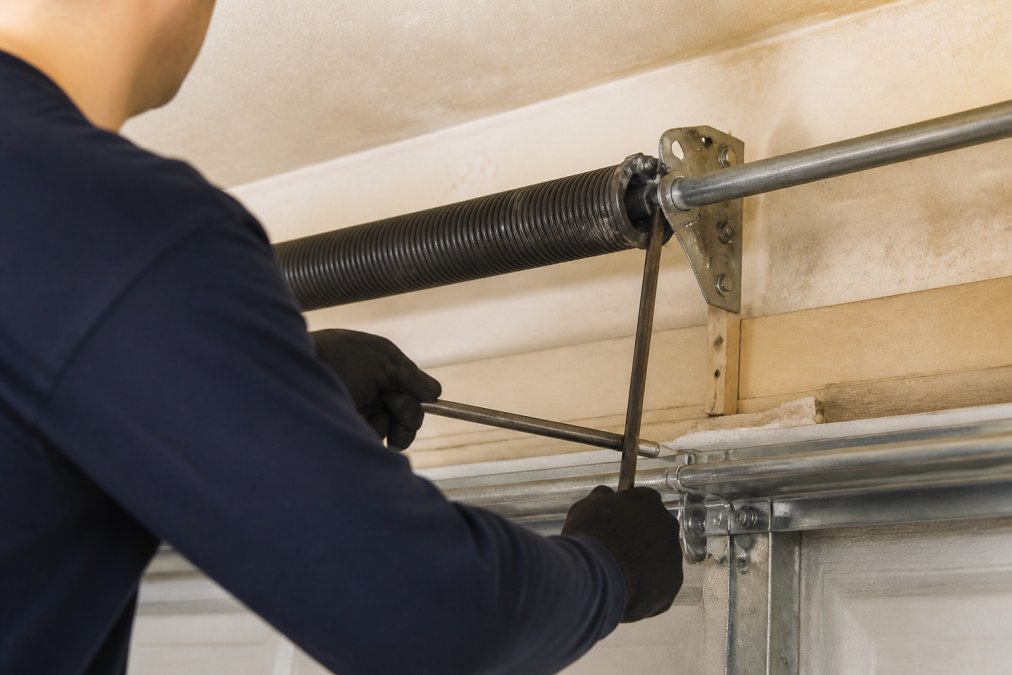
Torsion springs mount horizontally above the door on a steel shaft and twist to counterbalance the door's weight. Extension springs stretch along the horizontal tracks on each side and are typically found on older or lighter doors.
Torsion systems generally cost more to replace because they involve a winding cone, cable drum, bearing plate, and center bearing that all need proper tensioning. Extension springs are simpler and cheaper per unit, but they need safety cables so a snapped spring can't whip across the garage.
A common mistake is assuming the two are interchangeable. They are not. Your door's bottom bracket, cable drum, and drum hardware are matched to one system, so the type you already have usually decides the replacement path.
Factors That Influence Your Repair Quote
Several variables push a quote up or down, and most homeowners only see the final number:
- Spring type and gauge: Heavier doors need thicker wire and higher-torque springs.
- Cycle rating: Standard springs versus high-cycle springs rated for far more open-and-close cycles.
- Number of springs: Some doors use one torsion spring, others two.
- Service call fee and labor costs: Distance, time of day, and whether it's a weekend or emergency call.
- Parts warranty: A longer warranty on the spring itself usually means a higher upfront price.
- Door weight capacity: Commercial or oversized doors require heavier-duty components.
Because pricing depends on your door's specific setup, American Eagle Garage Doors LLC provides free estimates so you get a real number before any work starts.
Signs of a Broken Garage Door Spring
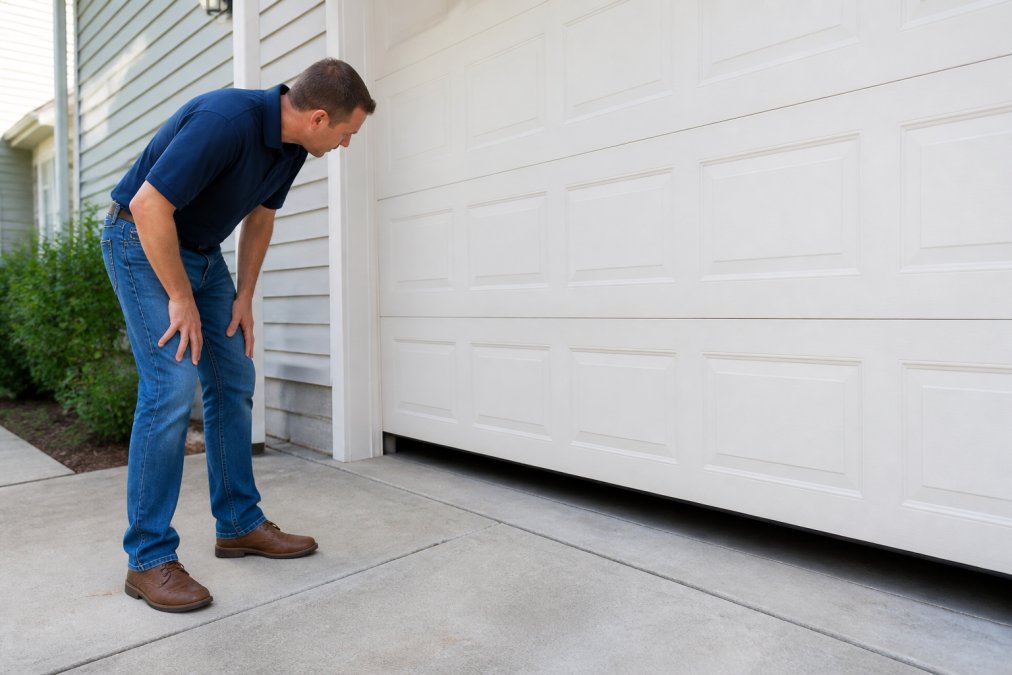
The clearest sign of a broken spring is a garage door that opens a few inches and stops, or one that feels extremely heavy when you try to lift it manually. A loud bang from the garage, followed by a door that won't budge, is the classic snap moment.
Other warning signs include:
- A visible gap in the torsion spring coil above the door
- The door sitting unevenly, with one side higher than the other
- The garage door opener straining, grinding, or refusing to lift the door
- A door that slams down instead of lowering smoothly
If you notice any of these, stop using the opener. Running a door on a broken spring puts the entire load on the opener and cables, which can lead to a much larger repair.
DIY vs Professional Garage Door Spring Replacement
Replacing a garage door spring yourself is one of the most dangerous home repairs you can attempt. Torsion springs store enormous tension, and the winding process requires specialized winding bars and a precise understanding of spring tension.
Here is what actually happens during a torsion spring replacement, so you can judge the DIY risk honestly:
- The door is secured. A professional clamps the door in the closed position and vice-grips the torsion shaft so the door can't drop when tension releases.
- Tension is released slowly. Winding bars are inserted into the winding cone and the spring is unwound a quarter-turn at a time. A standard 7-foot door spring may hold several full turns of stored energy.
- The spring is measured, not guessed. Inside diameter, wire gauge, and length must match the door's weight. A spring that's one gauge off will either lift the door too fast or leave it heavy.
- The new spring is wound to a specific turn count. That count is calculated from the spring's rated capacity, not eyeballed. Too few turns and the door won't stay open; too many and the spring is overloaded from day one.
- The door is balanced and tested. The opener is reconnected only after the door holds position at the halfway point.
A common mistake is treating this like swapping a light fixture. It isn't. Releasing stored tension incorrectly can cause severe injury, and a mis-wound spring can fail within days. The two tools most DIY attempts skip, proper winding bars and a solid shaft-locking method, are exactly the two that prevent the worst injuries.
What the professional premium actually buys you:
- Correct spring sizing. A mismatched spring wears out early and can damage the opener and cables.
- Cable and drum inspection. Cables stretch and fray; a snapped cable under tension is its own hazard.
- Bottom bracket and bearing plate check. These carry the full door load and are a common failure point after a spring snap.
- A labor warranty. Most DIY spring swaps carry no coverage at all, and a failed DIY repair can void the opener manufacturer's warranty.
Where DIY can still make sense: replacing an extension spring on a light, older door is a lower-risk job because extension springs aren't wound under the same torsion load. Even then, safety cables must be installed so a snapped spring can't whip across the garage. If your door uses torsion springs, the horizontal spring above the door on a steel shaft, that's a professional job.
For most homeowners, the safety and warranty coverage make professional installation the clear choice. The cost difference between a DIY attempt and a professional replacement is usually smaller than the cost of one emergency room visit or one ruined opener.
How to Add WiFi to an Existing Garage Door Opener
Adding WiFi to an existing garage door opener usually means installing a smart controller that wires into the opener's wall terminals, or replacing the opener with a WiFi-enabled model. Most modern controllers work with openers from the mid-2000s onward.
The steps are straightforward:
- Confirm your opener's brand and terminal layout.
- Mount the smart controller near the opener.
- Connect the controller's wires to the opener's push-button terminals.
- Pair the controller with your home WiFi network.
- Test open, close, and status alerts from your phone.
The catch is older openers. If your unit predates common safety sensors or uses a proprietary wall console, the controller may not communicate reliably. In that case, a technician can tell you whether the opener is worth adapting or better replaced. American Eagle Garage Doors LLC handles opener repairs and installations for both residential and commercial systems.
Spring Lifespan, Cycle Ratings, and Warranty Coverage
A garage door spring's lifespan is measured in cycles, not years. One cycle is a single open-and-close. Standard springs are typically rated for around 10,000 cycles, while high-cycle springs are built for significantly more, making them worthwhile for households that open the door several times a day.
| Spring Type | Typical Cycle Rating | Best For | Warranty Consideration |
|---|---|---|---|
| Standard torsion | ~10,000 cycles | Light daily use | Shorter parts warranty |
| High-cycle torsion | 20,000+ cycles | Busy households | Longer parts warranty |
| Extension | Varies by door weight | Older, lighter doors | Often shorter coverage |
When you compare quotes, ask what cycle rating and parts warranty each one includes. A cheaper spring with a low cycle rating can cost more over time if it fails early. This is the part most quotes gloss over, and it's where the real value sits.
Maintenance Checklist to Prevent Future Spring Snaps
Preventative maintenance is the cheapest way to avoid an emergency repair. A few minutes twice a year can catch the wear that leads to a snapped spring.
- Listen for grinding or popping when the door moves
- Check the door's balance by disconnecting the opener and lifting it halfway
- Inspect springs for gaps, rust, or stretching
- Lubricate the springs, rollers, and hinges
- Test the emergency release and safety sensors
- Tighten loose bolts on the tracks and brackets
- Watch for uneven movement or a door that drifts
If the door feels heavy or won't stay halfway up, the spring tension is off. That's a job for a professional, not a DIY fix.
For more on door balance and safety, the U.S. Consumer Product Safety Commission garage door safety guidance outlines why a properly balanced door is a safety issue, not just a convenience one. Homeowners can also review International Door Association consumer resources for industry guidance on spring and hardware maintenance, and check Occupational Safety and Health Administration standards where commercial loading dock doors are involved.
A snapped spring is a safety problem, not just an inconvenience, and it rarely waits for a convenient moment. When your door won't lift or you hear that telltale bang, American Eagle Garage Doors LLC can help with free estimates and expert spring replacement for residential and commercial doors across Greeley and Evans. Our team handles torsion and extension springs, opener repairs, and the alignment work that keeps a door running reliably long after the repair. Call American Eagle Garage Doors LLC today and get your garage door operating safely again.
Frequently Asked Questions
What is the typical cost of replacing a garage door spring?
Garage door spring replacement cost depends on several factors: whether you have torsion or extension springs, the spring gauge and cycle rating you choose, labor rates in your area, and whether same-day or emergency service is needed. Most quotes include parts, labor, and a service call fee. American Eagle Garage Doors LLC offers free estimates, so you can get an exact figure for your door before committing. Call to schedule your no-obligation assessment.
Can you replace just one spring on a garage door?
Technicians typically replace both springs at the same time, even if only one has snapped. Springs wear at the same rate because they share the door's weight and cycle count. Replacing just one leaves the older spring likely to fail soon after, which means paying for a second service call. Pairing the replacement also keeps the door balanced and extends the lifespan of your opener and cables.
What are the signs of a failing garage door spring?
Watch for a loud bang from the garage, a door that opens a few inches then stops, visible gaps in the spring coil, or a door that feels extremely heavy when you try to lift it manually. You might also notice the opener straining or the door sitting unevenly. Any of these signs means you should stop using the door and call a professional for an inspection before the spring fails completely.
How long does a professional spring replacement take?
A standard residential spring replacement usually takes one to two hours for a trained technician. The job involves securing the door, releasing tension safely, swapping the springs, and testing the balance and opener travel. Commercial doors or doors needing additional repairs can take longer.