 ultimate-guide
Commercial Garage Door Maintenance Services Guide
Table of Contents
- Why Commercial Garage Door Maintenance Services Matter
- Commercial Garage Door Safety Inspection Checklist
- OSHA Garage Door Safety Requirements for Facility Managers
- Commercial Garage Door Spring Replacement Cost Factors
- Preventive Maintenance vs. Reactive Repair: Cost-Benefit Analysis
- DIY vs. Professional Maintenance: What Are the Risks?
- Choosing the Right Commercial Door Service Partner
- Conclusion
- Frequently Asked Questions
Last Updated: September 4, 2026
Why Commercial Garage Door Maintenance Services Matter
A commercial garage door that fails mid-shift doesn't just interrupt workflow; it creates a security gap, halts loading operations, and forces an expensive emergency call. Commercial garage door maintenance services are the structured programs that prevent these failures through scheduled inspections, lubrication, and component adjustments. At American Eagle Garage Doors LLC, we see the aftermath of skipped maintenance daily, and the pattern is consistent: small issues become major repairs when left unchecked.
The real cost of neglect isn't the repair bill, it is the operational downtime that follows. A facility manager juggling dock schedules, inventory flow, and safety compliance rarely budgets time for door upkeep, yet the door is the most used piece of equipment on the dock. Investing in a routine service contract shifts the narrative from reactive repair to proactive reliability, which keeps your facility moving and your team safe.
Commercial Garage Door Safety Inspection Checklist
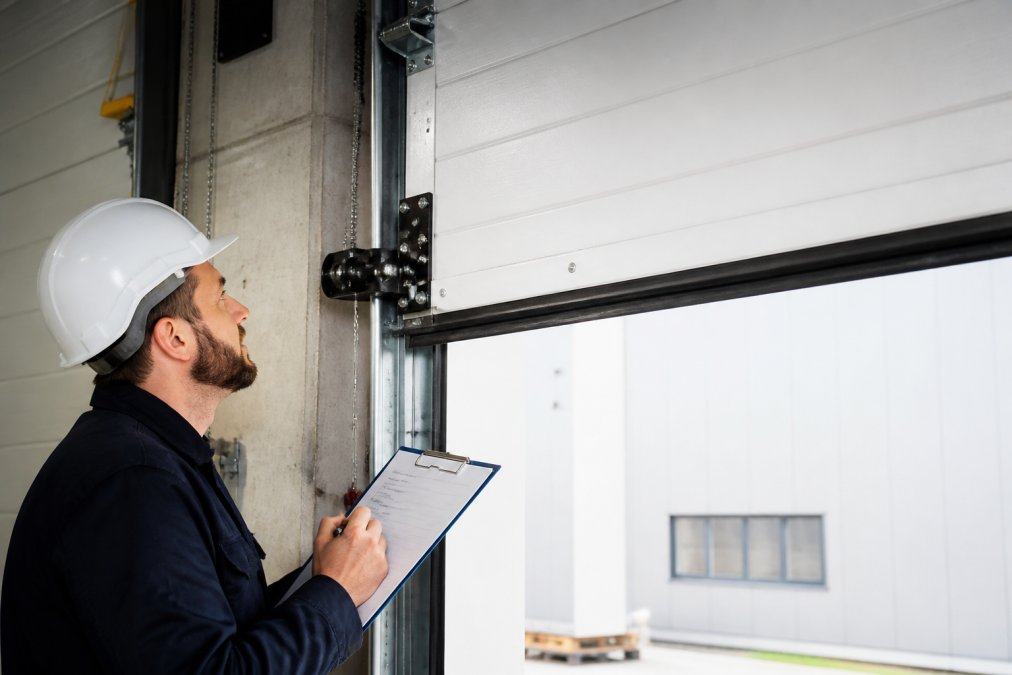
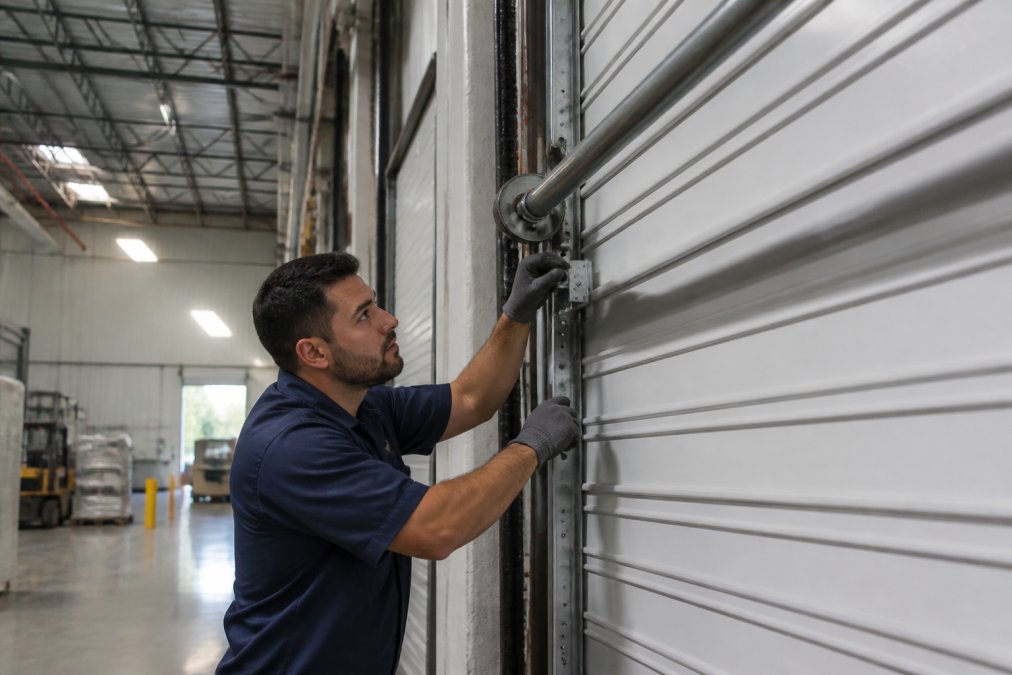
A thorough safety inspection is the foundation of any maintenance program. Technicians evaluate door balance, cable tension, and track alignment, then verify that safety sensors reverse the door on contact. This checklist covers the critical points every facility should expect during a professional visit:
- Door balance test: Disconnect the operator and manually lift the door halfway; it should stay put without drifting.
- Hardware torque check: Verify bolts on hinges, bearing plates, and cable drums are tight; vibration loosens them over time.
- Cable and pulley inspection: Look for fraying, kinks, or rust on cables, which are the most dangerous failure points.
- Roller and hinge condition: Lubricate rollers and replace any that are cracked, worn, or out of round.
- Weather stripping review: Check the bottom seal for gaps that let in pests, water, and conditioned air.
- Safety sensor test: Place an object in the door's path and confirm the auto-reverse function engages immediately.
- Operator force settings: Confirm the close force is adjusted per manufacturer specs to prevent injury.
A common mistake is treating this as a visual walkthrough. A proper inspection involves testing the door under load and measuring spring tension, which requires tools and training most in-house teams lack.
OSHA Garage Door Safety Requirements for Facility Managers
OSHA does not publish a single standard titled "garage door safety," but compliance is enforced through several overlapping regulations. The primary reference is 29 CFR 1910.178, which governs powered industrial trucks and explicitly requires that "brakes, steering mechanisms, and other safety devices" be maintained (osha.gov). For dock doors, the relevant interpretation is that a malfunctioning door or operator creates a struck-by or caught-between hazard, which falls under the General Duty Clause (Section 5(a)(1)).
To build a defensible compliance posture, facility managers should implement a documented inspection and testing protocol. The following checklist aligns with OSHA's expectations and industry best practices from the Door & Access Systems Manufacturers Association (DASMA):
- Auto-reverse function test: Place a 1-inch high obstruction (e.g., a block of wood) in the door's path. The door must reverse upon contact. Test monthly.
- Force settings verification: Measure the door's closing force with a force gauge. The operator should stop and reverse if it exceeds manufacturer specifications. Test quarterly.
- Photoelectric sensor alignment: Ensure sensors are clean, aligned, and mounted no higher than 6 inches above the floor. Test weekly.
- Emergency release mechanism: Verify the manual release handle functions correctly and is accessible. Test quarterly.
- Fire door drop test: For fire-rated doors, conduct a drop test per the manufacturer's schedule (typically quarterly or annually). The door must close and latch automatically when the release is triggered.
- Visible damage inspection: Check tracks, rollers, cables, and springs for wear, corrosion, or misalignment. Document findings and corrective actions.
- Maintenance log maintenance: Record every inspection, test, and repair. OSHA investigators look for a pattern of proactive maintenance, not just a single incident report.
Commercial Garage Door Spring Replacement Cost Factors
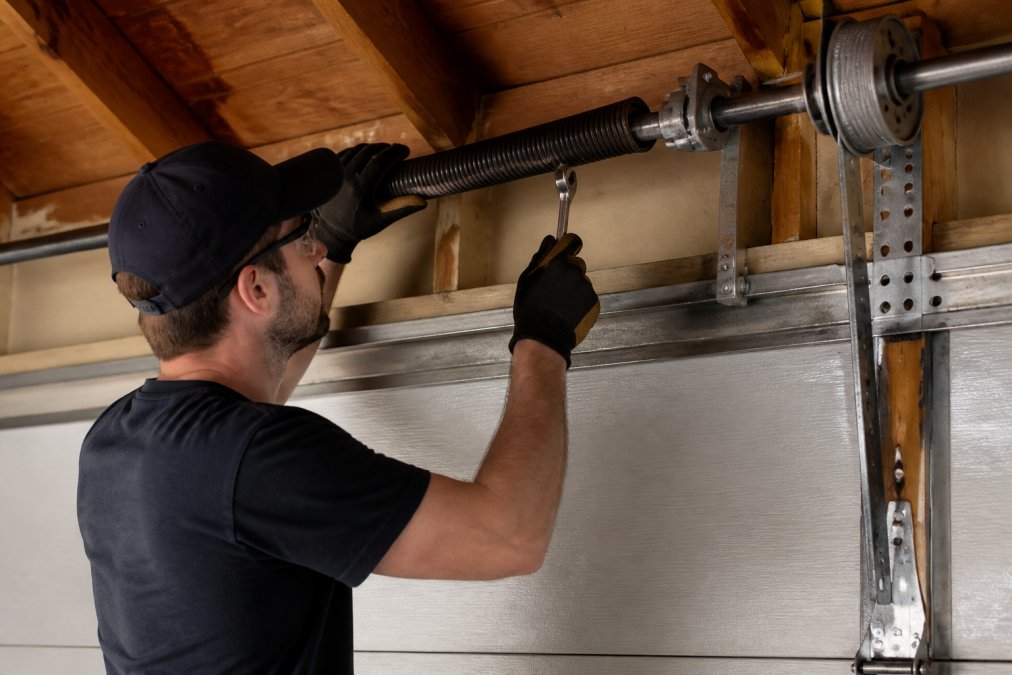
Commercial spring replacement pricing is not a single line item; it is a function of engineering specifications and labor risk. The most significant driver is the spring's cycle rating, which directly correlates to its wire gauge and length. Standard torsion springs are often rated for 10,000 cycles, while high-cycle options range from 25,000 to over 100,000 cycles (dasma.com). A facility running a door 20 times per day will exhaust a 10,000-cycle spring in roughly 500 days, whereas a 100,000-cycle spring would last over 13 years under the same load. The upfront premium for a high-cycle spring is typically a fraction of the cost of one emergency replacement and the associated downtime.
Beyond the spring itself, the quote should itemize these components, as they are often wear-matched to the spring's lifespan:
- Cable drums: Drums are sized to the door's weight and cable diameter. Reusing worn drums with new springs can cause uneven cable spooling and premature failure.
- Bearing plates and center brackets: These endure the full torsion load. Cracks or wear here necessitate replacement to prevent catastrophic failure.
- Cables: A new spring exerts fresh tension on old cables. Frayed or corroded cables are a safety hazard and will fail, often within weeks of a spring replacement.
- Bottom brackets: These transfer spring tension to the bottom fixture. Loose or worn brackets cause cable misalignment.
Labor is the second major cost factor. Replacing a commercial torsion spring is a high-risk task that requires specialized winding bars, torque measurement, and a full door rebalance. A professional technician will also perform a safety inspection of the entire door system during the replacement, which is a value-add that a parts-only quote does not include.
To make an informed decision, request a quote that separates parts and labor, specifies the spring cycle rating, and includes a rebalance and cable inspection. Ask the provider to calculate the cost per cycle over the expected lifespan. This shifts the conversation from a single invoice to a long-term operational cost, which is the metric that matters for your budget.
Preventive Maintenance vs. Reactive Repair: Cost-Benefit Analysis
Preventive maintenance is a scheduled investment; reactive repair is an unplanned expense. The financial argument for the former is straightforward: a quarterly lubrication and adjustment visit costs a fraction of an emergency spring replacement, and it eliminates the overtime labor rates and production stoppage that come with a mid-day failure.
Consider the ripple effects of a reactive repair. When a loading dock door fails, trucks wait, drivers idle, and shipments miss windows. That downtime often costs more than the repair itself. A scheduled maintenance program from the Door & Access Systems Manufacturers Association extends the life of the door operator and reduces the frequency of parts replacement. For facilities running multiple shifts, the math favors a proactive contract that spreads cost predictably across the year rather than absorbing spikes after failures.
| Approach | Cost Profile | Downtime Risk | Equipment Lifespan |
|---|---|---|---|
| Preventive Maintenance | Predictable, lower per-visit | Minimal, scheduled | Extended |
| Reactive Repair | High, emergency rates | Significant, unscheduled | Shortened |
DIY vs. Professional Maintenance: What Are the Risks?
The risks of DIY maintenance on commercial doors are not theoretical. The most obvious danger is physical: torsion springs store tremendous energy, and mishandling them is a leading cause of garage door injuries. The less obvious risk is operational. An untrained person may lubricate the wrong components, overtighten hardware, or misadjust the operator's force settings, creating a door that functions intermittently before failing completely.
Professional technicians bring two things an in-house team does not: diagnostic experience and the right parts on the truck. They know how a door should sound and move when it is correctly balanced, and they catch worn bearings or stressed cables before they snap. While basic tasks like clearing debris from the tracks are safe for facility staff, anything involving spring tension, cable replacement, or operator programming should be left to a licensed technician. Attempting these repairs to save a few hundred dollars typically results in a larger bill and a longer shutdown when the door fails again.
Choosing the Right Commercial Door Service Partner
Selecting a service partner requires vetting beyond a low hourly rate. Look for a provider that offers scheduled preventive maintenance contracts, not just emergency call-outs, because the contract structure shows they are invested in your door's longevity. Confirm they service your specific door type, whether that is rolling steel, sectional, or high-speed doors, and ask about their response time for breakdowns.
Reliability is the differentiator. Facility managers need a partner who shows up when scheduled and communicates clearly about parts lead times. American Eagle Garage Doors LLC provides expert repair and installation for commercial doors in Greeley and Evans, specializing in spring replacements and opener repairs that keep warehouse and dock operations running. We offer free estimates and competitive pricing, with a focus on prompt, professional service. Reviews from local business clients consistently highlight the importance of a technician who arrives prepared and finishes the job right the first time.
Conclusion
Commercial garage door maintenance is not an expense to minimize; it is an investment in operational continuity. Shifting from a reactive mindset to a scheduled maintenance program reduces downtime, extends equipment life, and keeps your facility compliant with safety standards. The choice of a service partner determines whether that program delivers results or just paperwork.
American Eagle Garage Doors LLC supports facility managers and business owners with expert repair and installation services for commercial garage doors. From spring replacements to opener repairs, our team ensures your doors operate safely and efficiently, and we back our work with prompt, professional service and competitive pricing. Contact us today for a free estimate and experience the difference of a partner who treats your operational uptime as their priority. Call us today.
Frequently Asked Questions
How often should commercial garage doors be inspected?
Schedule a professional commercial garage door safety inspection at least twice per year. Facilities with high traffic, such as loading docks, may need quarterly checks. Daily visual checks for broken cables or misaligned tracks are also recommended. Regular preventive maintenance catches small issues before they cause operational downtime.
What specific maintenance tasks are required for commercial garage doors?
Key tasks include lubricating hinges, rollers, and bearings; checking and adjusting the door balance; inspecting cables for fraying; testing safety sensors; verifying the door operator's reverse mechanism; and checking weather stripping for wear. A professional maintenance service will also inspect the track alignment and tighten loose hardware.
How much does commercial garage door maintenance cost?
Pricing depends on the number of doors, the system type, and the service contract selected. Many providers offer tiered plans, from basic inspections to comprehensive preventive maintenance programs. Contact our team for a free estimate tailored to your facility's specific needs.
What are OSHA garage door safety requirements for commercial facilities?
OSHA requires that all powered industrial doors have functioning safety features. This includes photo-eye sensors that reverse the door if an object is in the path, and proper labeling for pinch points. Regular inspections must confirm these systems work correctly. Compliance also requires that employees are trained on safe operating procedures.
How long do commercial garage doors typically last?
A well-maintained commercial door system can last 15 to 20 years or more. The lifespan depends on usage frequency, environmental conditions, and how consistently preventive maintenance is performed. High-cycle torsion springs, however, may need replacement more frequently, depending on the number of open and close cycles per day.
What are the signs that a commercial garage door needs professional repair?
Watch for unusual grinding or squealing noises, slow or jerky operation, visible cable fraying, a door that is off balance, or safety sensors that are not responding. If the door fails to reverse when it hits an obstruction, stop using it immediately and call a professional. Ignoring these signs can lead to complete system failure.
Frequently Asked Questions
Q: How often should commercial garage doors be inspected?
A: Schedule a professional commercial garage door safety inspection at least twice per year. Facilities with high traffic, such as loading docks, may need quarterly checks. Daily visual checks for broken cables or misaligned tracks are also recommended. Regular preventive maintenance catches small issues before they cause operational downtime.
Q: What specific maintenance tasks are required for commercial garage doors?
A: Key tasks include lubricating hinges, rollers, and bearings; checking and adjusting the door balance; inspecting cables for fraying; testing safety sensors; verifying the door operator's reverse mechanism; and checking weather stripping for wear. A professional maintenance service will also inspect the track alignment and tighten loose hardware.
Q: How much does commercial garage door maintenance cost?
A: Pricing depends on the number of doors, the system type, and the service contract selected. Many providers offer tiered plans, from basic inspections to comprehensive preventive maintenance programs. Contact our team for a free estimate tailored to your facility's specific needs.
Q: What are OSHA garage door safety requirements for commercial facilities?
A: OSHA requires that all powered industrial doors have functioning safety features. This includes photo-eye sensors that reverse the door if an object is in the path, and proper labeling for pinch points. Regular inspections must confirm these systems work correctly. Compliance also requires that employees are trained on safe operating procedures.
Q: How long do commercial garage doors typically last?
A: A well-maintained commercial door system can last 15 to 20 years or more. The lifespan depends on usage frequency, environmental conditions, and how consistently preventive maintenance is performed. High-cycle torsion springs, however, may need replacement more frequently, depending on the number of open and close cycles per day.
Q: What are the signs that a commercial garage door needs professional repair?
A: Watch for unusual grinding or squealing noises, slow or jerky operation, visible cable fraying, a door that is off balance, or safety sensors that are not responding. If the door fails to reverse when it hits an obstruction, stop using it immediately and call a professional. Ignoring these signs can lead to complete system failure.