 ultimate-guide
What Is a Commercial Door Safety Inspection? 2026 Guide
Table of Contents
- What a Commercial Door Safety Inspection Actually Covers
- Key Components Inspectors Examine on Every Door
- OSHA Commercial Door Requirements and NFPA 80 Compliance
- Your Commercial Garage Door Safety Checklist for Daily and Monthly Checks
- Building a Commercial Door Preventative Maintenance Schedule
- What a Professional Inspection Costs and How to Budget for It
- Liability, Insurance, and Inspection Records: What Property Owners Risk
- Frequently Asked Questions
Last Updated: September 24, 2026
What a Commercial Door Safety Inspection Actually Covers
Knowing what is a commercial door safety inspection starts with this: it is a documented evaluation of every moving and load-bearing part of an overhead or rolling door, confirming it operates safely and meets fire and workplace safety standards. At American Eagle Garage Doors LLC, we treat it as three checks in one: mechanical condition, safety-device function, and compliance paperwork. It is not a quick visual glance when a door starts squealing.
The reason this matters more than most facility managers assume is liability. A door that fails mid-cycle in a loading dock can drop, crush, or strike whoever is underneath it. Many businesses find their insurance carrier asks for inspection records after an incident, and a missing log turns a routine claim into a dispute.
How It Differs From a Residential Garage Door Check
A home garage door check is informal and owner-driven: you listen for noise, watch the balance, and call someone when something looks wrong. A commercial inspection is scheduled, documented, and tied to regulatory standards, because the doors are larger, cycle far more often, and sit in workplaces covered by occupational safety rules.
Key Components Inspectors Examine on Every Door
Whatever you call it, what is a commercial door safety inspection covers the same core systems, regardless of door type. A certified inspector works top to bottom: springs and cables, tracks and rollers, the operator and safety devices, then the door panel and seals. Skipping a step is how small wear patterns become emergency calls.
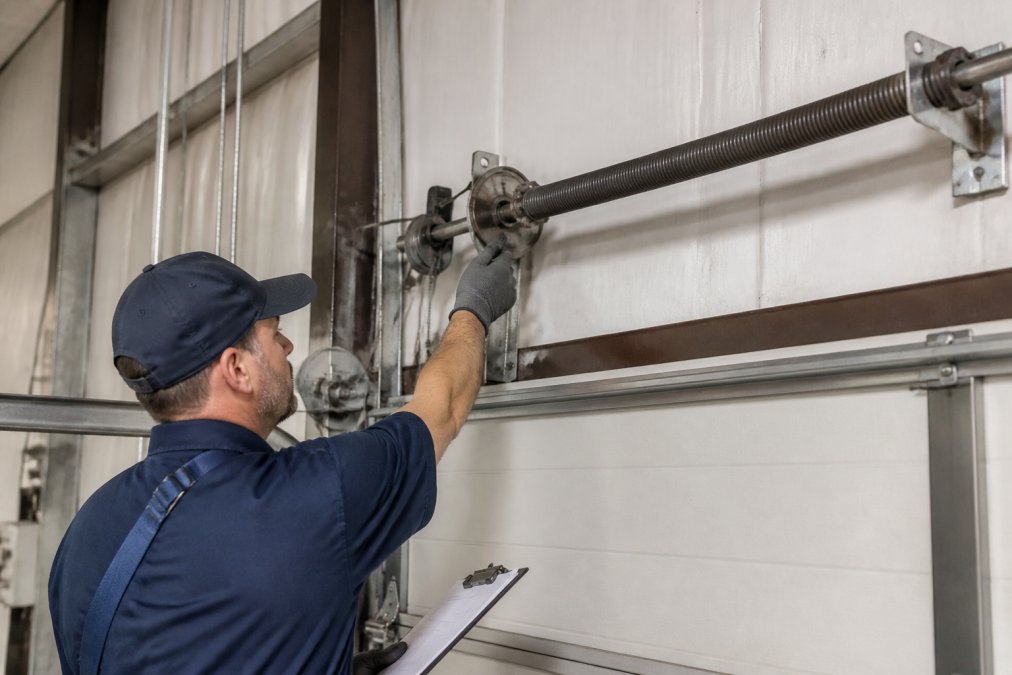
Load-Bearing Parts: Springs, Cables, and Tracks
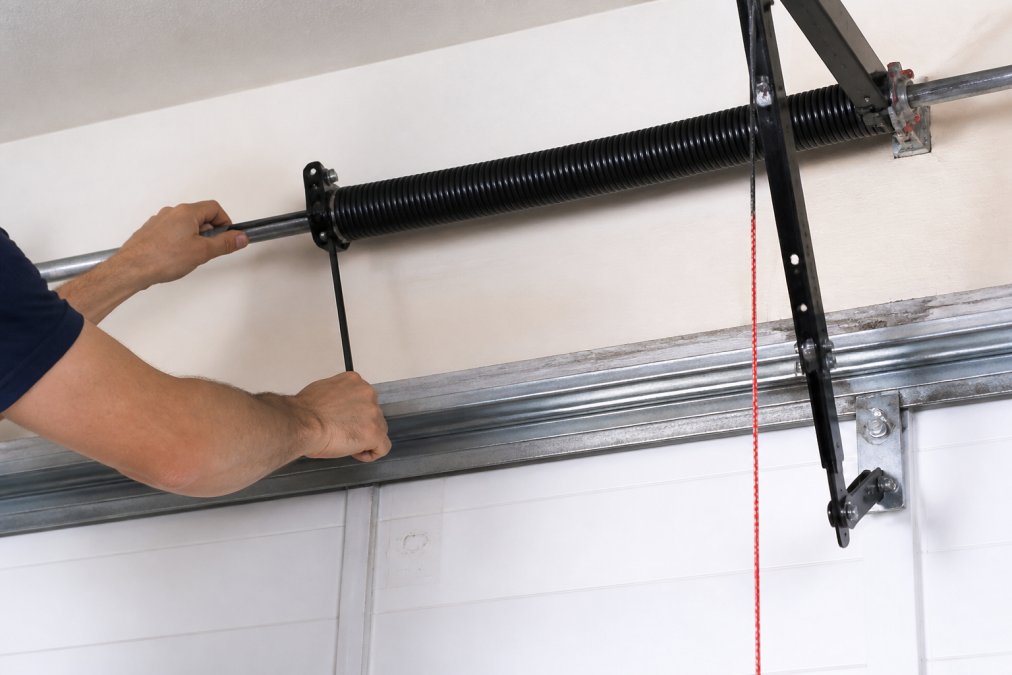
Springs, cables, and tracks carry the full weight of the door, so they get the closest look. Inspectors check spring tension, look for gaps or stretching in the coils, and examine cables for fraying or slack. A frayed cable usually snaps without warning.
Safety Devices: Auto-Reverse, Photo-Eye Sensors, and Emergency Release
Safety devices are tested, not just eyeballed. The auto-reverse mechanism must send the door back up when it meets resistance, and the photo-eye sensors must stop and reverse the door when the beam is broken. Inspectors test both with a physical obstruction, because a clean-looking sensor can still be misaligned.
OSHA Commercial Door Requirements and NFPA 80 Compliance
Two frameworks govern commercial doors: workplace safety rules covering employee exposure to door hazards, and fire door standards covering doors that are part of a building's fire protection. The OSHA standards for general industry require that employers maintain equipment in safe working condition, which includes overhead doors and their operators. The NFPA 80 Standard for Fire Doors and Other Opening Protectives sets the inspection, testing, and maintenance requirements for fire-rated door assemblies.
What the Annual Fire Door Drop Test Requires
Fire-rated doors must be tested annually to confirm they close and latch on their own, a procedure known as the drop test. The inspector releases the door from its open position and watches it travel, checking that it fully closes, latches, and resets without assistance. Any binding, dragging, or failure to latch is recorded as a deficiency.
Your Commercial Garage Door Safety Checklist for Daily and Monthly Checks
A commercial garage door safety checklist splits work between daily users and a trained technician. Daily checks take under a minute and catch obvious problems; monthly checks catch wear that builds slowly. The full mechanical and compliance inspection is annual at minimum, or more often for high-cycle doors.
Daily checks, performed by whoever opens and closes the door:
- Listen for grinding, scraping, or popping during travel
- Watch the door move smoothly, with no jerking or uneven travel
- Confirm the photo-eye sensors are clean and aligned
- Check that the door closes fully and sits level on the floor
- Look for anything obstructing the track or the door path
Monthly checks, performed by a designated staff member:
- Test the auto-reverse by placing a solid object in the door's path
- Pull the emergency release and confirm it resets
- Inspect cables for fraying and springs for gaps or rust
- Tighten visible bolts and check brackets for looseness
- Examine weatherstripping and bottom seals for cracks or gaps
- Log every finding with a date, even if nothing is wrong
Building a Commercial Door Preventative Maintenance Schedule
A commercial door preventative maintenance schedule is built around cycle count, not the calendar alone. A door that cycles 50 times a day wears out far faster than one that opens twice. Most facilities settle on monthly visual checks, quarterly lubrication and adjustment, and an annual full inspection, with high-cycle doors on a tighter rotation.
| Door Type | Typical Cycle Volume | Suggested Inspection Frequency |
|---|---|---|
| Low-use storage door | Under 10 cycles/day | Annual full inspection |
| Retail or office bay | 10-30 cycles/day | Quarterly check, annual inspection |
| Active loading dock | 30-100 cycles/day | Monthly check, quarterly inspection |
| High-cycle warehouse door | Over 100 cycles/day | Monthly inspection, annual overhaul |
Preventative Maintenance vs. Reactive Repair
Preventative maintenance costs a scheduled visit and a small adjustment. Reactive repair costs a service call, a part, and however long the door is down. The gap is downtime, and downtime on a loading dock backs up deliveries, idles drivers, and pushes work into overtime.
What a Professional Inspection Costs and How to Budget for It
Inspection pricing depends on door type, count, and how many are fire-rated, so a single number would be misleading. What you can control is how you budget: set aside a line item for scheduled maintenance the way you budget for HVAC service, and treat emergency repairs as the failure of that budget, not the plan itself.
To build a real number, work through four inputs:
- Count the doors and note which are fire-rated. Fire-rated assemblies require the annual drop test and a written record, so they carry more inspection time than a standard door.
- Estimate cycles per day for each door. Cycle count drives frequency more than the calendar does.
- Set a frequency from that cycle count, using the schedule table above as a starting point.
- Add a contingency line for parts and emergency repairs, sized to the age and condition of the doors.
Liability, Insurance, and Inspection Records: What Property Owners Risk
- A dated entry for every inspection and every test, including the annual fire door drop test
- The name and certification of the person who performed the work
- The specific deficiencies found, with photos where a defect is visible
- The corrective action taken, the date it was completed, and the parts replaced
- Repair invoices and service tickets that match the log entries
- The door's location identifier, so a record can be tied to a specific opening
Backfilling inspection logs after an incident is a serious mistake. Altered records can void insurance coverage and create legal exposure far beyond the original equipment problem. Log the check when you do it, or not at all.
A common pattern among facility managers is to treat the log as a formality until the first claim, then rebuild the process under pressure. Building it before an incident costs a few minutes per check and turns a potential dispute into a documented, defensible position.
Frequently Asked Questions
What are the safety requirements for commercial overhead doors?
Commercial overhead doors must meet OSHA general duty requirements under 29 CFR 1910, which obligates employers to maintain equipment free of recognized hazards, and fire-rated doors must follow NFPA 80 testing and maintenance rules. In practice that means working auto-reverse systems, functioning photo-eye sensors, intact springs and cables, and an emergency release that operates by hand. Doors on required exit routes also fall under NFPA 101 life safety rules. A commercial door inspection verifies each of these points and documents the results.
What gets checked during a commercial door safety inspection?
An inspector works through the full operating system: spring tension, cables for fraying, track assembly alignment, hinges, brackets, rollers, and weatherstripping. They test the auto-reverse and photo-eye sensors, confirm the emergency release works, check door balance and travel, and look at the opener and its wiring. For fire-rated doors, the inspection also covers the fusible link and drop test. Any mechanical deficiencies get noted with a photo and a recommended fix.
How often should commercial garage doors be inspected?
A practical schedule pairs monthly visual checks by your staff with a professional inspection once or twice a year, depending on traffic. High-cycle doors at a loading dock may need quarterly service. Fire-rated rolling steel and sectional doors used as fire barriers require an annual drop test under NFPA 80. Following a commercial door preventative maintenance schedule keeps small wear patterns from turning into a door that is stuck open or off its track.
Can I perform a commercial door safety inspection myself?
You can and should do basic visual checks: listen for unusual noise, look for frayed cables, test the photo-eye sensors, and confirm the door reverses on contact with a test object. What you should not do is adjust spring tension, replace cables, or repair track assembly damage. Those parts store enough energy to cause serious struck-by or crush injuries. A certified inspector has the tools to measure balance and torque safely, and their report carries weight with your insurer.