 ultimate-guide
Cost to Convert Extension Springs to Torsion
Table of Contents
- What the Cost to Convert Extension Springs to Torsion Actually Includes
- Torsion vs Extension Springs Pros and Cons
- Garage Door Spring Conversion Kit Cost: What's in the Box
- Professional Garage Door Spring Installation Safety
- Compatibility Checklist: Door Weight, Headroom, and Opener Limits
- Long-Term ROI: Why the Higher Upfront Cost Often Pays Off
- Frequently Asked Questions
Last Updated: September 16, 2026
What the Cost to Convert Extension Springs to Torsion Actually Includes
The cost to convert extension springs to torsion depends on three variables: the conversion kit, the torsion hardware it contains, and the labor to install and balance the new system. Labor, not parts, drives the final number.
Materials: Conversion Kits, Torsion Springs, and Hardware
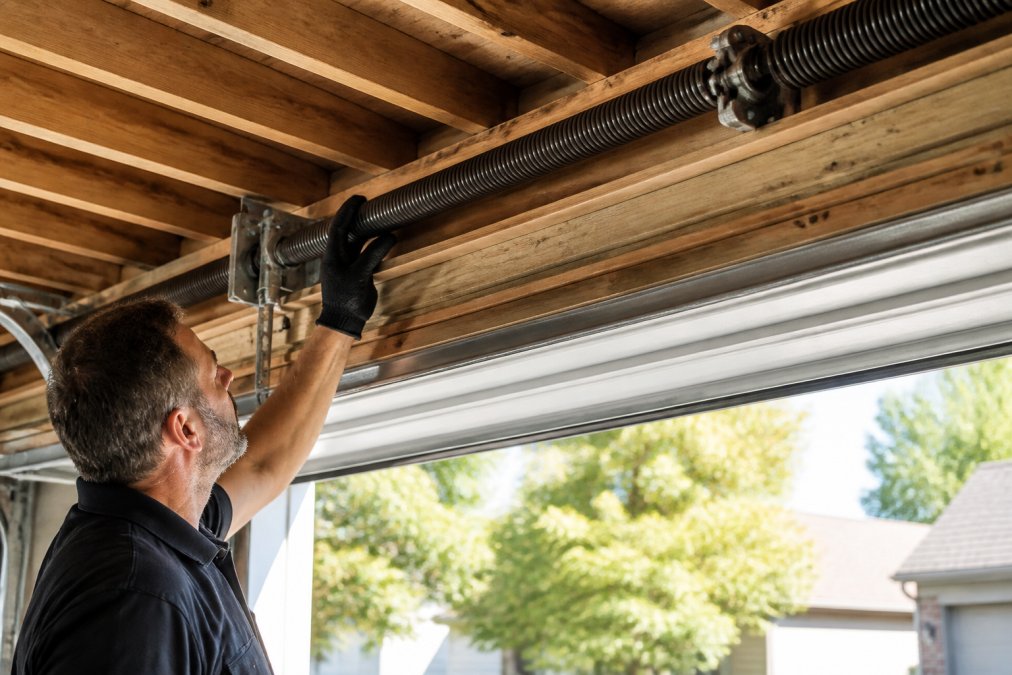
A conversion kit is not just two springs. A complete kit includes the torsion shaft, cable drums, a center bearing bracket, winding cones, stationary cones, lift cables, bottom brackets, and torsion springs sized to your door's weight.
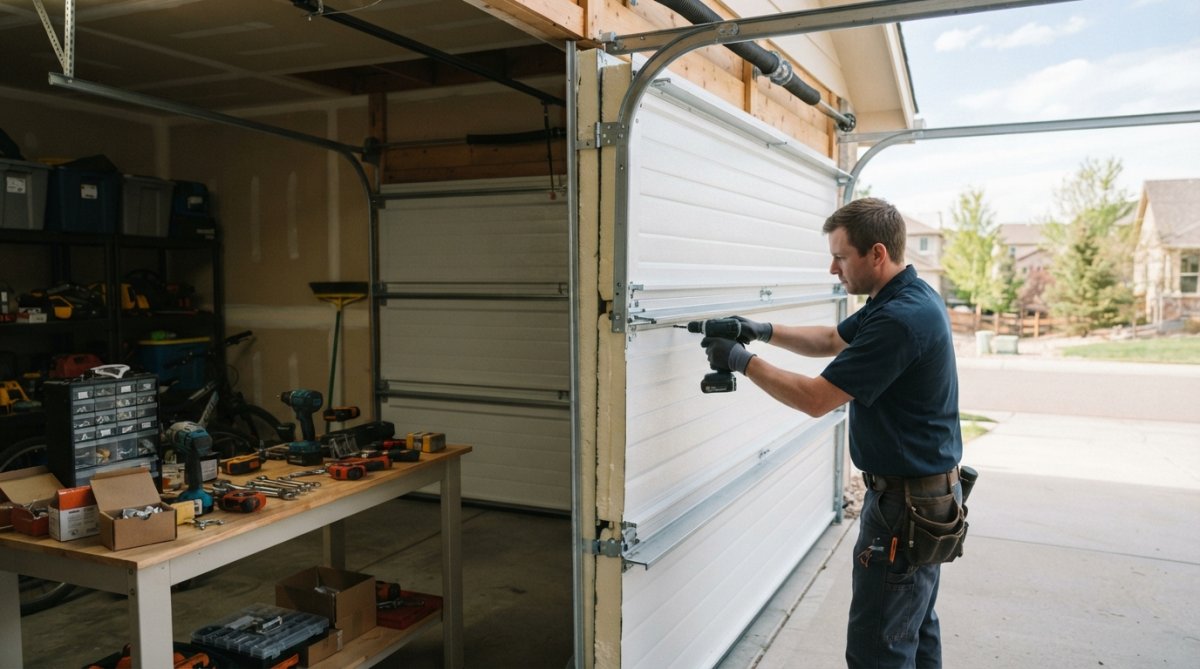
Labor: Why Professional Installation Drives the Final Number
Labor is the largest line item, varying with door size, ceiling height, and how much old hardware has seized or stripped.
What the Total Usually Looks Like
Because American Eagle Garage Doors LLC does not publish flat-rate pricing, the number depends on your door. A free estimate is the only way to get a real figure.
- Kit and hardware: the torsion shaft, drums, bearing bracket, cones, cables, bottom brackets, and the springs themselves.
- Labor: removal of the old extension system, installation and winding, balance testing, and opener adjustment.
- Contingency: anything the old door forces on you, such as seized bottom brackets, worn cables, or a track that will not accept the new shaft without shimming.
Why Quotes Vary So Much Between Contractors
Two contractors can quote the same door and land hundreds of dollars apart without either being wrong. The difference comes down to four things:
- Spring quality. A standard-cycle spring and a high-cycle spring cost different amounts and last different lengths of time. Cheaper quotes often use the lower-cycle spring.
- Hardware included. Some quotes reuse your existing cables and bottom brackets; others replace them as a matter of course. Reused hardware is cheaper today and more likely to fail sooner.
- Warranty terms. A quote that includes a multi-year parts and labor warranty costs more to stand behind than one that covers the part only.
- Access and height. A low-clearance or unusually tall garage takes longer to work in, and time is labor.
Torsion vs Extension Springs Pros and Cons
Torsion springs last longer and fail more safely than extension springs, which is the core argument for converting. The trade-off is upfront cost and more precise installation.
Here is how the two systems compare:
| Factor | Extension Springs | Torsion Springs |
|---|---|---|
| Mounting location | Above horizontal tracks | On shaft above door |
| Typical lifespan | Shorter | Longer |
| Failure mode | Can snap toward a person | Contained on the shaft |
| Safety containment | Requires safety cables | Inherent to the design |
| Installation complexity | Lower | Higher |
| Best for | Older, lighter doors | Most modern doors |
How to Visually Identify Which System You Have
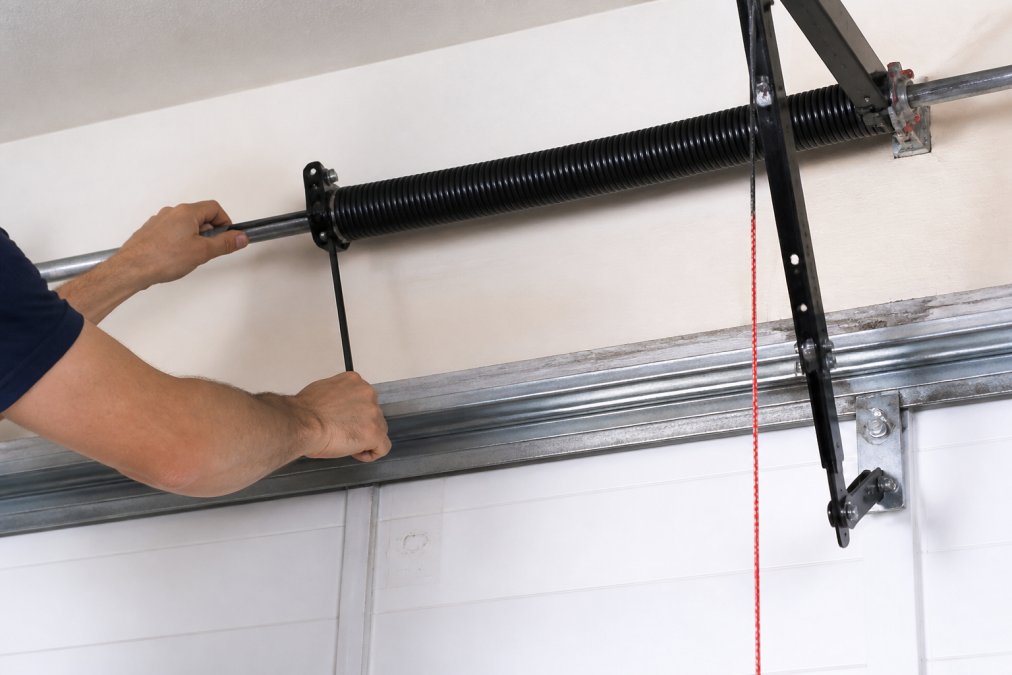
Look above the door. Two long springs running parallel to the horizontal tracks means extension springs. A single horizontal shaft with springs coiled around the bar means torsion springs.
Garage Door Spring Conversion Kit Cost: What's in the Box
The garage door spring conversion kit cost covers the full torsion assembly, not just springs: the torsion shaft, two cable drums, a center bearing bracket, two winding cones, two stationary cones, new lift cables, bottom brackets, and the torsion springs.
Professional Garage Door Spring Installation Safety
Professional garage door spring installation safety is the reason this is not a DIY job. Torsion springs store enormous torque, and winding them requires training, gloves, and eye protection.
Compatibility Checklist: Door Weight, Headroom, and Opener Limits
Before you commit to a conversion, run this checklist. A "no" on any line means the job needs modification or a different approach.
- Door weight: Weighed, not estimated. Spring sizing depends on it.
- Headroom clearance: Enough space above the door for the torsion shaft and springs.
- Track condition: Tracks are straight and securely fastened.
- Bottom brackets and lift cables: In good condition, or included in the upgrade.
- Opener compatibility: Your existing opener can handle the new counterbalance system.
- Emergency release: Present and functional after the conversion.
- Door balance test: Door stays put at the halfway point when released.
Long-Term ROI: Why the Higher Upfront Cost Often Pays Off
A torsion conversion costs more upfront than another extension spring replacement. The return comes from lifespan, fewer service calls, and safer failure behavior over the life of the door.
The Cost-Per-Cycle Math Most Guides Skip
Every spring is rated in cycles, and a cycle is one open-and-close. A standard extension spring is commonly rated around 10,000 cycles, and a standard torsion spring around 10,000 as well, but a high-cycle torsion spring can be specified at 20,000, 30,000, or more. The cost difference between a standard and a high-cycle spring is modest relative to the labor to install either one.
- Estimate your cycles per year. A typical household opens and closes the door four to six times a day, which is roughly 1,500 to 2,200 cycles a year. A household where someone works from home or the door is the main entry can easily double that.
- Divide the spring's cycle rating by your annual cycles. A 10,000-cycle spring at 1,800 cycles a year is about five and a half years. A 30,000-cycle spring at the same rate is about sixteen and a half years.
- Multiply the number of replacements you avoid by the cost of each replacement. Every avoided replacement saves the full installed cost, not just the spring, because labor is the same whether the spring is standard or high-cycle.
What the ROI Actually Depends On
The math above only pays off under certain conditions:
- How long you will stay in the home. If you are selling in two years, the next owner captures most of the remaining spring life. The conversion still helps at resale, but you will not personally collect the full return.
- How often the door is used. A door that opens twice a day wears springs far more slowly than one that opens ten times a day. High cycle counts are where the upgrade pays hardest.
- Whether the rest of the door is sound. A high-cycle spring on a door with worn rollers, a bent track, or a tired opener will not deliver its rated life, because the door is fighting itself every cycle.
- Whether maintenance happens. Annual lubrication and a balance check are cheap, and they are the difference between a spring that reaches its rating and one that fails early.
The Insurance and Liability Angle
This is the part most cost guides leave out, and it is worth a call to your insurer before you decide.
Two practical questions to ask:
- Does your homeowner's policy or the door manufacturer's warranty say anything about who performs spring work? Some warranties require installation by a qualified technician, and a DIY conversion can void coverage on the door and the opener.
- If a spring fails and damages a vehicle or injures someone, how does the claim get handled? A professionally installed, documented conversion is easier to defend than an undocumented DIY repair.
The Bottom Line on ROI
A conversion is not automatically the right call for every door. It is the right call when you plan to stay in the home, the door gets real daily use, and the rest of the door is in good enough shape to let a high-cycle spring do its job. In those conditions, the higher upfront cost is repaid in avoided replacements, fewer service calls, and a safer failure mode.
Frequently Asked Questions
How much does it cost to convert a garage door from extension springs to torsion springs?
The cost to convert extension springs to torsion depends on your door's weight, the conversion kit required, and labor rates in your area. A standard residential conversion typically involves a kit with torsion springs, a center bearing bracket, cable drums, winding cones, and new lift cables, plus professional installation. Because door weight and headroom vary, American Eagle Garage Doors LLC provides free estimates so you get an accurate number for your specific door before any work begins.
Is there a kit available to convert a 16-foot garage door to torsion springs?
Yes. Conversion kits are made for standard 16-foot double-car doors and include matched torsion springs, a center bearing bracket, cable drums, winding cones, and lift cables sized to your door's weight. The critical step is matching spring wire gauge, inside diameter, and length to the actual door weight, not just the door width. A kit that is mismatched to your door can leave the door unbalanced and strain the opener. A professional can verify load capacity before ordering.
Can I DIY a garage door spring conversion, or should I hire a professional?
Torsion springs store enough torque to cause serious injury or death if they release unexpectedly. Winding bars, winding cones, and high-tension springs require specific technique and tools, and a mistake during winding can be catastrophic. Professional garage door spring installation safety is not just about skill, it also affects your homeowner's insurance if an unpermitted DIY repair leads to damage or injury. For most homeowners, hiring a trained technician is the safer and often cheaper choice once you factor in tools and risk.
Do I need to replace my garage door opener when switching to torsion springs?
Not usually. Most openers work with either system as long as the door is properly balanced and the opener's lift capacity matches the door weight. However, if your opener is from around 2005 or older, it may lack modern safety features like auto-reverse and photo-eye sensors, which are required on residential openers sold in the U.S. since 1993. A technician can test your existing opener during the conversion and tell you whether a replacement is worth considering.
Garage door springs are not a component to guess at, and a conversion is not a job to rush. American Eagle Garage Doors LLC offers free estimates, expert repair and installation for both residential and commercial doors, and competitive pricing on spring conversions. Call today and get a straight answer on what your door needs.