 how-to
Garage Door Service Company: 2026 Guide
Table of Contents
- What a Garage Door Service Company Actually Does
- Emergency Repair Services: When You Need Same-Day Help
- Garage Door Spring Replacement Cost: What to Expect
- Garage Door Maintenance Checklist for Homeowners
- How to Find a Reliable Garage Door Technician
- Garage Door Service Company Red Flags to Avoid
- Conclusion
Last Updated: August 27, 2026
Your garage door is the largest moving part of your home, and when it fails, everything stops. At American Eagle Garage Doors LLC, we've seen firsthand how a stuck door can derail a morning commute, lock a delivery truck out of a warehouse, or leave a family's belongings exposed overnight. Choosing the right garage door service company before a crisis hits is one of the smartest decisions a homeowner or property manager can make.
What a Garage Door Service Company Actually Does
A garage door service company is a licensed contractor that handles the installation, repair, maintenance, and inspection of residential and commercial overhead doors and their mechanical systems. The scope of work covers everything from broken torsion springs and snapped cables to opener motor failures and full panel replacements. Most reputable providers also offer preventative maintenance programs and safety inspections.
A single service call often involves diagnostic testing of the door balance, inspection of rollers and hinges, tension adjustment on springs, and verification that safety sensors are aligned.
Residential Garage Door Installation and Repair
Residential garage door service covers new door installation, panel replacement after impact damage, opener repair, cable replacement, and routine tune-ups. A professional installation includes setting the track alignment precisely, calibrating spring tension to match the door's weight, and programming remote keypads and smart home integration features.
When selecting a new door, ask the technician about the R-value (insulation rating) alongside aesthetic options. A well-insulated door reduces energy loss through an attached garage, affecting heating and cooling costs year-round.
Commercial Garage Door Services for Warehouses and Loading Docks
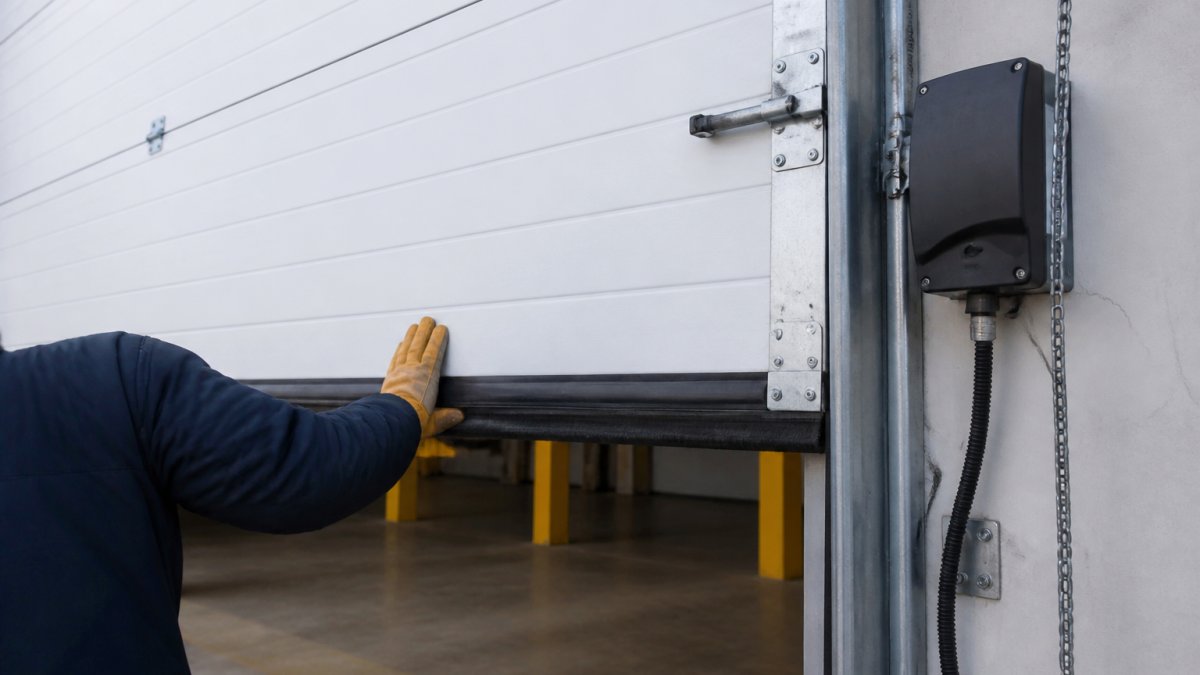
Commercial garage door service differs significantly from residential work. Warehouse and loading dock doors operate under far heavier daily cycle loads, often hundreds of open-close cycles per day versus a residential door's average of four to six. That mechanical stress accelerates wear on rollers, hinges, bottom seals, and motor components.
Commercial operators need technicians who understand high-cycle springs, heavy-duty track systems, and specific safety requirements for freight environments. Facility managers should look for a provider capable of handling both residential and commercial work under one service agreement, which simplifies scheduling and warranty coverage tracking.
Emergency Repair Services: When You Need Same-Day Help
Same-day emergency repair is critical when a door is stuck open (a security and weather exposure risk) or stuck closed (trapping vehicles and blocking deliveries). Fast response time separates adequate providers from exceptional ones. When evaluating a company, ask directly: what is your typical response window for emergency calls?
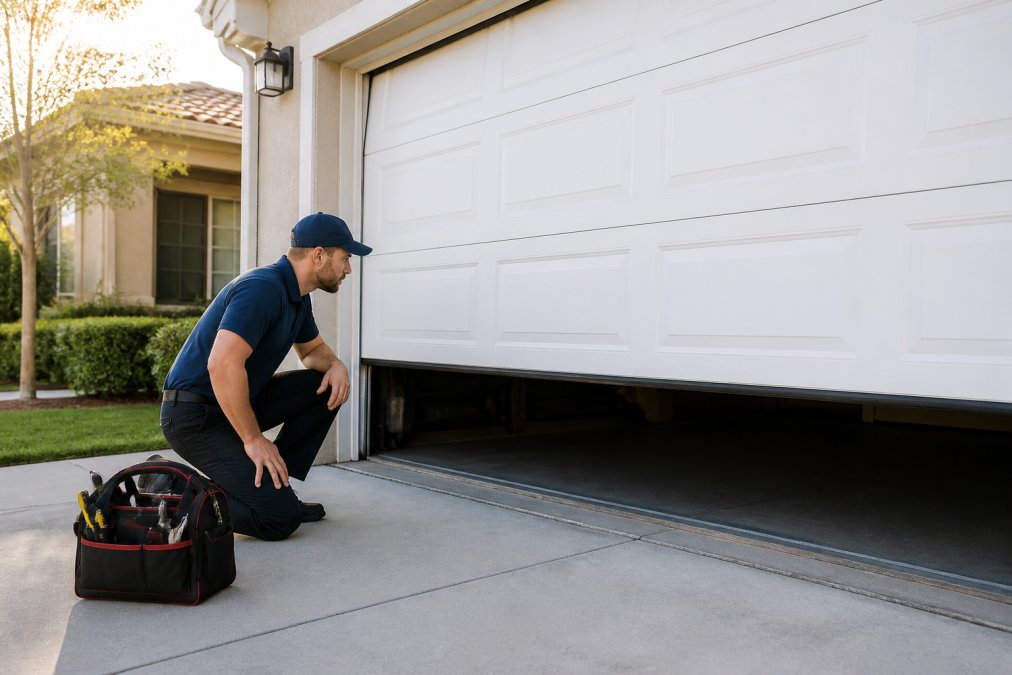
Common emergency scenarios include a door that has come off its track, a torsion spring that has snapped under tension, a cable that has frayed or jumped its drum, and a motor that has burned out mid-cycle. Each requires a technician on site and is unsafe for DIY repair.
Garage Door Spring Replacement Cost: What to Expect
Spring replacement is one of the most common garage door service calls. Pricing varies based on the spring type, door weight, and whether one or both springs need replacement. Replacing both springs at the same time is standard practice even when only one has failed, since springs are sold and installed in matched pairs calibrated to the door's weight.
Torsion Springs vs. Extension Springs
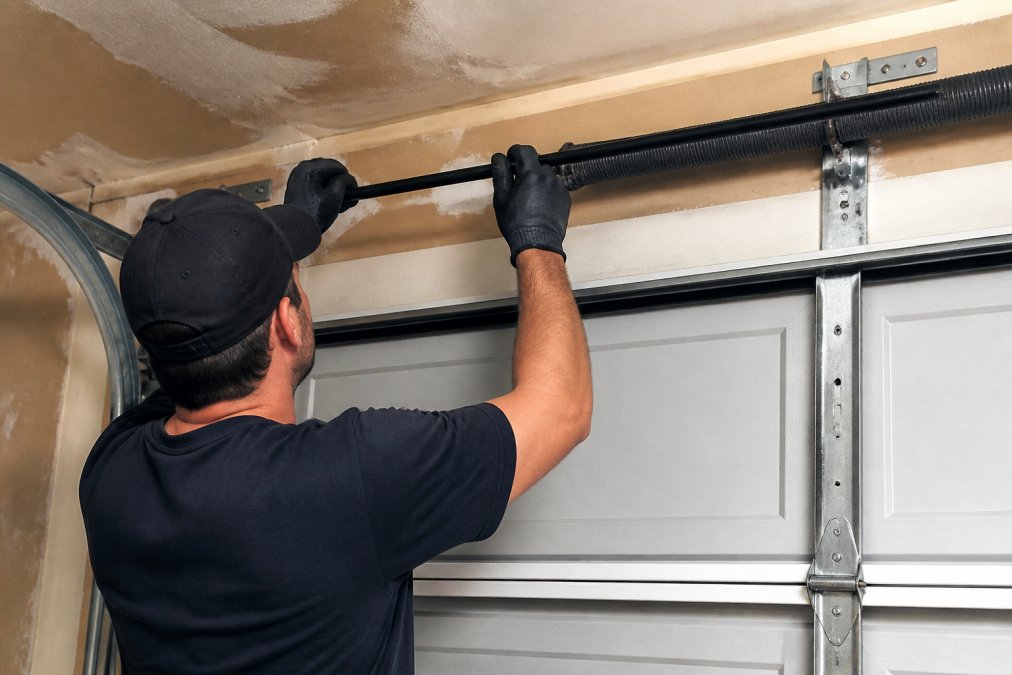
Torsion springs mount horizontally above the door opening on a metal shaft. They work by twisting under tension as the door closes and releasing that stored energy to assist the opener when the door opens. Torsion springs are more durable, produce smoother operation, and are the standard for most modern residential and commercial doors.
Extension springs run along the horizontal tracks on either side of the door. They stretch and contract with door movement. Older homes and lighter doors more commonly use extension springs. They are generally less expensive to replace but require safety cables threaded through them to contain the spring if it snaps.
Torsion systems last longer under heavy use and are the preferred choice for any door that sees frequent daily operation.
DIY vs. Professional Repair: Safety Risks You Should Know
Most garage door maintenance tasks are safe for a careful homeowner: lubrication, weather stripping replacement, sensor realignment, and remote programming are all reasonable DIY work. Spring replacement is not.
According to the U.S. Consumer Product Safety Commission's guidelines on garage door safety, garage door springs and related hardware are responsible for a significant share of residential garage door injuries each year. The tension involved in a standard torsion spring system cannot be safely managed without proper tools and training. The same caution applies to cable replacement, which is under high tension and connects directly to the spring system.
Garage Door Maintenance Checklist for Homeowners
A consistent maintenance routine extends the life of every component in your garage door system. Most technicians recommend a full inspection twice a year, with light maintenance monthly.
Monthly tasks:
- Visually inspect rollers, hinges, and cables for visible wear or fraying
- Test the auto-reverse safety feature by placing a 2x4 flat on the ground under the door and activating the close cycle
- Check that safety sensors are aligned (indicator lights should be solid, not blinking)
- Listen for grinding, squealing, or popping sounds during operation
Every six months:
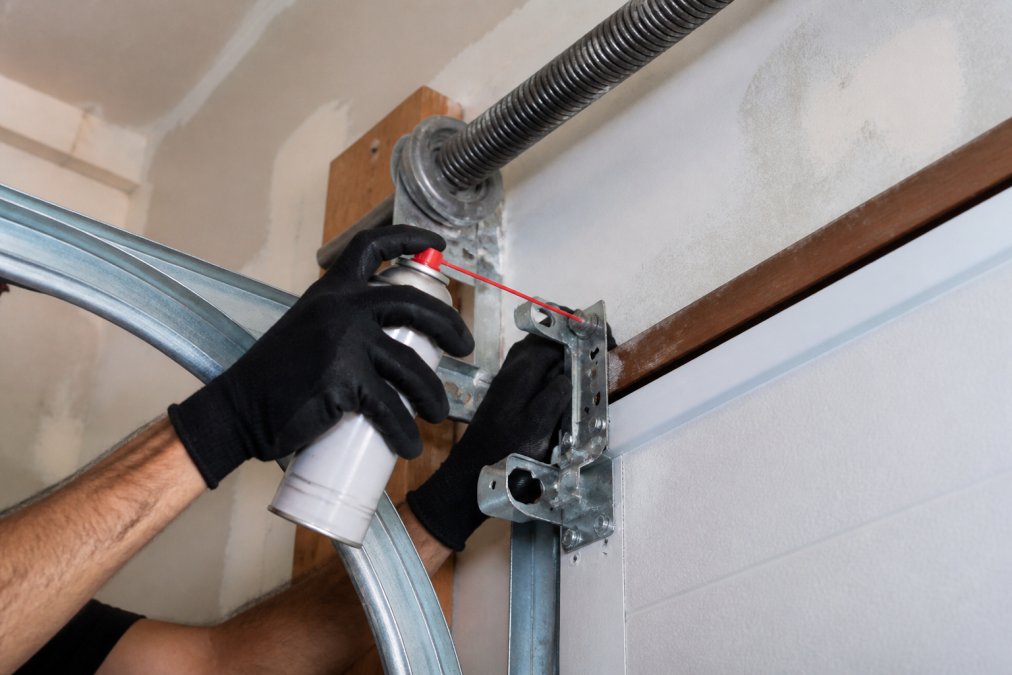
- Lubricate rollers, hinges, torsion spring coils, and the opener's drive chain or screw with a garage door-specific lubricant (not WD-40)
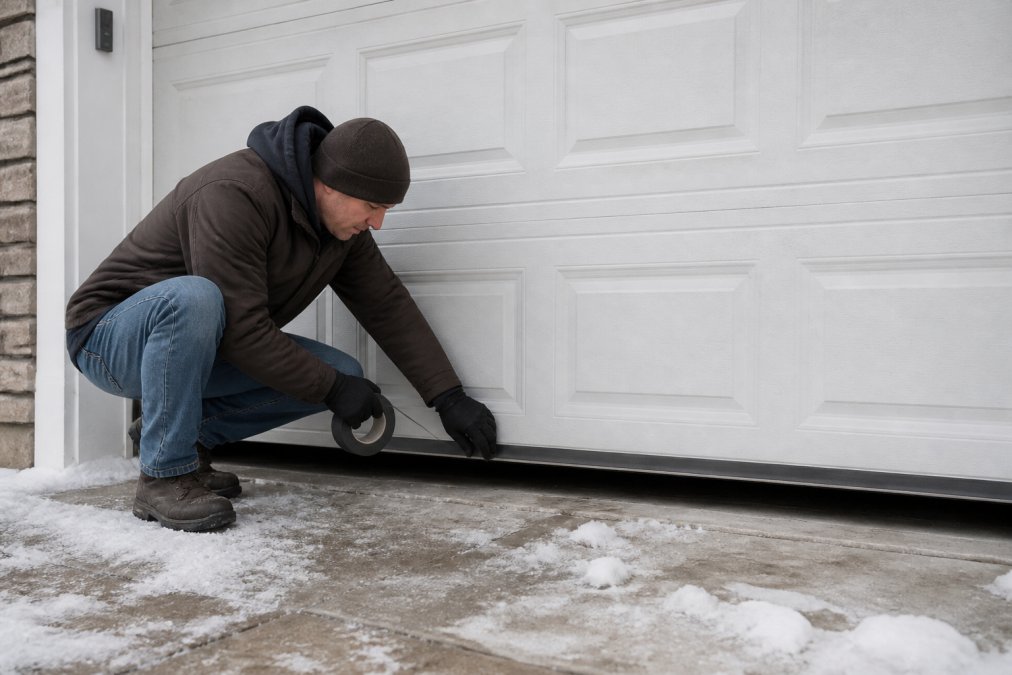
- Inspect and replace weather stripping and the bottom seal if cracked or compressed
- Test door balance manually: disconnect the opener, raise the door to waist height, and release. It should hold position.
- Inspect track alignment for gaps between rollers and track rail
- Check all mounting hardware and tighten any loose bolts or brackets
Annually:
- Schedule a professional safety inspection and tune-up
- Test keypad and remote batteries; replace as needed
- Evaluate insulation condition if the door is insulated
| Maintenance Task | Frequency | DIY or Pro? |
|---|---|---|
| Lubricate rollers, hinges, springs | Every 6 months | DIY |
| Test auto-reverse safety feature | Monthly | DIY |
| Inspect cables and torsion springs | Every 6 months | Pro recommended |
| Replace weather stripping / bottom seal | As needed | DIY |
| Full safety inspection and tune-up | Annually | Pro |
| Track alignment check | Every 6 months | DIY or Pro |
| Spring tension adjustment | As needed | Pro only |
| Remote / keypad battery replacement | Annually | DIY |
Opener Repair, Roller Replacement, and Track Alignment
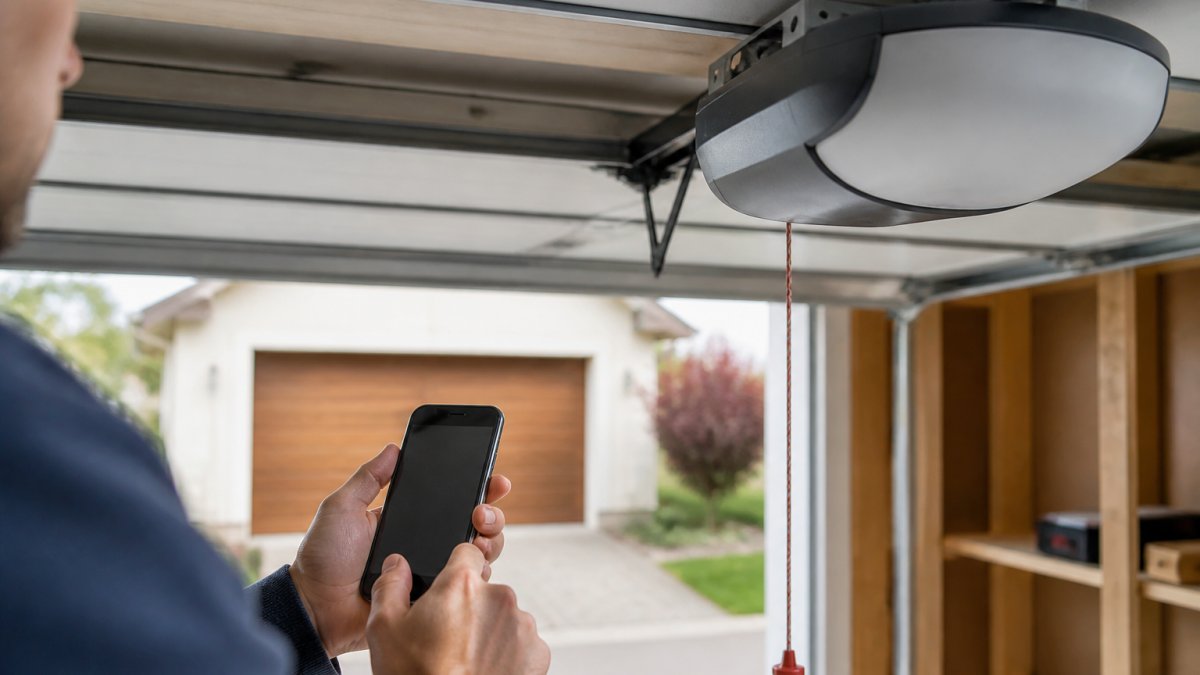
Many opener issues trace back to dead batteries in the remote, misaligned safety sensors, or a logic board that needs a reset. Before calling for service, check sensor alignment first: both sensors should have solid indicator lights. A blinking light means the beam is interrupted or the sensors are out of position.
Roller replacement is a straightforward repair that reduces noise and improves smooth operation. Nylon rollers are quieter than steel and don't require lubrication. Most doors have ten to twelve rollers, and replacing a worn set typically takes under an hour.
Track alignment problems show up as a door that binds, skips, or makes a grinding noise at a specific point in its travel. A technician will check for gaps between the roller and track rail and adjust the track mounting brackets to correct the angle. This repair is worth catching early: a door that continues to run on a misaligned track accelerates wear on rollers and can eventually cause the door to come off track entirely.
Safety Inspection: What a Technician Should Check
A professional safety inspection includes diagnostic testing of every mechanical and electrical component in the system. The International Door Association's standards for garage door service technicians outline the core competencies expected of certified technicians, including spring system evaluation, opener force and auto-reverse testing, and hardware inspection protocols.
A thorough inspection covers spring tension and cycle life, cable condition and drum seating, roller wear and bearing condition, track alignment and mounting hardware torque, opener motor performance and auto-reverse force calibration, safety sensor alignment and response testing, bottom seal and weather stripping condition, and panel condition and hinge integrity.
How to Find a Reliable Garage Door Technician
The biggest mistake homeowners make is waiting until something breaks to find a technician. Vetting a provider during a non-emergency gives you time to check credentials, read reviews, and get a free estimate without pressure.
Start with referrals from neighbors or property managers who have used local services. Online reviews are useful but read critically: look for specifics about punctuality, communication, and whether the work held up over time. A pattern of complaints about upselling or unexpected charges is a red flag regardless of overall star rating.
Licensing, Insurance, and Warranty Coverage
Licensing requirements for garage door contractors vary by state. Verify that any company you hire carries current general liability insurance and workers' compensation coverage. If a technician is injured on your property and the company lacks coverage, you may be exposed to liability.
A reputable garage door service company should warranty both parts and labor. Ask specifically: what is the warranty period, what does it cover, and what is the process if something fails after the service call? Sara Shriver, a customer in Evans, summarized what good service looks like: "Their prices for garage door repair were competitive, their customer service was professional and prompt, and the finished product was exceptional."
Garage Door Service Company Red Flags to Avoid
Pressure to replace rather than repair. A technician who immediately recommends full door replacement without attempting diagnosis deserves scrutiny. Many components, including springs, cables, rollers, and panels, are replaceable without replacing the entire door.
Unusually low service call fees. Some providers advertise very low diagnostic fees to get on site, then present inflated repair quotes once they're there. A transparent provider gives you a clear estimate before work begins.
No physical address or verifiable business identity. A legitimate garage door service company has a verifiable local presence. Check that the business appears in state licensing databases and carries a real address, not just a phone number.
Vague or verbal-only warranties. Any warranty worth having is in writing. If a technician cannot provide written documentation of warranty terms, the warranty does not effectively exist.
Refusing to show credentials. A licensed and insured technician should be able to show proof of insurance and any applicable trade certifications on request. Technician certification from recognized industry bodies, such as those outlined by the International Door Association's certification program, indicates formal training in spring systems, opener mechanics, and safety protocols.
Garage doors fail at the worst possible times, and the provider you choose determines whether a bad situation gets resolved quickly or drags on for days. American Eagle Garage Doors LLC handles both residential and commercial garage door service, from spring replacements and opener repairs to full installations, with free estimates and a commitment to prompt, professional work. For homeowners and facility managers who need reliable service without the runaround, reach out to American Eagle Garage Doors LLC and get a free estimate today.
Frequently Asked Questions
How much does it cost to have a garage door serviced?
Garage door service costs vary based on the type of repair, parts needed, and your location. A basic tune-up or safety inspection typically costs less than a broken spring replacement or full opener repair. Factors like torsion spring type, motor age, and panel condition all affect the final price. The best way to get an accurate number is to request a free estimate from a licensed local technician before any work begins.
What is included in a garage door service?
A standard garage door service usually covers diagnostic testing, lubrication of rollers and hinges, track alignment checks, spring tension inspection, safety sensor testing, weather stripping review, and opener operation verification. A thorough technician will also check the door balance, inspect cables for fraying, and flag any parts showing early wear. Some providers include keypad and remote programming as part of a full-service visit.
What is the most common garage door repair?
Broken spring replacement is the most frequent garage door repair. Torsion springs and extension springs both have a limited cycle life and tend to snap without much warning. A door off track is the second most common issue, often caused by worn rollers or a cable that has slipped. Both repairs carry real safety risks if attempted without proper training, which is why professional service is strongly recommended over DIY fixes.
How do I know if I need a professional garage door service company?
If your garage door makes grinding or popping noises, moves unevenly, reverses before closing, or won't open at all, those are clear signs a technician should inspect it. A door that feels unusually heavy when lifted manually often signals a spring problem. Safety sensor misalignment, a sluggish opener motor, or visible cable damage also warrant a professional service call rather than a DIY attempt.
This article was written using GrandRanker