 how-to
Why Commercial Garage Doors Reverse: Diagnosis & Fix
Table of Contents
- Why Your Commercial Garage Door Reverses Unexpectedly
- Safety Sensors and Photo-Eye Misalignment
- Adjusting Force and Limit Settings on Your Operator
- Inspecting Tracks, Rollers, and Debris Buildup
- Checking Door Balance and Spring Tension
- Commercial Garage Door Maintenance Checklist
- When to Call a Professional for Commercial Garage Door Repair
- Conclusion
- Frequently Asked Questions
Last Updated: September 27, 2026
Why Your Commercial Garage Door Reverses Unexpectedly
A commercial garage door that reverses unexpectedly is more than an inconvenience, it's a safety hazard. When your door stops mid-cycle and reverses direction, something in the operator's safety system has triggered an obstruction detection or force limit. Understanding why this happens is the first step to fixing it.
The most common culprit is a misaligned safety sensor. High-cycle commercial doors face constant mechanical stress: springs weaken, tracks collect debris, and hardware loosens. Any one of these can cause your commercial garage door reverse behavior.
This guide breaks down the diagnosis process step by step, covering what causes reversals, how to inspect critical components, and when professional service is necessary.
Safety Sensors and Photo-Eye Misalignment
Photo-eye sensors are your door's safety guardians. They sit on opposite sides of the opening and create an invisible beam. If anything blocks that beam, the operator reverses the door automatically. This is by design, it prevents the door from closing on people or equipment.
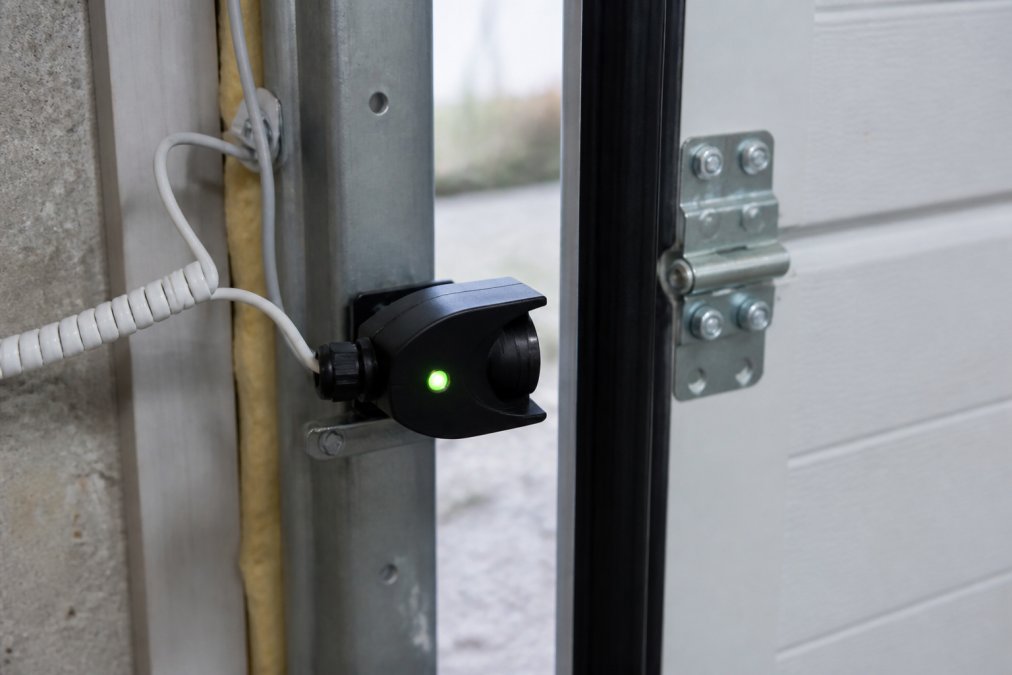
Commercial doors face a unique challenge: vibration-induced misalignment. While residential doors cycle 5-10 times daily, commercial doors cycle 50-150 times daily. This cumulative vibration gradually shifts sensor brackets out of alignment, even when bolts are tight.
Why Standard Bracket Tightening Fails
A standard photo-eye bracket uses one or two bolts in a simple L-bracket. Under constant vibration, the bracket rocks slightly with each cycle, shifting the sensor lens fractions of a millimeter per day. After 30-60 days of high-cycle operation, the beam no longer hits the lens dead-center, and the operator reverses.
Diagnosing Vibration-Induced Misalignment
Check your sensors first:
- Look at the LED indicators on both photo-eyes. A solid green light means the beam is intact; flashing or red signals misalignment.
- Walk the beam path with your hand. If the door reverses when your hand enters the beam area, the sensor is working but may need realignment.
- Inspect the lens on each sensor. Clean both lenses with a soft cloth and inspect for scratches that scatter the beam.
- Check the mounting brackets for movement. If the bracket flexes or rocks, vibration is causing drift.
- Verify alignment using the beam test. Block the beam with a card and confirm the door reverses consistently. Intermittent reversal signals the sensor is drifting in and out of alignment.
Vibration-Resistant Mounting Solutions
For commercial doors experiencing frequent reversals due to vibration:
Upgrade to heavy-duty brackets: Replace lightweight aluminum brackets with reinforced steel brackets designed for high-cycle doors. These use multiple mounting points (three or four bolts) and thicker material that resists flexing and prevents drift.
Add vibration-dampening isolators: Rubber or elastomer isolators installed between the bracket and mounting surface absorb vibration energy and reduce movement transmission to the sensor.
Use thread-locking compound: Apply medium-strength thread-locking compound (such as Loctite 243) to all bracket bolts before installation to prevent loosening from vibration while remaining removable for service.
Increase bracket spacing: Mount photo-eye brackets farther apart on the track or frame to reduce the lever effect of vibration and improve stability.
Check the sensor mounting surface: Ensure the mounting surface is solid and not flexing. Reinforce bent tracks, cracked concrete, or loose frames that transmit vibration to the sensor.
Testing for Alignment Drift Over Time
You can monitor drift yourself by marking the bracket position with a permanent marker and checking alignment weekly. If the bracket has shifted, vibration is causing drift. Implement vibration-resistant solutions and recheck after 2-4 weeks to confirm effectiveness.
Adjusting Force and Limit Settings on Your Operator
Your operator has two critical settings: force sensitivity and travel limits. Force sensitivity tells the motor how much resistance triggers a reversal; travel limits tell it when the door has reached fully open or closed. Incorrect force settings cause unexpected reversals, too low and the door reverses at slight resistance; too high and it won't reverse when it should.
Most commercial operators have adjustment dials on the motor unit, typically ranging from 1 to 10. A setting of 3 to 5 works for most doors. Start at 5 and adjust downward only if the door reverses on every cycle.
If travel limit switches are misset, the door may reverse before reaching fully closed.
Inspecting Tracks, Rollers, and Debris Buildup
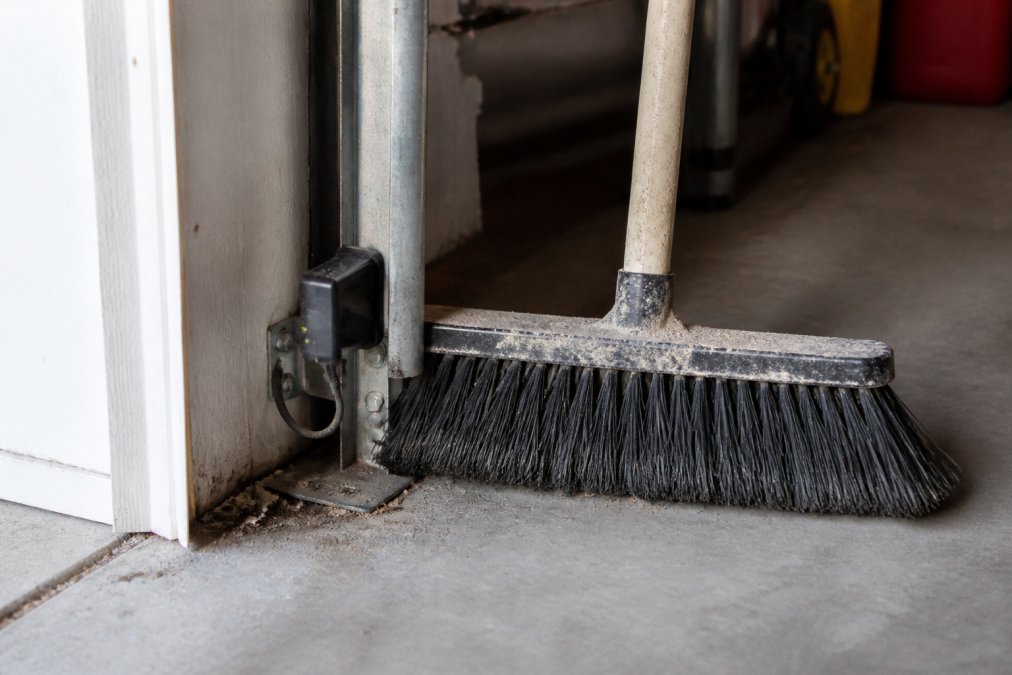
Debris in the track is one of the most overlooked causes of unexpected reversals. Dirt, gravel, and small objects accumulate in the track channel. When rollers hit this debris, the door experiences sudden resistance and the operator reverses. Commercial doors run constantly, and buildup becomes significant over weeks.
Checking Door Balance and Spring Tension
An unbalanced door is under stress. If springs are weak or broken, the door's full weight transfers to the operator motor, causing it to struggle and trigger the force sensor.
Commercial Garage Door Maintenance Checklist
Preventative maintenance stops reversals before they start. Commercial doors wear based on cycle count, not calendar schedule. Maintenance frequency should be tied to actual usage.
Understanding Your Door's Cycle Rate
Determine your door's daily cycle count: loading dock doors cycle 100-200+ times daily (high-use), service bays 30-80 times (medium-use), warehouses 10-30 times (low-use), and emergency exits 1-5 times (minimal-use). Many modern operators have cycle counters that track total operations.
Cycle-Based Maintenance Schedule
| Cycle Rate | Monthly Tasks | Quarterly Tasks | Semi-Annual Tasks | Annual Tasks |
|---|---|---|---|---|
| High-use (100+ cycles/day) | Clean tracks and remove debris; Tighten all bolts and brackets; Test photo-eye alignment; Inspect rollers for wear | Lubricate rollers and hinges; Check spring tension visually; Verify force and limit settings | Full track inspection for dents; Roller replacement if worn; Check operator motor for noise | Professional diagnostic inspection; Spring condition assessment; Operator calibration |
| Medium-use (30-80 cycles/day) | Clean tracks (every 2 weeks); Tighten bolts and brackets | Test photo-eye alignment; Lubricate rollers | Inspect rollers and springs; Verify force settings | Professional inspection; Spring assessment |
| Low-use (10-30 cycles/day) | Clean tracks monthly; Visual inspection | Tighten brackets; Test sensors | Lubricate rollers; Check springs | Professional inspection |
| Minimal-use (1-5 cycles/day) | Visual inspection monthly | Test photo-eye alignment | Lubricate rollers | Professional inspection |
High-Cycle Door Maintenance Details
For doors running 100+ cycles daily, listen weekly for grinding, squeaking, or popping sounds, and watch for hesitation, jerking, or uneven movement.
Annual tasks:
- Professional diagnostic inspection. A technician can test operator settings with proper equipment, verify sensor alignment with laser tools, and identify mechanical issues you might miss.
- Spring condition assessment. Springs on high-cycle doors wear faster. A professional can measure spring tension and predict when replacement will be needed.
- Operator calibration. Force and limit settings may need adjustment as the door ages. A professional can recalibrate the operator to factory specifications.
Maintenance Logging and Pattern Recognition
Keep a detailed maintenance log:
- Date of service
- Tasks performed
- Observations (noises, hesitation, alignment issues)
- Adjustments made
- Cycle count (if available)
Over time, patterns emerge. If reversals increase in frequency, the log shows whether it correlates with seasonal changes, increased usage, or specific times of year. For example, a door that reverses more often in winter may have humidity-related sensor issues or track contraction. A door that reverses more after a period of heavy use may have worn rollers or loose hardware.
When to Escalate Maintenance to Professional Service
If your maintenance log shows any of these patterns, schedule professional service:
- Reversals increasing in frequency despite regular maintenance
- Noises (grinding, popping, creaking) appearing or worsening
- Motor struggling or moving slowly
- Sensor alignment drifting back out within days of adjustment
- Spring tension changing noticeably between checks
When to Call a Professional for Commercial Garage Door Repair
Some problems require professional expertise. Knowing when to call saves time and prevents damage.
Call a professional if:
- Springs are broken or cracked. Spring replacement requires specialized tools and training.
- The door reverses consistently at the same point. This suggests a limit switch failure or structural issue requiring diagnostic equipment.
- Photo-eye alignment doesn't improve after cleaning and adjustment. Sensor failure or wiring issues need testing.
- The operator motor makes grinding noises or runs slowly. Internal damage may require motor replacement.
- You've adjusted force settings multiple times with no improvement. The issue is likely mechanical, not electronic.
- The door has been in service for 15+ years without major repair. Wear accumulates. A professional inspection identifies what needs replacement.
Conclusion
Commercial garage doors reverse unexpectedly because something in the safety system has detected resistance or obstruction. Most reversals stem from misaligned photo-eyes, debris in tracks, weak springs, or incorrect force settings. Start with the simple fixes: clean the tracks, verify sensor alignment, and check for loose hardware. If the problem persists after these checks, the door likely needs professional evaluation.
Frequently Asked Questions
Why is my commercial garage door reversing on its own?
Your commercial garage door reverses due to safety sensor misalignment, debris blocking the photo-eye, excessive downward force settings, or spring tension issues. The auto-reverse mechanism is a safety feature that activates when sensors detect an obstruction or when force limits are exceeded. Check for blocked sensors first, then inspect tracks and rollers for debris. If the door reverses without visible obstruction, the force sensitivity or limit settings likely need adjustment by a professional.
How do I adjust the force sensitivity on a commercial garage door opener?
Locate the force adjustment dial on your operator control box, typically labeled as downward or closing force. Start with the manufacturer's recommended setting, then make small quarter-turn adjustments. Test the door after each adjustment by placing a 2x4 board under the door to trigger the auto-reverse. If the door reverses too quickly, force is set too low; if it doesn't reverse with obstruction, force is too high. Consult your operator manual or a technician for proper calibration.
Can debris cause a commercial garage door to reverse?
Yes, debris is one of the most common causes of unexpected reversal. Dirt, dust, leaves, or small objects blocking the photo-eye sensors trigger the safety auto-reverse function. Track debris can also create friction that causes the door to stall and reverse. Inspect both the sensor lenses and the full length of the track weekly. Clean sensors with a soft, dry cloth and remove any buildup from rollers and brackets. Regular maintenance prevents debris-related reversals and extends operator life.
When should I call a professional for commercial garage door repair?
Contact a professional immediately if the door reverses persistently after you've cleaned sensors and checked for obstructions, if you suspect spring tension or balance issues, or if you need to adjust force settings beyond basic troubleshooting. High-cycle commercial doors experience greater mechanical stress and require expert diagnosis. Safety sensor recalibration and wiring harness inspection also require professional service. A technician can perform a full diagnostic and ensure your door meets commercial safety standards.