 how-to
Garage Door Fix Near Me: A 2026 How-To Guide
Table of Contents
- How to Diagnose Your Garage Door Problem Before Calling a Pro
- Common Garage Door Opener Problems and How to Troubleshoot Them
- Garage Door Spring Replacement Cost: What to Expect
- DIY vs. Professional Garage Door Fix: A Safety Analysis
- Garage Door Maintenance Checklist to Prevent Costly Repairs
- Residential vs. Commercial Garage Door Fix: Key Differences
- How to Choose a Certified Technician for Same-Day Service
- Conclusion
Last Updated: August 26, 2026
Your garage door is stuck, your car is trapped, and you need a garage door fix near me, fast. At American Eagle Garage Doors LLC, we've worked through hundreds of these situations, and the pattern is almost always the same: a problem that looks catastrophic is usually one of a handful of fixable issues. This guide walks you through diagnosing the problem yourself, understanding when to call a pro, and knowing what to expect from the repair process.
The International Door Association's homeowner safety guidelines makes one point clearly: most garage door injuries happen when homeowners attempt repairs without understanding the mechanical forces involved. Before you touch anything, read this guide first.
How to Diagnose Your Garage Door Problem Before Calling a Pro
Accurate diagnosis saves time and money. A garage door fix starts with identifying whether the problem is mechanical, electrical, or structural, because each requires a completely different approach.
Door Won't Open or Close
A door that refuses to move is usually caused by one of three things: a broken torsion spring, a dead opener, or a door that's jumped off its track. Start by disconnecting the opener using the red emergency cord hanging from the rail. Then try lifting the door manually. If it lifts smoothly, the problem is with the opener. If it feels extremely heavy or won't budge, you're almost certainly dealing with a broken spring.
Check the horizontal tracks on both sides for visible bends or obstructions. A door off track is recognizable by a gap between the roller and the track, or the door sitting at an angle in the frame. Do not force it.
Noisy Garage Door and Track Alignment Issues
A noisy garage door is one of the most common complaints, and it's usually a maintenance problem rather than a structural failure. Grinding or scraping sounds often point to worn rollers or a track alignment issue. Squeaking typically means the hinges and rollers need lubrication. Banging or popping sounds are more serious, they can indicate a worn torsion spring under stress.
Track alignment issues develop gradually. Look for gaps between the rollers and the track edge, or sections of track that are visibly bent. Minor misalignment can sometimes be corrected by loosening the track mounting bolts and tapping the track back into position with a rubber mallet. Significant misalignment requires professional realignment to avoid damaging the door panels.
Common Garage Door Opener Problems and How to Troubleshoot Them
Opener problems account for a large share of service calls, and many of them are solvable without a technician. The troubleshooting process follows a logical sequence.
Remote and Keypad Programming Failures
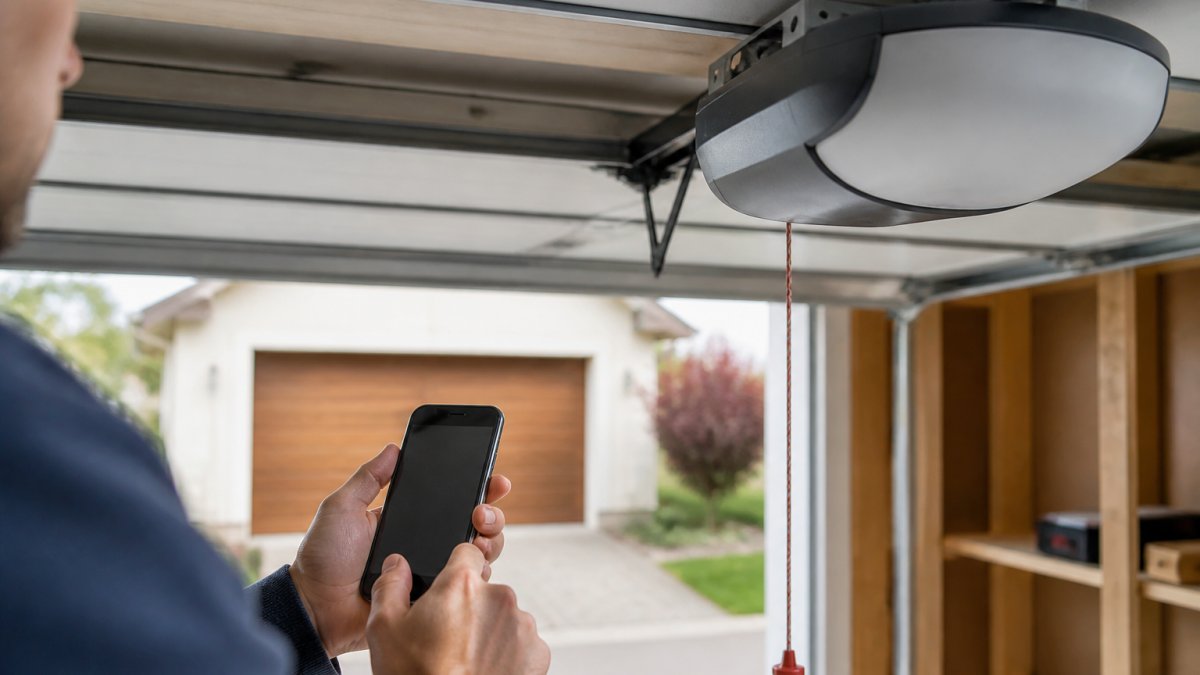
The most overlooked cause of remote failure is dead batteries. Replace them first, every time. If new batteries don't solve it, the remote may have lost its pairing with the opener's receiver. Most modern openers support reprogramming by holding the "learn" button on the motor unit until the indicator light blinks, then pressing the remote button within 30 seconds.
Keypad repair follows a similar process. If the keypad backlight works but the door doesn't respond, the PIN may have been corrupted or the keypad's receiver frequency may have drifted. Consult your opener's manual for the reprogramming sequence. For openers manufactured before roughly 2010, remote programming may require a different procedure, and some very old units no longer support modern frequency protocols, which is a legitimate reason to consider replacement.
Safety Sensor and Wall Console Faults
Safety sensors are the two small units mounted near the floor on either side of the door frame. They project an invisible beam across the door opening. When that beam is interrupted, by a misaligned sensor, a dirty lens, or an object in the path, the door will reverse or refuse to close. The [U.S. Consumer Product Safety Commission's garage door(https://aegdllc.com/garage-door-spring-repair) safety standards | cpsc.gov] mandates these sensors on all residential openers manufactured after 1993.
Sensor troubleshooting is straightforward: check that both units are pointing directly at each other (indicator lights should be solid, not blinking), wipe the lenses clean, and verify nothing is blocking the beam. A blinking or amber light almost always means misalignment. Loosen the wing nut, adjust the sensor bracket by hand until the light goes solid, then retighten.
Wall console faults are less common but worth checking. If the wall button doesn't trigger the opener but the remote does, the console wiring may have a break near the terminal block on the motor unit.
Garage Door Spring Replacement Cost: What to Expect
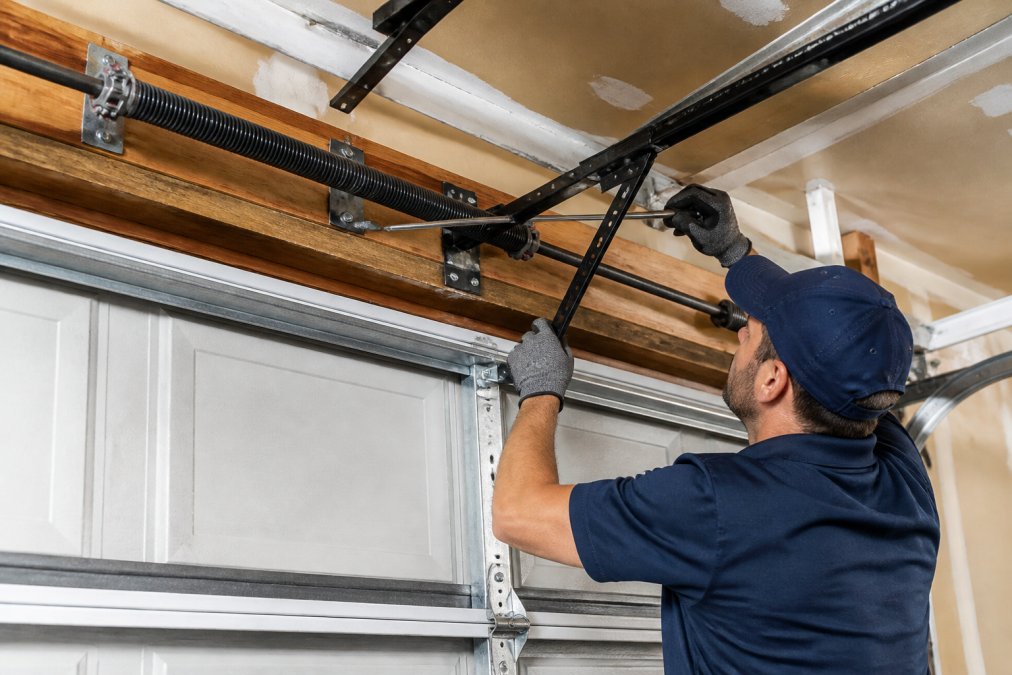
Spring replacement is the most common and most misunderstood garage door repair. Garage door spring repair involves either torsion springs (mounted horizontally above the door on a metal shaft) or extension springs (mounted along the horizontal tracks on each side). Torsion springs are the standard on most modern residential doors; extension springs are more common on older or lighter doors.
Pricing for spring replacement varies based on the spring type, the door's weight and size, and whether one or both springs need replacing. Many technicians recommend replacing both torsion springs at the same time even if only one has broken, because paired springs wear at the same rate and a second failure often follows within months. For current pricing, contact American Eagle Garage Doors LLC directly for a free estimate, we don't believe in quoting figures that may not reflect your specific door configuration.
What you should always verify before agreeing to any repair: whether the quote covers both parts and labor, what the warranty coverage includes, and whether the technician is licensed and insured.
| Spring Type | Typical Application | DIY Risk Level | Recommended Action |
|---|---|---|---|
| Torsion spring | Most modern residential doors | Extremely high | Always hire a certified technician |
| Extension spring | Older or lighter doors | High | Professional preferred; safety cables required |
| TorqueMaster (enclosed) | Wayne Dalton doors | Moderate | Manufacturer-specific tools needed |
DIY vs. Professional Garage Door Fix: A Safety Analysis
Here's the part most guides gloss over: garage door springs store an enormous amount of mechanical energy. A standard torsion spring on a two-car door can hold hundreds of foot-pounds of torque. When a spring breaks or is improperly handled during a garage door fix, that energy releases instantly and without warning.
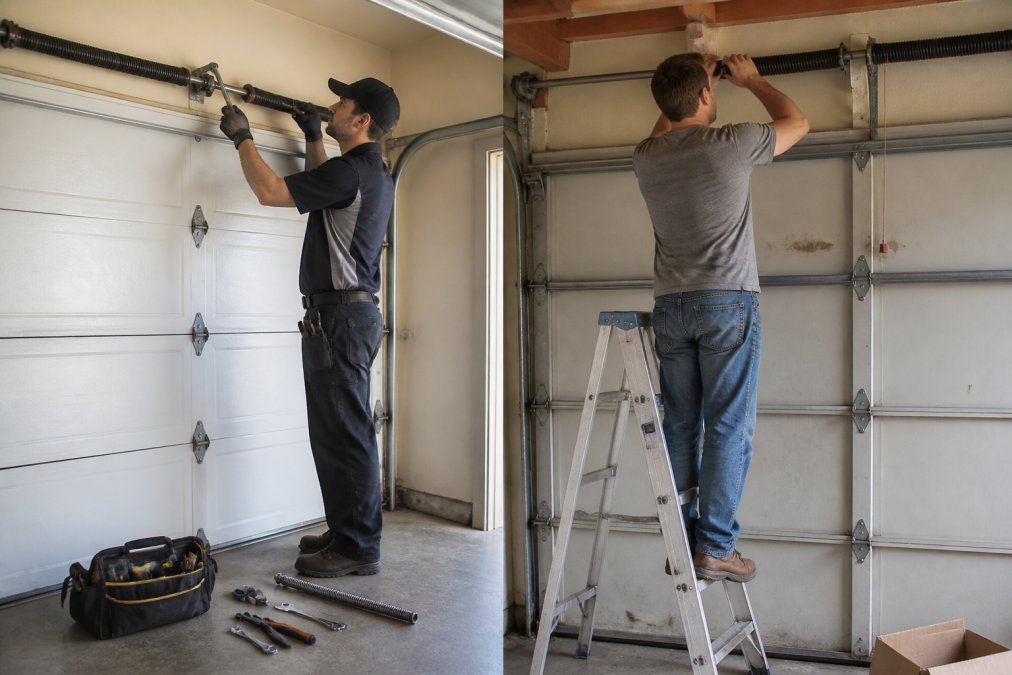
The Occupational Safety and Health Administration's guidelines on stored energy hazards categorizes torsion spring systems as stored-energy hazards requiring specific lockout/tagout procedures. This is not a category of repair where "watching a YouTube video" is adequate preparation.
What's reasonable for a homeowner to handle:
- Replacing remote batteries and reprogramming remotes
- Cleaning and lubricating rollers, hinges, and tracks
- Adjusting safety sensor alignment
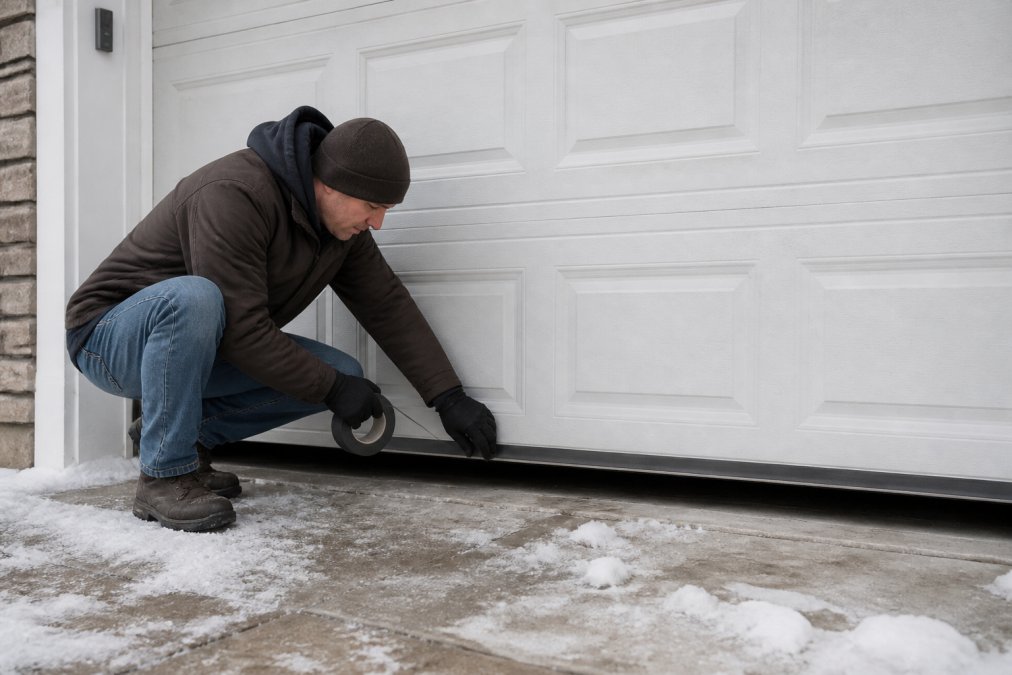
- Replacing weather stripping
- Tightening loose hinge bolts
What requires a certified technician:
- Torsion spring or extension spring replacement
- Cable replacement (cables are under tension even when springs are broken)
- Track replacement or major realignment
- Opener motor replacement
- Any repair on a commercial door
A common mistake is underestimating how quickly a cable replacement job escalates. The cables wrap around drums at the ends of the torsion spring shaft. Loosening those cables without first releasing spring tension correctly can cause the shaft to spin violently. This is a repair that genuinely requires professional training.
Garage Door Maintenance Checklist to Prevent Costly Repairs
Preventative maintenance is the most cost-effective thing a homeowner can do. Most major garage door failures, broken springs, worn cables, damaged rollers, are preceded by months of warning signs that routine inspection would catch.
Quarterly maintenance tasks:
- Visually inspect all rollers for cracks, chips, or flat spots
- Check all hinge hardware for loose or missing bolts
- Inspect cables for fraying, kinking, or uneven wear
- Test door balance: disconnect the opener, lift the door to waist height, and release. It should stay in place. If it drops or rises, the spring tension needs adjustment.
- Lubricate torsion spring coils, roller bearings, hinges, and track curves with a garage door-specific lubricant (not WD-40, which attracts dirt)
- Clean safety sensor lenses with a dry cloth
- Test the auto-reverse function by placing a 2x4 flat on the ground under the door, the door should reverse immediately on contact
Annual tasks:
- Inspect weather stripping along the bottom and sides for cracks or gaps
- Check track mounting brackets for looseness
- Test the wall console and all remotes
- Inspect torsion spring for visible wear or corrosion
- Schedule a professional safety inspection and tune-up
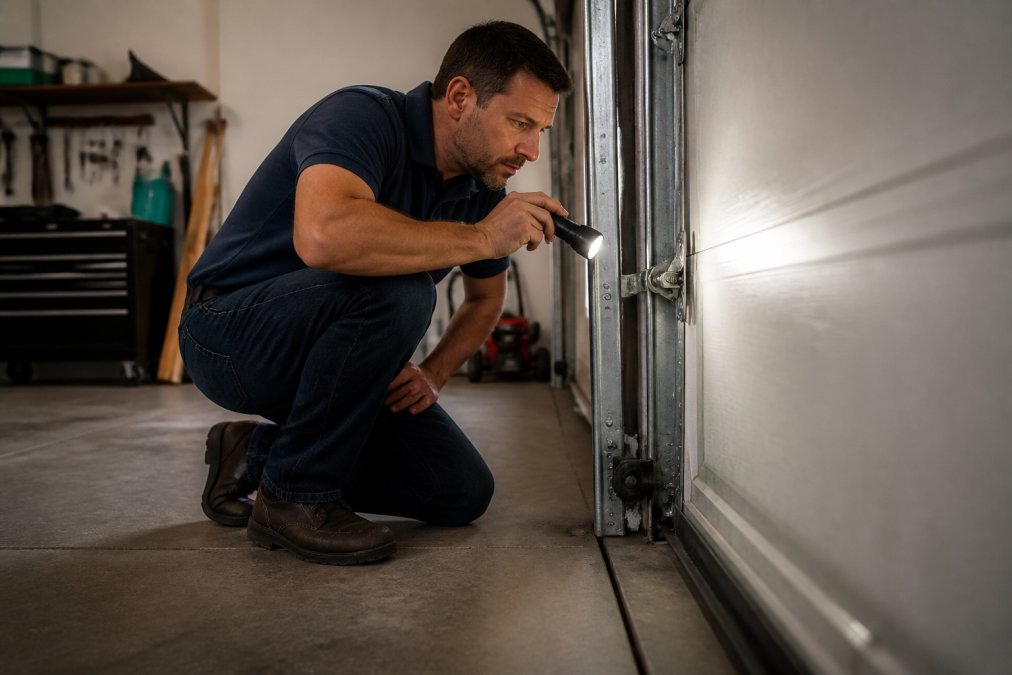
A professional tune-up typically covers door balance adjustment, hardware tightening, full lubrication, and a safety inspection, all in a single service call. Many homeowners find that annual maintenance prevents the kind of sudden failures that require emergency service.
Residential vs. Commercial Garage Door Fix: Key Differences
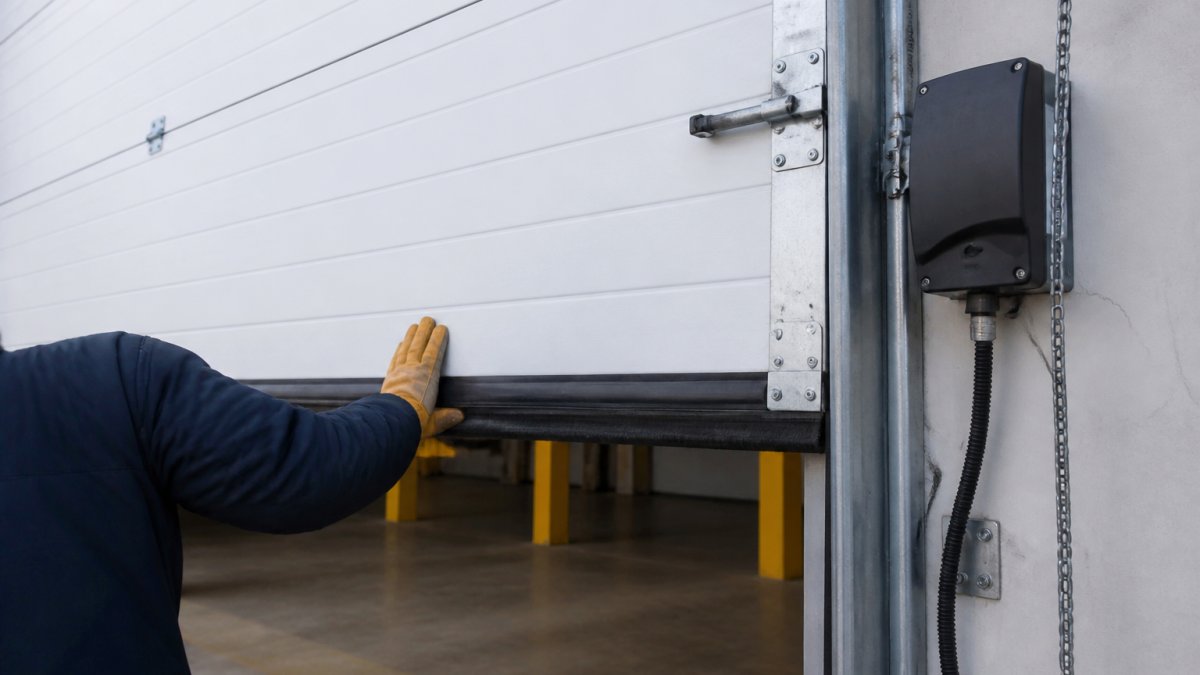
The mechanical principles are the same, but the scale, frequency of use, and regulatory requirements are not. Residential garage door typically cycle a few times per day; commercial doors at loading docks or warehouses may cycle dozens or hundreds of times daily. That difference in duty cycle changes everything about how repairs are approached.
Commercial doors use heavier-gauge torsion springs rated for high-cycle use, industrial-grade tracks and hardware, and openers with significantly more torque. A residential spring rated for 10,000 cycles will fail quickly on a commercial door. When a commercial garage door fix is needed, the replacement parts must match the door's cycle rating, not just its physical dimensions.
Commercial doors are also subject to fire code compliance requirements. Rolling steel fire doors, in particular, must meet NFPA 80 standards for fire door assemblies. Annual inspection and certification by a qualified technician is required for fire-rated doors. Property managers overseeing multiple commercial units should maintain inspection records for each door.
The diagnostic process for commercial doors also differs. Commercial openers often use three-phase power, have more complex control boards, and may integrate with building access systems. Troubleshooting these systems requires familiarity with industrial electrical systems, not just residential opener logic.
How to Choose a Certified Technician for Same-Day Service
Not all garage door companies are equal, and the difference matters most when you need same-day repair. Here's what to verify before you book.
Verify licensing and insurance. A licensed and insured technician protects you from liability if something goes wrong during the repair. Ask for proof, a reputable company will provide it without hesitation.
Ask about warranty coverage. Quality repairs come with a warranty on both parts and labor. Clarify the duration and what it covers before work begins.
Get a written estimate. A free estimate should be exactly that, free, written, and itemized. If a company charges for an estimate or won't provide one in writing, that's a red flag.
Check for same-day service availability. When your door is stuck and your car is inside, next-week availability isn't useful. Ask directly whether the company can dispatch a technician the same day or the following morning.
Sara Shriver, a customer in Evans, described her experience with American Eagle Garage Doors LLC this way: "Their prices for garage door repair were competitive, their customer service was professional and prompt, and the finished product was exceptional." That combination, competitive pricing, prompt response, and quality results, is the standard to hold any provider to.
American Eagle Garage Doors LLC offers free estimates, handles both residential and commercial garage doors, and provides prompt service for urgent repairs. For older openers, including units from 2005 or earlier, our technicians assess whether repair or replacement is the better long-term value, and we'll give you an honest answer either way.
Frequently Asked Questions
Q: What is the most common garage door repair?
A: Broken torsion or extension springs are the most frequent garage door repair. Springs bear the full weight of the door every time it moves, so they wear out faster than any other component. A door that feels extremely heavy when lifted manually, or one that stops mid-travel, almost always points to a failed spring. Because springs are under high tension, this repair requires a certified technician with the proper tools and training.
Q: Is it safe to replace garage door springs yourself?
A: Replacing garage door springs yourself carries serious injury risk. Torsion springs store a large amount of mechanical energy and can snap with enough force to cause severe lacerations or broken bones if released improperly. Extension springs require equal caution. Professional technicians use winding bars, safety cables, and years of hands-on experience to handle springs safely. For most homeowners, the risk far outweighs any potential savings on the service call.
Q: How do I know if my garage door needs professional repair?
A: Call a professional when the door is off track, a spring is visibly broken or separated, cables are frayed or hanging loose, or the opener motor runs but the door does not move. Grinding noises, a door that reverses immediately after closing, or flashing safety sensor lights also indicate issues beyond basic troubleshooting. Attempting to force a door that is mechanically compromised can cause further damage to the panels, opener, and surrounding hardware.
Q: Can I get same-day garage door repair if my car is stuck inside?
A: Many licensed and insured garage door companies offer same-day or emergency service for situations where a door is stuck and blocking a vehicle. When you call, describe the problem clearly, broken spring, door off track, opener failure, so the technician arrives with the correct parts. American Eagle Garage Doors LLC offers prompt service for exactly these situations. Contact them directly to confirm current availability and receive a free estimate before any work begins.
A stuck or broken garage door is a real disruption, and the wrong repair decision can turn a minor fix into a major expense. American Eagle Garage Doors LLC provides expert repair and installation services for residential and commercial garage doors, with specializations in spring replacements, opener repairs, and full safety inspections. Contact us today for a free estimate and experience service that's prompt, professional, and backed by a commitment to lasting results.
This article was written using GrandRanker