 listicle
7 Ways to Fix a Noisy Garage Door (2026 Guide)
Table of Contents
- Why Your Noisy Garage Door Needs Attention Now
- 1. Inspect All Moving Parts for Wear
- 2. Tighten Loose Hardware, Nuts, and Bolts
- 3. Clean and Clear the Tracks
- 4. Lubricate Rollers, Hinges, and Springs
- 5. Check Chain or Belt Tension
- 6. Replace Worn-Out Rollers for Quieter Operation
- 7. Diagnose the Source of the Noise
- Frequently Asked Questions
Last Updated: September 9, 2026
A noisy garage door isn't just an annoyance; it's your door telling you something is wearing out. That grinding, rattling, or screeching sound is typically the result of metal-on-metal friction and loose components that, left unchecked, can lead to costly repairs or a full failure. The good news is that most noise problems are fixable with basic tools and a little know-how. In this guide from American Eagle Garage Doors LLC, we break down the seven most effective ways to fix a noisy garage door, helping you restore quiet, reliable operation and extend the life of your system.
The seven methods we cover range from simple cleaning to component replacement. We'll show you exactly how to inspect, tighten, lubricate, and replace the parts that cause the most racket. We'll also cover when a DIY fix is appropriate and when you should call a professional, because some repairs carry real safety risks.
Why Your Noisy Garage Door Needs Attention Now
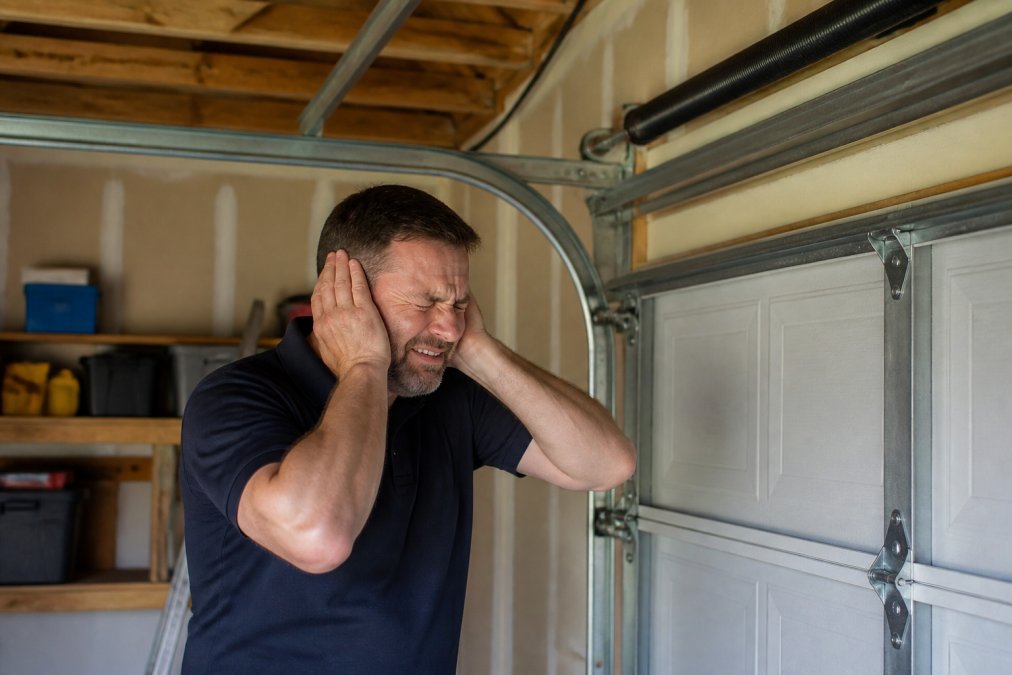
A noisy garage door is a warning sign, not a cosmetic issue. Every squeak or grind indicates friction or looseness in a system designed to move with precision. Ignoring these sounds accelerates wear on the opener, springs, and panels, often turning a minor fix into a major expense.
The most common culprits behind a noisy garage door are loose hardware, dry rollers, and dirty tracks. Vibration from daily operation gradually loosens nuts and bolts, while lack of lubrication causes rollers and hinges to grind. Addressing these issues promptly prevents damage to the door's balance and your opener's drive mechanism.
1. Inspect All Moving Parts for Wear
Start your noisy garage door fix with a visual inspection of every moving component. Look at the rollers, hinges, springs, cables, and the opener's carriage assembly. You are checking for signs of wear, rust, or visible damage that would explain the noise.
Pay close attention to the condition of your rollers. Steel rollers with flat spots, chips, or heavy rust will create a rhythmic thumping or grinding as they pass through the track. Similarly, check the hinge pins for wear; worn hinge pins allow the door panels to shift, causing rattling and misalignment. If you spot any component that looks damaged, replacement is the only reliable fix.
2. Tighten Loose Hardware, Nuts, and Bolts
Vibration is the enemy of a quiet garage door. Over time, the constant motion of the door loosens the fasteners on the brackets, hinges, and track. Loose hardware causes a distinct rattling sound, especially when the door is moving.
Using a socket wrench, carefully tighten every nut and bolt you can see on the door's hardware. Be cautious with the bolts on the torsion spring bracket; these are under extreme tension. If you are not comfortable working near the springs, tighten only the components on the door panels and the track, and leave the spring hardware to a professional.
3. Clean and Clear the Tracks
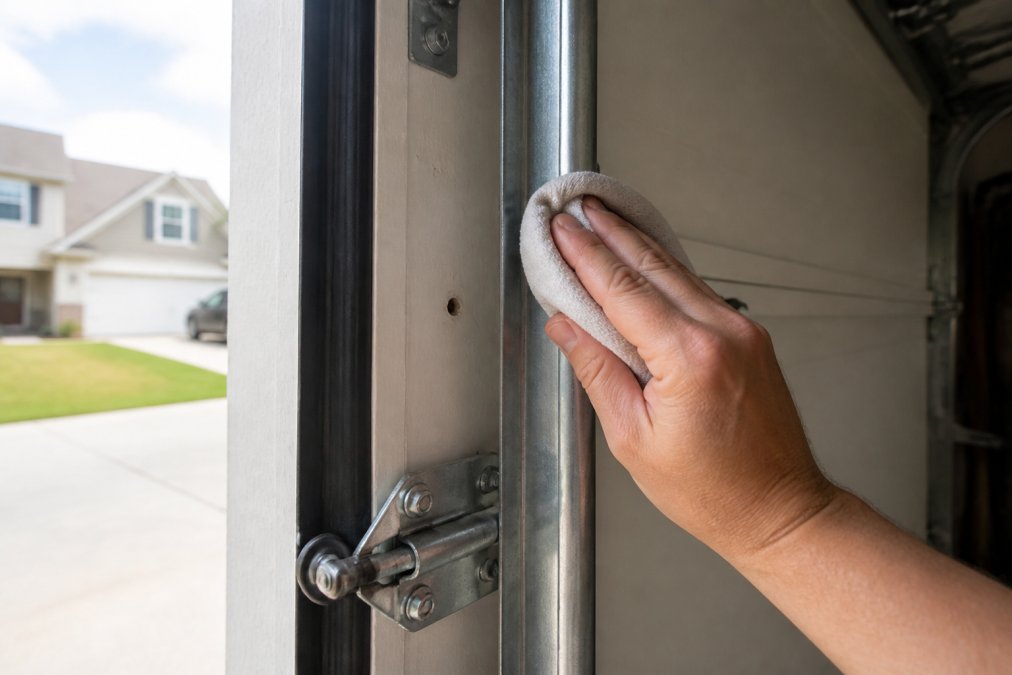
Dirty tracks are a leading cause of a noisy garage door. Built-up grease, dirt, and debris create resistance and cause the rollers to chatter as they move. Cleaning the tracks is a simple, high-impact step in your noisy garage door maintenance routine.
Use a damp cloth to wipe out the inside of the tracks on both sides of the door. For stubborn grime, use a degreaser and a stiff brush. Do not use a lubricant on the tracks; this attracts more dirt and can cause the rollers to slide rather than roll, which is counterproductive.
4. Lubricate Rollers, Hinges, and Springs
Proper lubrication is the single most effective way to quiet a noisy garage door. The goal is to reduce friction on all moving metal parts. For residential use, a silicone-based lubricant or white lithium grease is the best choice for most components (familyhandyman.com).
Apply the lubricant sparingly to the roller bearings, hinge pins, and the torsion spring. For the springs, a light coat of lubricant prevents the metal coils from grinding against each other. Avoid using WD-40 as a lubricant; it is a solvent and will wash away existing grease, leaving the door drier than before.
5. Check Chain or Belt Tension
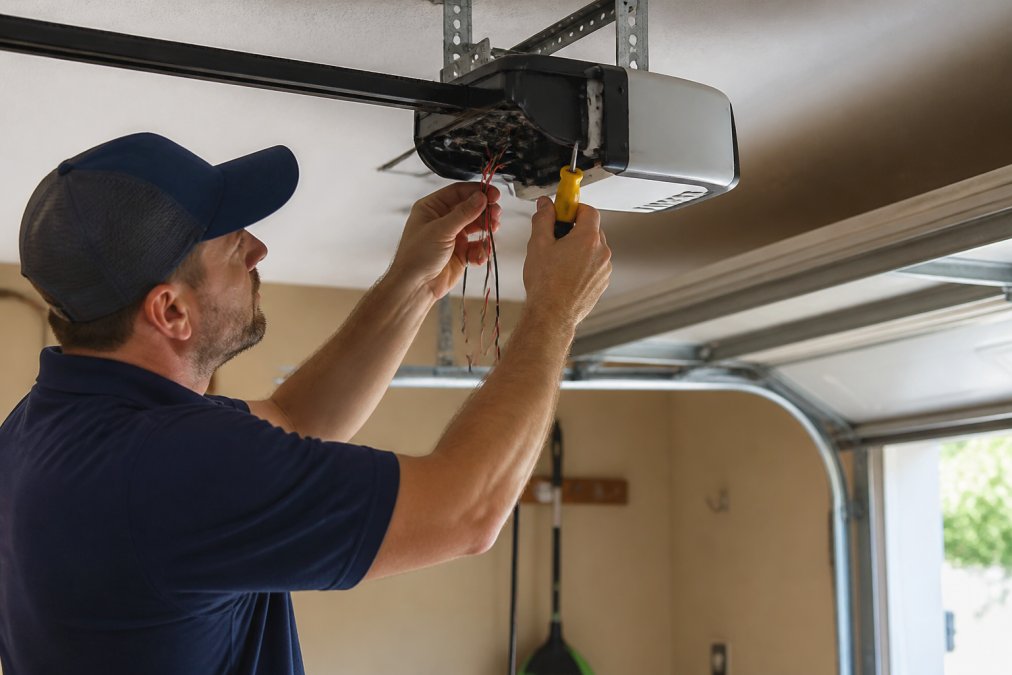
The opener's drive mechanism is a frequent source of noise, but the fix depends entirely on which type of system you have. A loose chain slapping against the rail creates a distinct, rhythmic clatter, while a loose belt produces a duller flapping sound. However, the problem isn't always slack. Over-tightened systems cause a high-pitched whine from the motor and put undue stress on the entire drivetrain.
Diagnose the sound first. Stand near the opener housing while a helper cycles the door. If the noise is a metallic clatter, it's almost certainly the chain. If it's a low-frequency thump, suspect the belt or the carriage assembly. A persistent hum with no movement could indicate a gear or sprocket issue inside the motor housing, which is not a DIY fix.
For chain-drive openers: The chain should have approximately 1/2 inch of slack when you press down on the middle of the lower run (chamberlain.com). Locate the adjustment nut on the threaded rod at the end of the rail. Turn it clockwise to tighten, counter-clockwise to loosen. After adjusting, run the door a full cycle and listen. The chain should be taut enough to not slap but loose enough to have a slight give. A common mistake is over-tightening to eliminate all noise, which will instead create a whining sound and shorten the life of the motor's sprocket.
For belt-drive openers: Belt tension is often managed by a spring-loaded tensioner or an adjustable bolt on the motor unit itself. Consult your specific owner's manual, as the mechanism varies by brand (e.g., Chamberlain, LiftMaster, Genie). The belt should not have more than 1/4 inch of give (liftmaster.com). A worn or cracked belt will often make a clicking sound as it passes over the sprocket; if you see fraying or cracks, replacement is the only fix.
A critical check: If your opener uses a DC motor with a soft-start/soft-stop feature, a sudden, loud bang when the door stops is often a sign of a worn-out carriage stop collar or a failing drive gear inside the motor, not a tension issue. Replacing the gear kit is a common repair for older chain drives.
6. Replace Worn-Out Rollers for Quieter Operation
If you have cleaned and lubricated the rollers but still hear grinding, the rollers are likely worn out. Replacing standard steel rollers with nylon rollers is one of the best upgrades you can make for a noisy garage door. Nylon rollers are inherently quieter because they do not create the same metal-on-metal friction against the steel track.
This is a more involved repair. The bottom rollers are under tension from the cables and should only be replaced by a professional. The top and middle rollers are safer to swap out, but you must ensure the door is fully secured before removing any hardware. The reduction in noise and vibration is immediate and dramatic.
| Roller Type | Noise Level | Durability | Best For |
|---|---|---|---|
| Steel Ball-Bearing | Moderate | High | Heavy doors, high traffic |
| Nylon Ball-Bearing | Low | Medium | Residential, noise reduction |
| Standard Steel | High | Low | Budget replacement |
7. Diagnose the Source of the Noise
Not all noises are the same, and learning to translate the specific sound into a likely culprit is the fastest way to a quiet door. Instead of guessing, use this sound-based diagnostic chart to narrow down the problem before you pick up a wrench. This is the unique angle most guides miss: treating the noise as a symptom, not just a nuisance.
Squeaking or Screeching (High-Pitched): This is almost always metal-on-metal friction. The most common source is the steel rollers moving against the track without lubrication. If you've recently lubricated and the squeak persists, check the torsion spring for rust. A dry, rusty spring will emit a high-pitched squeal as it twists. Apply a thin coat of silicone lubricant to the spring coils and re-test.
Grinding or Thumping (Rhythmic and Low-Pitched): A rhythmic thump that gets faster as the door moves usually indicates a flat spot on a roller or a damaged bearing. As the roller rotates, the flat spot hits the track. If the thump is slow and occurs only at specific points, it could be a bent track section or a loose hinge pin causing the panel to catch. Inspect the rollers on the bottom bracket first, as they bear the most weight.
Popping or Banging (Loud and Sudden): This is the most serious sound. A loud bang or pop when the door starts or stops moving often indicates a sudden release of tension. This could be a failing torsion spring, a snapped cable, or a broken pulley. Do not operate the door. This is a safety-critical failure that requires professional service.
Rattling or Clattering (Random and Fast): This is typically caused by loose hardware, nuts, bolts, and screws vibrating against the door panels. It can also be the drive chain slapping against the rail. Tighten all visible hardware with a socket wrench, and check the chain tension as described in the previous section.
A Unique Diagnostic Tool: The 'Hand on the Panel' Test. To isolate the source of a vibration, place your hand flat on different sections of the door while a helper runs it. If you feel the vibration strongest at the bottom panel, the issue is likely the bottom roller or cable. If it's at the top, suspect the spring or top bracket. This physical feedback helps you skip unnecessary lubrication and go straight to the problem part.
Frequently Asked Questions
Why is my garage door so noisy when it opens and closes?
Noise usually comes from metal-on-metal friction in moving parts. Common culprits include dry rollers, loose hardware, worn hinges, or a misaligned track. If you hear grinding, it may be a lack of lubrication on the torsion springs. A loud bang or snap indicates a broken spring, which requires immediate professional attention. Start by inspecting and lubricating the rollers and hinges, then tighten any loose bolts.
Can I spray WD-40 on my garage door rollers?
Standard WD-40 is a solvent, not a true lubricant. It will wash away existing grease and leave parts dry, making noise worse. Use a silicone-based lubricant or lithium grease designed for garage doors. Apply it to the rollers, hinges, and bearing plates. Avoid getting lubricant on the tracks, as this can cause the door to slip and affect the safety sensors.
My garage door is still squeaking even after lubrication. What should I do?
If squeaking persists after lubrication, the rollers are likely worn out. Steel rollers with dry bearings create constant friction. Replace them with nylon rollers, which run quieter and require less maintenance. Also check the hinge pins for wear. If the noise continues, the issue may be with the garage door opener's drive chain or belt, which may need tension adjustment.
How often should I lubricate my garage door to prevent noise?
Lubricate your garage door twice a year, ideally in spring and fall. This routine prevents wear and keeps operation quiet. If you use your door daily, consider a quarterly schedule. Always clean the tracks and moving parts before applying fresh lubricant. A regular maintenance schedule is the best way to avoid costly repairs and extend the life of your door system.