 how-to
Signs Garage Door Spring Needs Replacement: 6 Warnings
Table of Contents
- How to Know If You Have a Broken Garage Door Spring
- Sign 1: Loud Bang or Popping Sound
- Sign 2: The Door Won't Open or Feels Heavy
- Sign 3: The Door Opens Crooked or Jerks
- Sign 4: Visible Gaps or Coil Separation
- Sign 5: The Door Slams Shut or Won't Stay Open
- Average Lifespan of Garage Door Springs and Replacement Cost
- Garage Door Spring Repair Safety: Why You Shouldn't DIY
- The Mechanics of Spring Tension: Why It's Not Like Other Home Repairs
- The Professional Tool Kit: What You Don't Have
- Personal Protective Equipment (PPE) for Professional-Level Inspection
- Why Professional Training Matters: The Geometry of the System
- The Hidden Costs of DIY: What You Risk Beyond Injury
- What a Professional Service Call Actually Includes
- Frequently Asked Questions
Last Updated: September 6, 2026
How to Know If You Have a Broken Garage Door Spring
A garage door spring failure is a stressful home emergency that usually happens without warning and leaves your vehicle trapped. The signs garage door spring needs replacement are often obvious once you know what to look for, yet many homeowners dismiss early warnings until the system fails completely.
The garage door spring is the counterbalance system that lifts roughly 60 to 70 percent of the door's total weight. When a torsion spring snaps, that tension disappears instantly, and your garage door opener suddenly strains to lift a load it was never designed to handle.
Below, we'll walk through six specific warnings that signal spring trouble, explain how long springs typically last, and cover what replacement involves. But first, here's what most guides get wrong: they treat a loud bang as the only real symptom. In practice, quieter signs like a door that feels heavy or opens crookedly often appear days or weeks before the spring finally breaks.
Sign 1: Loud Bang or Popping Sound
A loud bang from the garage sounds like a firecracker or a heavy metal object dropping onto concrete. This is the sound of a torsion spring snapping under metal fatigue, and it's the most unmistakable sign that a spring has failed completely.
The noise occurs because the spring is wound under extreme tension. When the metal fractures, that stored energy releases instantly. You might also hear a rattling or scraping sound afterward as the broken pieces drag against the torsion shaft.
If you hear this sound, stop using the door immediately. A broken spring leaves the door unbalanced, and operating it risks damaging the opener, cables, and tracks. This is the one scenario where signs garage door spring needs replacement are not a matter of debate: the spring is broken and must be replaced before the door is safe to use again.
Sign 2: The Door Won't Open or Feels Heavy
When a spring loses tension gradually rather than snapping all at once, the door becomes progressively harder to lift. You might notice that the door opens only a few inches before stalling, or that it feels like it weighs twice as much as it should.
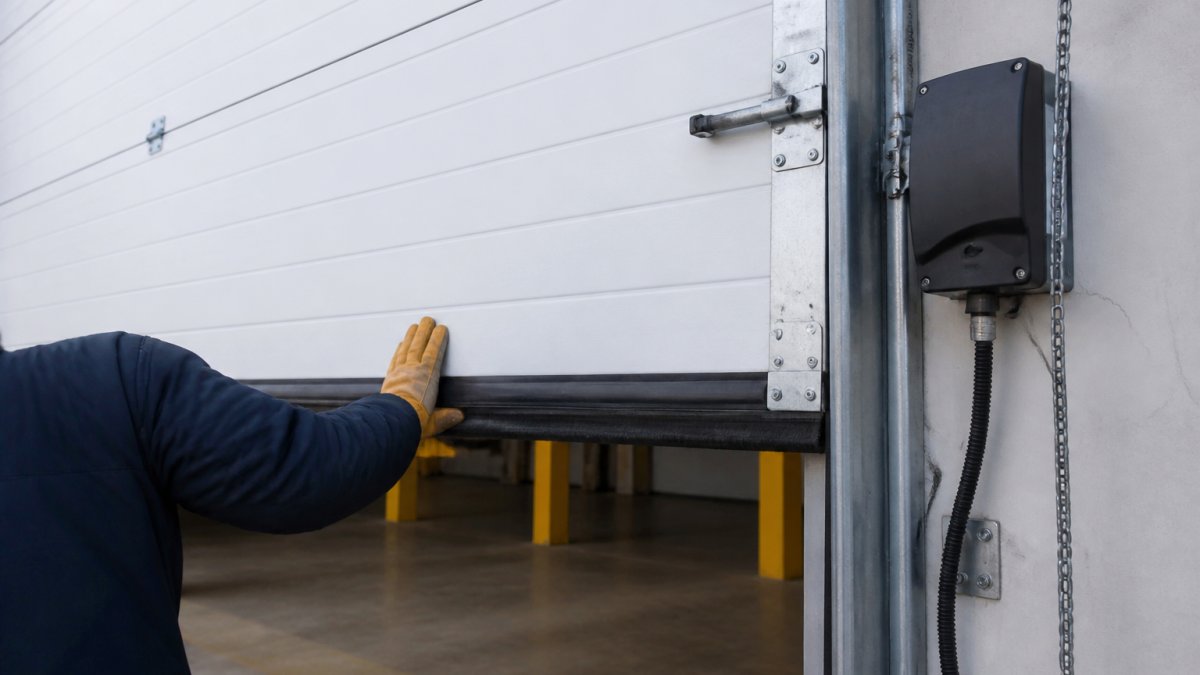
Pull the emergency release cord to disconnect the opener, then attempt to lift the door by hand. A properly counterbalanced door should lift with minimal effort, roughly 10 to 15 pounds of force. If the door feels heavy, won't budge, or slams down when you try to lower it, the spring is no longer providing adequate counterbalance. Performing this test every few months helps you catch spring wear before a complete failure leaves you stranded.
Sign 3: The Door Opens Crooked or Jerks
A door that travels unevenly, with one side moving faster than the other, points to an imbalance in the spring system. You might see the door tilt at an angle, catch on the track, or move with a jerking motion as it travels.
Uneven movement happens when one spring has failed while the other still holds tension, or when a single spring has lost tension unevenly along its length. The door's structural integrity depends on both sides lifting in unison; when they don't, uneven stress can bend tracks and damage rollers.
Door alignment issues rarely fix themselves. Continuing to operate a crooked door accelerates wear on every other component. If you notice the door opening lopsided, schedule an inspection rather than waiting for the spring to fail outright.
Sign 4: Visible Gaps or Coil Separation
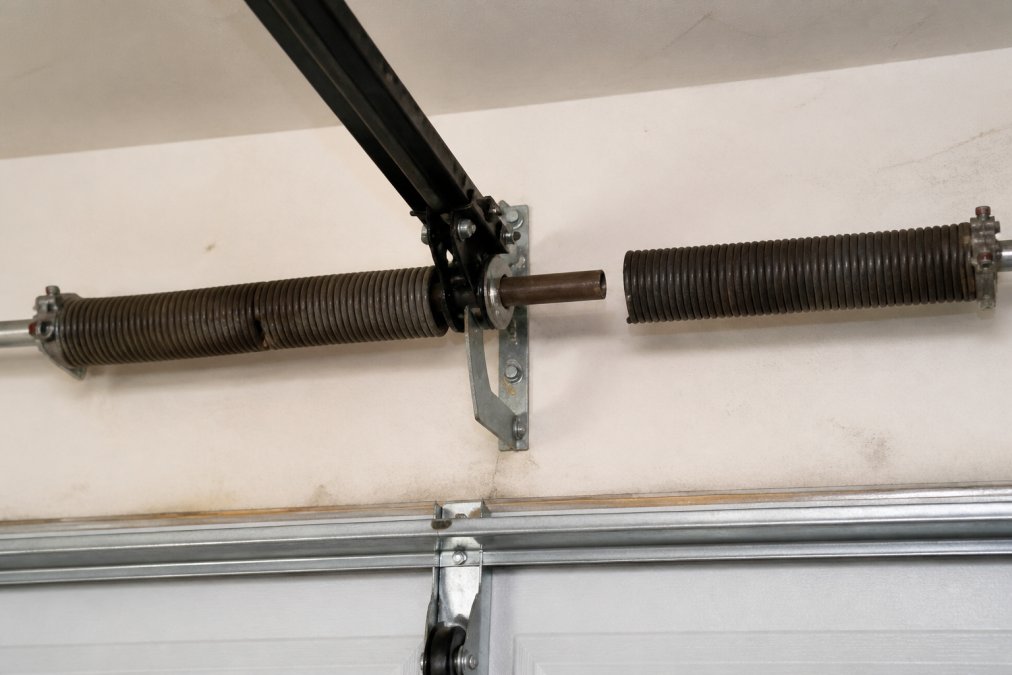
A visual inspection can reveal spring damage before the door fails. Look at the torsion spring mounted horizontally above the door opening. A healthy spring has tightly wound coils with no visible spacing between them.
When the spring breaks, you'll see a visible gap where the coil has separated, often with a jagged edge at the fracture point. Extension springs, mounted vertically along the tracks on either side, may show similar separation or appear stretched out and sagging.
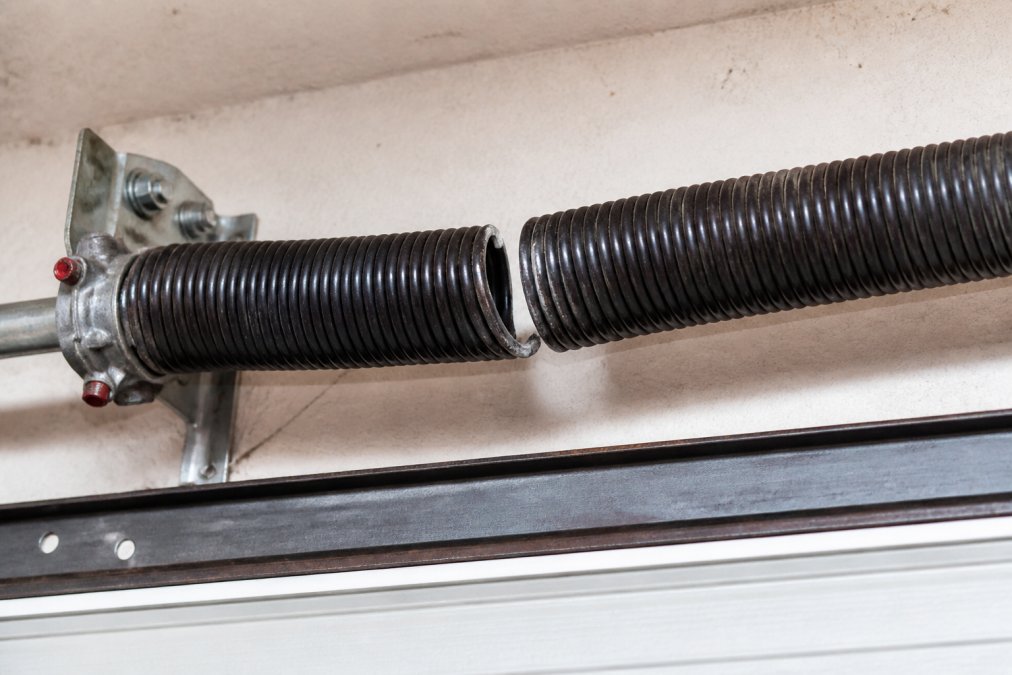
Inspect the springs monthly using a flashlight. Never touch the spring while it's under tension. If you see coil separation, gaps, or rust that has pitted the metal surface, the spring is compromised. The signs garage door spring needs replacement are visible here without any testing.
Sign 5: The Door Slams Shut or Won't Stay Open
A properly balanced door stays put when you stop it at any point along its travel. If your door crashes down when you release it halfway, or if it won't stay open when you raise it manually, the spring has lost its ability to hold the door's weight.
This symptom is both a safety hazard and a sign of advanced spring wear. A door that slams shut can injure people, damage vehicles, and stress the garage door opener that's fighting against the imbalance.
Test the balance once a month. Disconnect the opener with the emergency release cord, lift the door to the halfway point, and let go. The door should hold its position. If it falls, the spring needs attention. This test also protects your opener, since a balanced door dramatically reduces strain on the motor and drive mechanism.
Average Lifespan of Garage Door Springs and Replacement Cost
Garage door springs are rated by cycle count, where one cycle equals one full open and close. Standard torsion springs are typically rated for 10,000 cycles, which translates to roughly 7 to 10 years for an average household using the door four times per day. Homes with heavier doors or more frequent use will see shorter lifespans.
Understanding Spring Cycle Ratings
The cycle rating is printed on the spring's winding cone or can be measured by a technician. A 10,000-cycle spring will last about 7 years at 4 cycles per day, but only 3.4 years at 8 cycles per day. High-traffic households often exceed 10 cycles per day, cutting lifespan to under 3 years. Look for a color-coded paint dot on the winding cone, red indicates high torque, while white or yellow indicates lower torque. Matching the replacement spring's rating to your door's exact weight is critical; an undersized spring will fail prematurely, and an oversized one can make the door dangerous to operate.
The Cost-Benefit Analysis: Repair vs. Replace
A common question is whether to replace just the springs or the entire door system. Here is a practical framework to guide that decision:
| Scenario | Recommended Action | Rationale |
|---|---|---|
| Springs are the only failed component; door is under 15 years old | Replace both springs | Springs are a wear item; replacing both ensures balanced operation and avoids a second failure within months |
| Door is over 20 years old; panels are dented, rusted, or have failing insulation | Replace the full door | The cost of new springs plus labor on an aging door often approaches 50% of a new door's cost; a new door includes new springs, tracks, and hardware with a warranty |
| Door is over 15 years old but in good structural condition | Replace both springs and have a full hardware inspection | Cables, drums, and rollers wear alongside springs; replacing them proactively prevents a cascade of failures |
| Opener is over 10 years old and has been straining | Replace springs and evaluate the opener | A strained opener may have internal gear damage; a professional can test the opener's force settings to determine if it needs replacement |
Industry guidance from the International Door Association's spring maintenance resources recommends replacing both torsion springs at the same time, even if only one has failed, because the other is typically near the end of its service life. The cost difference between replacing one spring and replacing both is usually only the price of the second spring itself, labor is nearly identical since the technician must disassemble the same components.
Factors That Accelerate Spring Wear
Several factors accelerate spring wear beyond cycle count:
- Seasonal temperature swings cause metal to expand and contract, contributing to metal fatigue. Springs fail most often in extreme cold or heat.
- Infrequent lubrication allows friction to wear down the coils. A dry spring rubs against itself on every cycle, generating heat and micro-fractures.
- Doors that are heavier than the spring rating place constant extra stress. This happens when homeowners add insulation or heavier glass panels without upgrading the springs.
- Poor door balance forces the spring to work harder on every cycle. If the tracks are misaligned or rollers are worn, the spring must compensate for the added resistance.
- Rust and corrosion from coastal humidity or road salt can pit the metal surface, creating stress concentration points where fractures begin.
The Real Cost of Delaying Replacement
A common pattern is that homeowners delay spring replacement to save money, only to face a much larger bill later. A broken spring forces the opener to lift the full door weight, roughly 150 to 250 pounds for a standard double-car door. This strains the opener's gears and motor, often leading to opener failure within weeks. Replacing an opener costs significantly more than replacing springs. Additionally, a door that slams shut due to spring failure can damage vehicles, injure pets or children, and bend tracks that then require separate repair. The most economical approach is to replace springs at the first sign of wear, not after the system has sustained secondary damage.
Professional installation is strongly recommended for spring replacement. The high-tension nature of these components means that spring calibration requires specialized tools and training. A professional will also inspect the cables, drums, and rollers while the door is disassembled, catching secondary wear before it becomes another failure. When you receive a quote, ask whether it includes both springs, a full hardware inspection, and a balance test, these are the markers of a thorough replacement service.
Garage Door Spring Repair Safety: Why You Shouldn't DIY
Garage door spring repair safety is not a suggestion, it's a matter of preventing serious injury. Torsion springs are wound so tightly that they can deliver a force exceeding several hundred pounds. A spring that slips during DIY repair can act like a projectile, and the cables under tension can lash out with enough force to cause severe wounds.
The Mechanics of Spring Tension: Why It's Not Like Other Home Repairs
A torsion spring is wound around a steel shaft and held in place by cable drums at both ends. When the door closes, the spring winds tighter, storing energy. When the door opens, that energy releases to lift the door. A standard 10,000-cycle torsion spring for a 16-foot door is wound to approximately 30 to 40 full turns. If the spring fractures or slips during handling, that energy releases in a fraction of a second, there is no gradual decompression. The spring can whip around the shaft, strike a person in the head or torso, or snap a cable that then acts like a high-speed cutting wire.
The Professional Tool Kit: What You Don't Have
Professional technicians use specialized tools that are not available at typical hardware stores. These include:
- Winding bars, Solid steel rods, typically 18 to 24 inches long and 1/2 inch in diameter, inserted into the winding cone to tension or release the spring. Improvised tools like screwdrivers or pry bars can slip out of the cone, causing sudden, uncontrolled release.
- Spring tension gauges, Instruments that measure the exact torque on the spring to ensure it matches the door's weight.
- Cable winding drums, Precision-machined components that must be matched to the cable diameter and door height. Using the wrong drum can cause the cable to slip or bind.
- Safety cables, Installed through the center of extension springs to prevent them from becoming projectiles if they snap.
- Clamping tools, Used to secure the door in place while working, preventing it from falling unexpectedly.
Personal Protective Equipment (PPE) for Professional-Level Inspection
Even for inspection, not repair, the U.S. Consumer Product Safety Commission's garage door safety guidelines recommends specific protective gear. A professional technician performing spring work wears:
- ANSI Z87.1-rated safety glasses with side shields to protect against metal fragments if a spring fractures
- Heavy-duty work gloves with cut-resistant lining to protect hands from sharp spring ends and cable barbs
- Steel-toe boots to protect feet if a spring or door component drops
- A hard hat when working under a torsion spring mounted overhead
A homeowner performing a visual inspection should at minimum wear safety glasses and keep their hands clear of the spring. Never lean over the spring or place your face directly above it while inspecting. Use a flashlight to examine the coils from a safe distance.
Why Professional Training Matters: The Geometry of the System
The counterbalance system is not just a spring, it is a precisely engineered assembly of springs, cables, drums, and track components that must work in harmony. A technician learns to measure the spring's inside diameter, wire gauge, and length to determine the correct replacement. They also understand wind direction, torsion springs come in left-wind and right-wind configurations, and installing the wrong one will cause the door to bind or the spring to unwind dangerously. The Door & Access Systems Manufacturers Association's technical resources publishes detailed specifications for spring selection and installation that professionals study and apply on every job.
The Hidden Costs of DIY: What You Risk Beyond Injury
Beyond the immediate physical danger, a DIY spring repair that goes wrong can cause thousands of dollars in collateral damage. A spring that unwinds unexpectedly can:
- Bend the torsion shaft, requiring replacement of the entire shaft assembly
- Snap a cable, which can then whip and damage the door panels, tracks, or nearby vehicles
- Pull the door off its tracks, causing the door to fall and potentially injure anyone underneath
- Damage the garage door opener, which may have already been strained by operating with a failing spring
A professional will also inspect the cables, drums, and rollers while the door is disassembled, catching secondary wear before it becomes another failure. This full-system inspection is part of the service, it is not an upsell, it is the standard of care that prevents repeat breakdowns.
What a Professional Service Call Actually Includes
When you hire a professional, you're paying for more than the spring itself. The service includes:
- Accurate measurement of spring gauge, length, and wind direction
- Proper winding and spring calibration to match your door's exact weight
- Inspection of cables, drums, rollers, and track alignment
- Testing of the door balance and opener force settings
- Replacement of both springs when only one has failed, to prevent a second failure within months
American Eagle Garage Doors LLC provides expert spring replacement for both residential and commercial doors in Greeley and Evans. We offer free estimates and competitive pricing, and we pride ourselves on delivering professional, prompt service and exceptional customer care.
The cost of professional replacement is modest compared to the alternative. A DIY mistake can damage the door, the opener, or worse, cause an injury that results in thousands of dollars in medical bills. When the signs garage door spring needs replacement appear, the smartest move is to call a professional who can restore your door to safe, reliable operation.
Frequently Asked Questions
How much does it usually cost to replace a spring on a garage door?
Garage door spring replacement cost varies based on the type of spring, the door size, and your location. Torsion springs typically cost more than extension springs due to the higher tension and installation complexity. On average, homeowners spend a few hundred dollars for parts and labor. For an exact quote, contact American Eagle Garage Doors LLC for a free estimate.
What's the average lifespan of a garage door spring?
The average lifespan of garage door springs is typically 7 to 10 years, but it depends on usage. Springs are rated by cycles, where one cycle is a full open and close. A spring rated for 10,000 cycles will last about 7 years if you open and close the door 4 times per day. Frequent use, poor maintenance, and extreme temperatures can shorten this lifespan.
Can I open a garage door with a broken spring?
You should never attempt to open a garage door with a broken spring. The door becomes extremely heavy and could fall unexpectedly, causing injury or damage. In many cases, the door will not open at all. If it does, the opener motor will strain and may burn out. Disconnect the opener and call a professional garage door spring repair service.
How do I know if I have torsion or extension springs?
Torsion springs are mounted horizontally above the door opening on a metal bar, while extension springs run parallel to the horizontal tracks on both sides of the door. Most modern residential garage doors use torsion springs, but older models may have extension springs. Identifying the type is important for replacement, so check the springs or ask a technician during an inspection.