 comparison
Are Vinyl Garage Doors Worth It in Cold Weather?
Table of Contents
- How Cold Weather Affects Vinyl Garage Door Performance
- Vinyl vs Steel Garage Door Pros and Cons in Freezing Climates
- Garage Door Insulation R-Value Explained and Why It Matters
- Material Degradation: When Vinyl Becomes Brittle
- Energy Efficiency and Heat Loss Through Your Garage Door
- Cost of Installing New Garage Doors and Long-Term Value
- Is Vinyl Worth It? A Cold-Weather Decision Framework
- Frequently Asked Questions
Last Updated: October 1, 2026
How Cold Weather Affects Vinyl Garage Door Performance
Vinyl garage doors face unique challenges when temperatures drop below freezing. The material becomes less pliable as cold weather sets in, which changes how the door moves and seals. Understanding this behavior is essential when asking whether are vinyl garage doors worth it in cold weather.
Freezing temperatures make vinyl rigid and brittle, affecting door operation and seal contact. The material contracts in cold and expands in heat, creating stress at connection points and hinges.
While vinyl regains flexibility when temperatures rise, repeated freeze-thaw cycles accelerate wear. The garage door opener must work harder to lift a door with increased friction, and springs experience additional strain.
The key is understanding what to expect and planning accordingly.
Vinyl vs Steel Garage Door Pros and Cons in Freezing Climates
Vinyl and steel garage doors each have distinct advantages and limitations in cold weather, depending on your regional climate and installation quality.
Vinyl Garage Doors in Cold Weather:
Pros:
- Better insulation properties than uninsulated steel (R-value 2-6 vs. R-value 0)
- Lighter material reduces strain on the garage door opener and springs
- Won't rust or corrode from salt exposure or road de-icing chemicals
- Quieter operation than steel doors due to dampening properties
- Maintains seal contact better than steel in moderate cold (above 0°F)
Cons:
- Material becomes brittle in extreme cold (below 0°F), increasing crack risk
- Bottom seal loses pliability and may crack or separate from the frame
- Thermal bridging still occurs at aluminum frame and hinge points, reducing effective R-value by 15-25%
- More expensive than basic uninsulated steel
- Freeze-thaw cycles in variable climates accelerate seal degradation
Steel Garage Doors in Cold Weather:
Pros:
- Superior structural strength and rigidity across all temperature ranges
- Maintains panel integrity even in extreme cold (below -20°F)
- Lower initial cost for uninsulated models
- Easier to repair individual panels if damage occurs
- No brittleness issues regardless of temperature
Cons:
- Conducts cold rapidly without heavy insulation (uninsulated steel loses 2-3 times more heat than insulated vinyl)
- Prone to rust and corrosion in salt-heavy environments (coastal regions, snow-belt states using road salt)
- Heavier doors require more powerful openers and place greater stress on springs
- Condensation problems in attached garages (warm interior air condenses on cold steel surface)
- Insulated steel doors (R-value 12-18) weigh 40-60% more
Installation Quality as a Deciding Factor:
Professional installation matters more than material choice in cold climates. Poor installation creates gaps and improper seal contact that accelerate failure. Key factors include frame alignment to ±1/8 inch tolerance, continuous weather stripping (reduces thermal bridging by 10-15%), proper bottom seal contact pressure, and correct opener force adjustment.
Regional Climate Mapping:
Your decision should depend on your specific climate zone:
-
Moderate cold climates (winter lows 10-25°F, infrequent freeze-thaw): Vinyl doors are the better choice. Brittleness risk is minimal, insulation value is significant, and the material will last 15-20 years with standard maintenance. Examples: Southern New England, Mid-Atlantic, Upper South.
-
Severe cold climates (winter lows below 0°F, consistent cold): Steel doors with heavy insulation (R-12 or higher) are more reliable long-term, despite higher weight and cost. Vinyl will function but expect replacement every 10-12 years. Examples: Upper Midwest, Northern Plains, Mountain regions.
-
Variable cold climates (winter lows 0-20°F, frequent freeze-thaw cycles): This is the most challenging environment for vinyl. Freeze-thaw cycling accelerates seal degradation and crack propagation. Consider insulated steel or composite doors if budget allows. Examples: Northeast, Interior Mountain West, Great Lakes region.
-
Attached garages: Vinyl doors make sense in any climate because insulation value directly impacts home heating efficiency. Energy savings accumulate over years and can offset higher initial cost within 8-12 years through reduced heating bills.
-
Detached garages: Vinyl insulation matters less since the space doesn't connect to living areas. An uninsulated or lightly insulated steel door performs adequately, and vinyl's insulation advantage is wasted.
| Feature | Vinyl | Steel (Uninsulated) | Steel (Insulated) |
|---|---|---|---|
| Thermal Resistance (R-value) | 2-6 | 0 | 12-18 |
| Cold Weather Brittleness | Yes, below 0°F | No | No |
| Corrosion Risk | None | High in salt regions | High in salt regions |
| Weight | Light (150-250 lbs) | Medium (300-400 lbs) | Heavy (400-600 lbs) |
| Initial Cost | Contact us for a free estimate | Contact us for a free estimate | Contact us for a free estimate |
| Maintenance (cold climate) | Annual seal replacement | Rust inspection, condensation control | Rust inspection, condensation control |
| Expected Lifespan (cold climate) | 10-15 years | 15-20 years | 15-25 years |
The real question isn't which material is objectively better, it's which fits your specific climate zone, budget, and long-term plans. Vinyl works well in moderate cold climates with proper installation. Steel works better where temperatures consistently drop to dangerous extremes or where freeze-thaw cycling is frequent. Professional installation from a contractor experienced in your regional climate ensures your door performs as designed and lasts as long as the material allows.
Garage Door Insulation R-Value Explained and Why It Matters
R-value measures heat transfer resistance; higher values mean better insulation. Garage door R-values range from 0 to 18, helping predict energy efficiency and heat loss.
An attached garage without proper insulation reduces heating efficiency. Heat escapes through the garage door and cold air infiltrates through gaps. In cold climates, an insulated door measurably reduces energy bills.
Vinyl doors offer R-values of 2-6; polyurethane-core performs better than polystyrene. Steel doors with foam insulation reach R-values of 12-18 if properly installed.
The bottom seal is critical for preventing drafts. Vinyl seals lose flexibility in cold weather, reducing seal contact and allowing air infiltration. Rubber seals perform better in freezing temperatures than vinyl weather stripping.
Material Degradation: When Vinyl Becomes Brittle
Vinyl becomes brittle around 0°F to -10°F, losing 40-60% of its flexibility between 40°F and -10°F. Steel and composite materials maintain pliability across this range.
Plasticizers in vinyl become immobilized in cold, reducing the polymer chains' ability to absorb stress. Stress concentrates at weak points, panel seams, hinge holes, and joints, where cracks initiate and propagate rapidly.
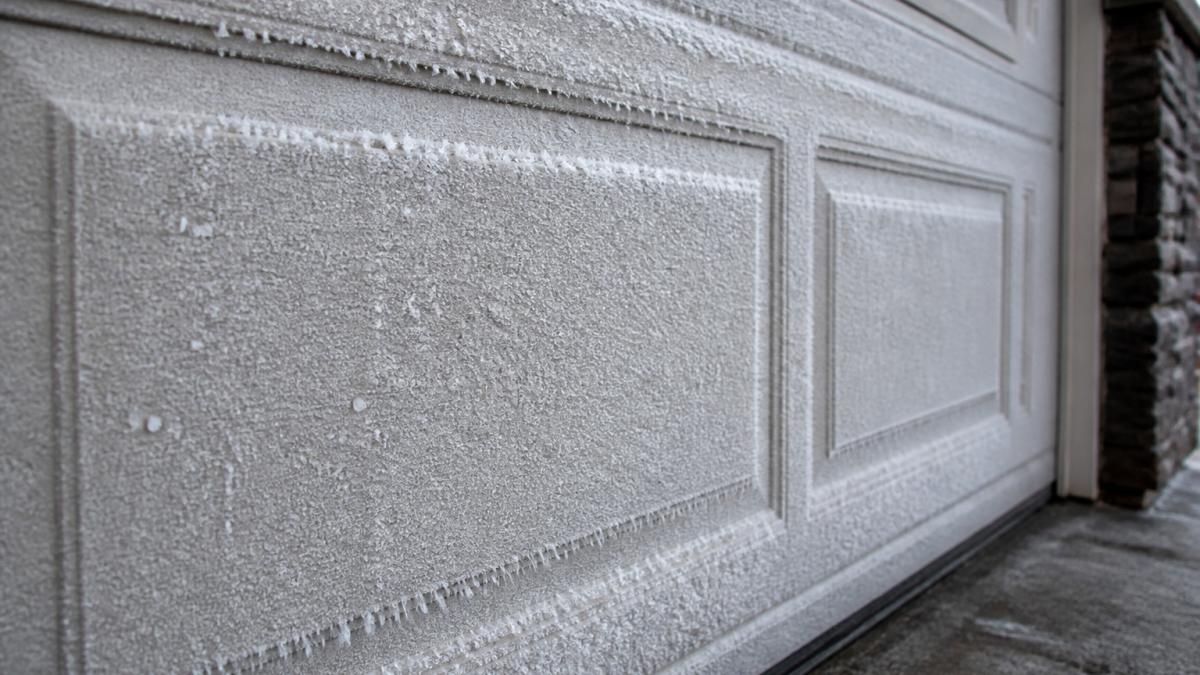
Moisture accelerates degradation through freeze-thaw cycles. Condensation penetrates cracks and freezes, expanding 9% and widening cracks. Multiple cycles in fluctuating climates rapidly deteriorate structural integrity.
Consistent sub-zero climates (Upper Midwest, Northern Plains) produce fewer freeze-thaw cycles and slower crack propagation than regions with frequent temperature swings (Northeast, Mountain West).
Steel maintains flexibility across all temperatures. Composite doors perform better than vinyl in extreme cold but cost 20-40% more and are less common.
Vinyl degradation is predictable. Professional installation can extend lifespan by reducing stress concentration.
Energy Efficiency and Heat Loss Through Your Garage Door
An uninsulated garage door accounts for 15-20% of total heating loss in cold climates, despite occupying only 8-10% of exterior surface area.
Thermal bridging occurs when heat travels through metal frames and hinges, bypassing insulation. Proper weather stripping reduces but doesn't eliminate this effect.
Attached garages act as buffer zones only if the interior garage door is sealed. Many homeowners overlook this, allowing warm air to escape and creating significant efficiency problems.
Vinyl doors with polyurethane insulation perform better than polystyrene alternatives. Polyurethane provides continuous insulation without air gaps. It also resists moisture penetration better than polystyrene, which degrades when exposed to humidity. In cold, damp climates, this difference matters.
Weather stripping and bottom seals are maintenance items, not permanent fixtures. Vinyl seals deteriorate over time, especially in cold weather. Replacing weather stripping every 3-5 years keeps the door functioning as designed. Neglecting this maintenance wastes money on heating bills.
Cost of Installing New Garage Doors and Long-Term Value
The total cost of a new garage door includes the door itself, installation labor, removal of the old door, and any structural modifications needed. Installation quality directly impacts how long the door lasts and how well it performs in cold weather. Poor installation creates gaps and misalignment that accelerate failure.
American Eagle Garage Doors LLC provides free estimates so you can understand the full scope of work before committing. Professional installation ensures proper alignment, seal contact, and opener adjustment. This foundation determines whether your investment delivers long-term value.
A vinyl door installed correctly will outperform an uninsulated steel door over its lifespan.
Is Vinyl Worth It? A Cold-Weather Decision Framework
Whether are vinyl garage doors worth it in cold weather depends on three factors: your climate zone, how long you plan to stay in the home, and your budget for maintenance and replacement.
Frequently Asked Questions
Are vinyl garage doors better than steel in freezing temperatures?
Steel doors outperform vinyl in extreme cold because they maintain structural integrity and don't become brittle. Vinyl becomes less pliable as temperatures drop below 0°F, increasing the risk of cracking and seal failure. Steel doors offer better thermal resistance when properly insulated, though both materials require quality bottom seals and weather stripping to prevent drafts and heat loss in cold climates.
What is the garage door insulation R-value I should look for in cold weather?
Look for an R-value of at least R-12 to R-18 for cold climates. Higher R-values indicate better thermal resistance and reduce heat transfer through your garage door. An R-value of R-18 or above provides meaningful protection against temperature fluctuation and helps prevent condensation buildup. Check the manufacturer's specifications, as R-value varies by door construction and insulation type (polyurethane or polystyrene cores offer the best performance).
How much does it cost to install a new garage door, and is vinyl cheaper than steel?
Pricing depends on size, insulation level, and installation complexity. For accurate pricing tailored to your specific needs and climate zone, contact American Eagle Garage Doors LLC for a free estimate. Long-term value should factor in durability, maintenance costs, and energy savings, vinyl may require more frequent repairs in cold climates, affecting total cost of ownership over 15-20 years.
Do insulated garage doors really make a difference in energy bills and cold weather performance?
Yes, insulated doors reduce thermal bridging and heat loss, especially in attached garages. An insulated door with proper weather stripping and bottom seals can lower energy bills by reducing the workload on your heating system. In cold weather, insulation also prevents condensation buildup and maintains more stable temperatures in the garage and adjacent living spaces. The benefit is most noticeable in attached garages that connect to heated areas of your home.