 ultimate-guide
Garage Service Call Cost: What to Expect in 2026
Table of Contents
- What Is a Garage Service Call and What Does It Include?
- Average Garage Service Call Fee Ranges and Pricing Models
- Factors That Influence Your Garage Door Repair Costs
- Signs Your Garage Door Needs Professional Repair
- How to Choose a Reliable Garage Door Service Company
- Garage Door Maintenance Checklist to Reduce Future Costs
- DIY vs. Professional Repair: When to Call a Technician
- How to Save Money on Garage Door Repairs
- Frequently Asked Questions
Last Updated: September 2, 2026
What Is a Garage Service Call and What Does It Include?
A garage service call is a visit from a professional technician to diagnose, repair, or maintain your garage door system. You're typically charged a service call fee that covers the technician's time to assess the problem and provide a repair estimate. Most visits include an on-site inspection where the technician evaluates the door's mechanical components, safety features, and overall condition, checking torsion springs, extension springs, cables, rollers, tracks, safety sensors, and the garage door opener. Many companies offer free estimates as part of their initial service call, while others charge a diagnostic fee that may be credited toward repair costs.
A service call is the assessment phase, you're paying for expertise and diagnosis. The actual repair, whether that's a spring replacement, cable repair, or opener adjustment, is typically quoted separately and charged based on parts and labor. Some technicians can complete minor repairs during the initial visit, while major work often requires a second appointment with specialized equipment.
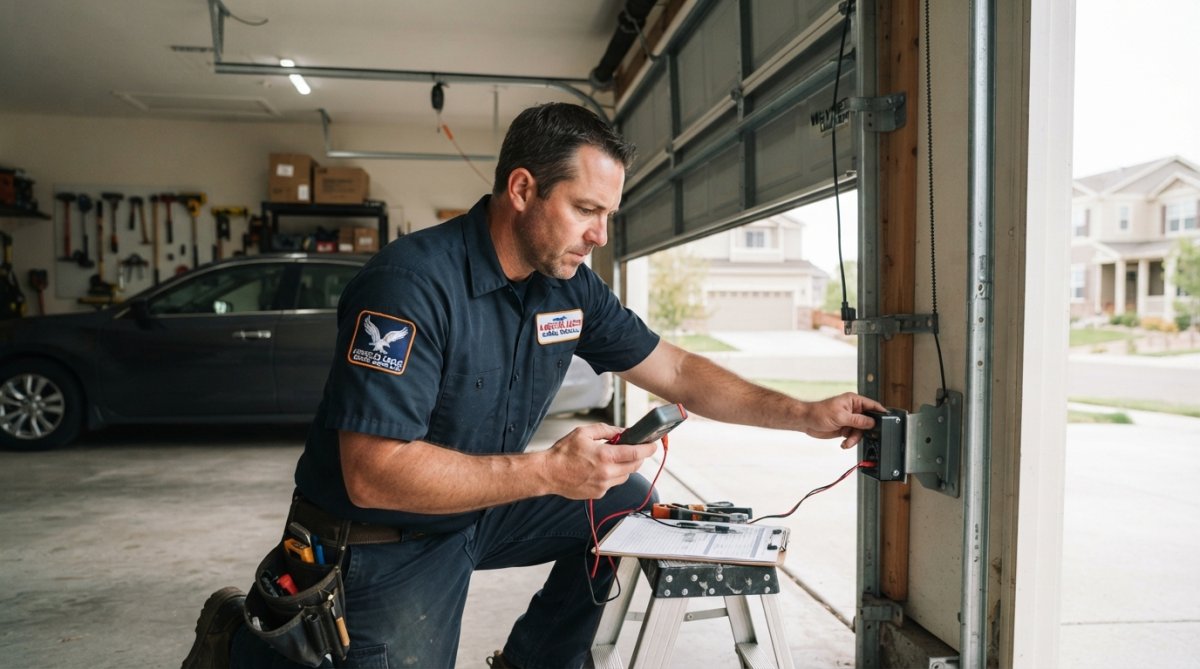
Ask whether the diagnostic fee is waived if you hire them for repairs, what the service call covers, and whether they charge for travel time. At American Eagle Garage Doors LLC, we provide free estimates on all garage service call assessments, so you know exactly what repairs cost before committing to work.
Average Garage Service Call Fee Ranges and Pricing Models
Most garage door service companies charge for a service call in one of three ways: a flat rate, an hourly billing model, or a waived fee if repairs are completed.
A flat rate typically ranges depending on your location, the complexity of your door system, and the company's service area. This is the most common pricing model because it's transparent and predictable. Some companies waive the service call fee entirely if you proceed with repairs, making it a zero-cost diagnostic visit.
Hourly billing is less common for initial service calls but may apply if extensive troubleshooting is needed. Emergency and after-hours service calls carry additional surcharges. If your garage door fails on a weekend, holiday, or late evening, expect to pay a premium above the standard service call fee.
| Pricing Model | Typical Structure | Best For |
|---|---|---|
| Flat Rate | Fixed fee per visit | Most residential repairs and diagnostics |
| Hourly Billing | Hourly rate plus travel | Complex troubleshooting or multiple issues |
| Waived with Repair | No charge if you hire them | Simple repairs completed same-day |
| Emergency Surcharge | Base fee + after-hours markup | Urgent weekend or late-night calls |
Ask about the garage service call cost structure before booking. Reputable companies post their base rates online or provide them immediately over the phone.
Factors That Influence Your Garage Door Repair Costs
Several variables affect what you'll actually pay when you call for professional garage door service. Beyond the base service call fee, the total cost depends on the specific problem, the parts needed, labor rates, and your location.
Labor Rates vs. Parts Pricing Breakdown
Labor and parts are typically billed separately. A garage service call fee covers the technician's time to diagnose the issue. If repairs are needed, you'll pay for parts at cost plus markup, and labor charges based on the technician's hourly rate or a flat repair fee.
Parts markup varies widely. A torsion spring that costs a technician $50 might be charged to you at $100-150 depending on the company's markup and warranty. Labor rates depend on the complexity of the repair. A simple adjustment takes 15-30 minutes, while a spring replacement takes 1-2 hours. A full opener replacement can take 3-4 hours.
Always ask for a complete estimate that breaks down parts, labor, and any additional fees. One company might charge less for the initial visit but significantly more for parts and labor.
Emergency and After-Hours Surcharges
If your garage door breaks on a weekend or late evening, you'll pay more than the standard rate. Most companies charge a surcharge of 25-50% above the base rate for evening, weekend, and holiday calls (aaa.com). Ask specifically about these surcharges when you call. If your garage door is stuck and you can't access your car, an emergency appointment might be worth the extra cost. If it's non-urgent, scheduling a standard appointment saves money.
Signs Your Garage Door Needs Professional Repair
Knowing when to call a professional prevents small issues from becoming expensive problems. If your garage door moves slowly, makes grinding or squeaking noises, or doesn't open fully, these are early indicators of mechanical wear. Slow movement often means the door is working harder than it should, typically due to misalignment, worn rollers, or spring tension problems.
A door that reverses unexpectedly or won't stay open is a safety issue. Reversal can signal problems with the safety sensors, force settings, or spring balance. A door that won't stay fully open suggests the springs aren't holding tension properly.
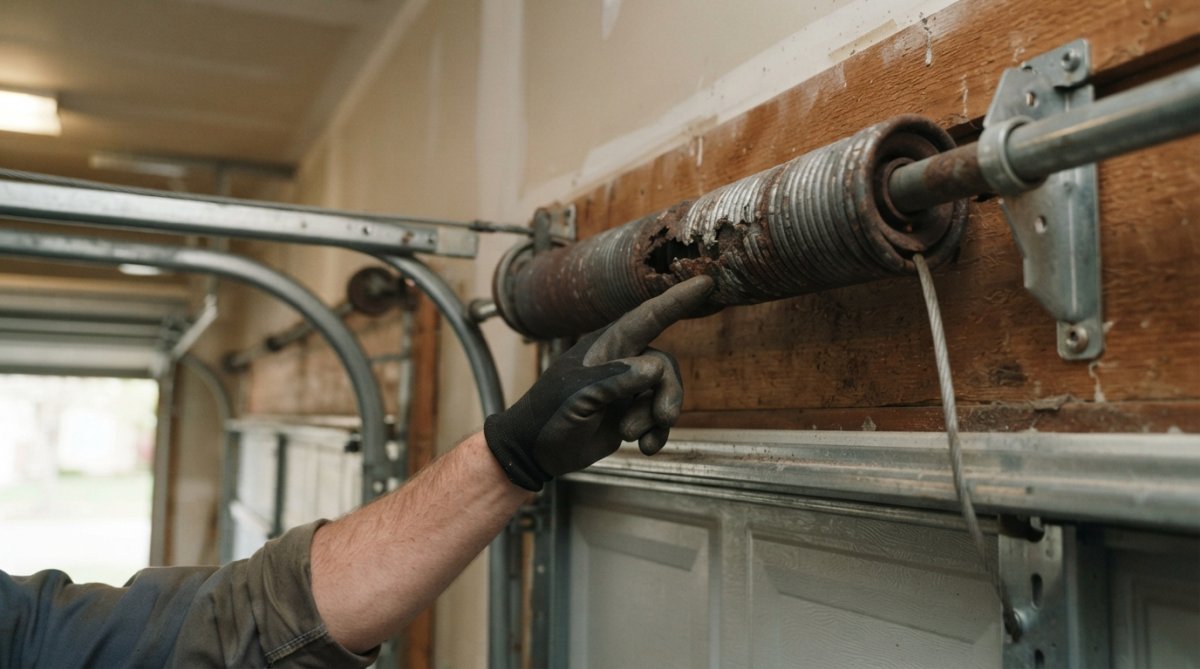
Visible damage is always worth a professional assessment. Dents, bent panels, visible rust on springs or cables, and cracked weather seals should be evaluated by a technician. Rust on torsion springs is particularly concerning because corroded springs can fail suddenly and dangerously.
If your garage door opener is more than 10-15 years old and you're experiencing frequent issues, a professional can advise whether repair or replacement makes financial sense.
How to Choose a Reliable Garage Door Service Company
Finding a trustworthy garage door service company requires checking credentials, reading reviews, and understanding their service guarantees.
Start by verifying that the company is licensed and insured. Ask for proof before allowing them on your property. Check online reviews on Google, Yelp, and the Better Business Bureau. Look for patterns in customer feedback about punctuality, professionalism, and whether the technician showed up when promised.
Ask about their warranty on both parts and labor. A reputable company stands behind its work, typically offering warranties ranging from 1-5 years (bbb.org). Request a detailed written estimate before work begins that itemizes the service call fee, parts costs, labor hours, and any surcharges.
Verify that the company serves your area and can meet your timeline. Ask about their typical appointment windows and whether they offer same-day or next-day service.
At American Eagle Garage Doors LLC, we pride ourselves on reliability and transparency. Our technicians arrive on schedule, provide free estimates with no hidden fees, and stand behind our work with comprehensive warranties. We serve both residential and commercial clients and offer same-day and next-day appointments to minimize your downtime.
Garage Door Maintenance Checklist to Reduce Future Costs
Preventative maintenance is the most cost-effective way to avoid expensive repairs. Monthly, visually inspect your garage door and opener for visible rust, smooth movement, and unusual noises. Test the safety sensors by placing an object in the door's path; the door should reverse immediately.
Every three months, lubricate the moving parts with garage door lubricant (not WD-40) and clean the tracks with a damp cloth. Twice a year, test the door balance by disconnecting the opener and manually lifting the door halfway, it should stay in place without drifting. Check the weather seal at the bottom of the door and replace it if cracked or missing.
| Maintenance Task | Frequency | Why It Matters |
|---|---|---|
| Visual inspection | Monthly | Catches rust, damage, and wear early |
| Lubricate moving parts | Every 3 months | Reduces friction and noise |
| Test safety sensors | Monthly | Ensures emergency reverse function works |
| Check door balance | Every 6 months | Detects spring tension problems |
| Clean tracks | Every 3 months | Prevents binding and misalignment |
| Inspect weather seal | Every 6 months | Maintains energy efficiency and weatherproofing |
Regular maintenance prevents the need for emergency service calls and extends your garage door's lifespan.
DIY vs. Professional Repair: When to Call a Technician
Some garage door issues are safe for homeowners to address. DIY tasks include lubricating moving parts, cleaning tracks, replacing weather seals, and reprogramming remote controls. If your garage door remote stops working, try replacing the batteries first.
Never attempt to repair or adjust torsion springs. These springs are under extreme tension, over 200 pounds of force per spring on average (the CDC). A broken spring can cause serious injury or death. Spring replacement requires specialized equipment and training.
Cable replacement, roller replacement, and track realignment are also best left to professionals. These components work together as a system, and improper adjustment can cause the door to bind or operate unsafely. If you're unsure whether a repair is safe for DIY, call a technician rather than attempting repairs.
How to Save Money on Garage Door Repairs
Schedule maintenance before problems develop. A technician can identify worn components and spring fatigue during a routine maintenance visit. Addressing these issues early costs far less than emergency repairs.
Get multiple estimates before committing to a repair. Call three companies and ask for written quotes on the same repair. Compare the parts costs, labor hours, and total price.
Ask about service call fee waivers. Many companies waive the diagnostic fee if you hire them for the repair. Avoid emergency service calls when possible, if the issue isn't urgent, schedule a standard appointment and save the emergency surcharge.
Upgrade to a newer garage door opener if yours is over 15 years old. Older openers lack safety features and efficiency improvements in newer models. Keep your garage door clean and protected from the elements by rinsing it occasionally and applying a protective coating in harsh climates.
Choosing a reliable garage door service company comes down to transparency, reliability, and standing behind the work. When your garage door needs professional attention, you deserve a technician who shows up on time, explains the problem clearly, and provides a fair estimate before starting work. American Eagle Garage Doors LLC offers free estimates, competitive pricing, and same-day and next-day service availability for both residential and commercial clients. Our team specializes in spring replacements, opener repairs, and complete door installations with comprehensive warranties on all work. Contact us today for a free estimate and experience the professional, prompt service that keeps your garage door operating safely and efficiently.
Frequently Asked Questions
What is typically included in a garage service call?
A standard garage service call includes a site assessment, diagnostic fee evaluation, and identification of the problem. The technician inspects the garage door opener, torsion springs, extension springs, cables, rollers, tracks, and safety sensors. Many providers include a repair estimate at no additional cost. Some charge a diagnostic fee that may be waived if you proceed with repairs. The scope depends on whether you're addressing an emergency repair or scheduling preventative maintenance.
How much does a garage door service call typically cost?
Garage service call pricing depends on several factors including your location, the type of repair needed, whether it's an emergency, and your service provider's pricing model. Some companies charge a flat rate for the initial diagnostic visit, while others use hourly billing. Many providers waive the service call fee if you hire them for repairs. Contact your local garage door service company directly for current pricing and to request a free estimate, as costs vary significantly based on your specific situation.
Are there hidden fees I should watch out for in garage door repair estimates?
Yes. Common hidden fees include after-hours and weekend surcharges, travel charges, parts markup beyond standard rates, and diagnostic fees that aren't clearly disclosed upfront. Ask your technician about the standard base charge, whether emergency repairs cost more, and what's included in the estimate. Request a detailed written estimate that breaks down labor rates, parts costs, and any additional fees. Reputable companies provide transparent pricing and explain all charges before starting work.
Should I pay for a diagnostic fee or service call before repairs begin?
Many garage door service companies offer free estimates or waive the diagnostic fee if you proceed with repairs. However, some charge a flat diagnostic fee upfront to cover the technician's time for the on-site inspection and assessment. Before scheduling, ask whether the diagnostic fee applies and if it's credited toward repair costs. This is an important question to clarify with your service provider, as policies vary. A free or waived diagnostic fee is often a sign of a customer-focused company.
This article was written using GrandRanker