 how-to
Can Old Garage Openers Be Repaired? A 2026 Guide
Table of Contents
- Can Old Garage Openers Be Repaired? The Short Answer
- Signs Your Opener is Failing: Common Problems and Diagnostics
- Garage Door Opener Repair vs Replacement: A Cost-Benefit Analysis
- The Part Obsolescence Problem: Finding Parts for Older Units
- Safety First: UL 325 Standards and Modern Compliance
- DIY Repair vs Professional Service: What You Can Safely Fix
- Smart Home Integration: Why Your Old Opener May Be Outdated
- Finding a Reliable Garage Door Fix Near Me
- Frequently Asked Questions
Last Updated: September 7, 2026
Can Old Garage Openers Be Repaired? The Short Answer
Yes, can old garage openers be repaired depends on the specific failure point and the unit's age. Most mechanical issues, such as worn gears, broken springs, or misaligned safety sensors, are fixable regardless of age. However, if the circuit board has failed or the motor unit is beyond economical repair, replacement often makes more financial sense.
The decision comes down to whether the repair cost justifies extending the life of an aging system.
Signs Your Opener is Failing: Common Problems and Diagnostics
Most garage door opener failures follow predictable patterns. The most common problems include the motor running but the door not moving, the door reversing before it closes, and the remote working intermittently or not at all.
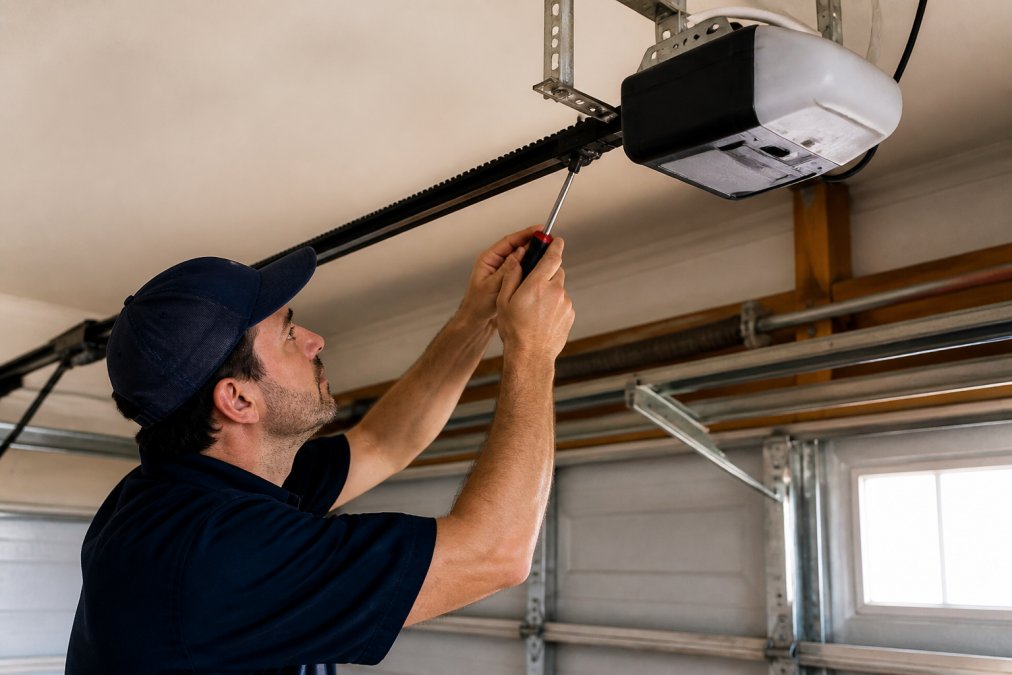
If the motor hums but the door stays put, the gear assembly or drive rails are likely stripped or jammed. If the door starts moving and then reverses, the travel adjustment or force settings are out of calibration, or the photo eyes are misaligned. Remote issues often trace back to the logic board or rolling code technology losing sync.
Garage Door Opener Repair vs Replacement: A Cost-Benefit Analysis
The repair versus replacement decision hinges on three factors: the age of the unit, the cost of the specific repair, and the remaining lifespan of the motor. If a repair costs more than half the price of a new opener and the unit is over 10 years old, replacement is usually the better investment.
Step 1: Identify the Failed Component and Its Repair Cost
The cost of a repair varies depending on what broke. Common repairs include safety sensor realignment or replacement, gear and sprocket assembly replacement, limit switch adjustment or replacement, circuit board replacement, and motor unit replacement.
Step 2: Compare Against the Price of a New Opener
A new, quality garage door opener, installed, varies in price depending on drive type, horsepower, and smart features.
If the repair quote is significantly less than the cost of a comparable new unit, and the opener is relatively new, repair is usually the right call. If the quote is higher, or the unit is older, replacement may be a better investment.
Step 3: Factor in the Age and Remaining Lifespan
A well-maintained garage door opener has a typical service life of 10 to 15 years (homedepot.com). After that, components wear out in sequence.
If the opener has already required two or more repairs in the past three years, replacement is the more economical path, as each additional repair carries a higher probability of another failure within 12 months.
Step 4: Check Parts Availability Before Committing
Before authorizing any repair on a unit over 10 years old, have the technician confirm the part is in stock or available from the manufacturer.
The Decision Matrix
| Factor | Repair Makes Sense | Replacement Makes Sense |
|---|---|---|
| Unit age | Under 8-10 years | Over 12-15 years |
| Failure point | Gears, sensors, springs, limit switches | Circuit board, motor unit, drive rails |
| Repair cost | Less than 40% of new unit price | More than 50% of new unit price |
| Parts availability | Parts still manufactured | Parts obsolete or backordered |
| Safety features | Meets UL 325 standards | Lacks modern safety compliance |
| Repair history | First or second repair | Third or more repair in 3 years |
When Repair Makes Sense
Repair is the right call when the opener is relatively young, parts are readily available, and the failure is mechanical rather than electronic. A stripped gear assembly, broken spring, or misaligned sensor are straightforward fixes that can add years of service.
When Replacement is the Better Call
Replacement becomes attractive when the circuit board fails, as this is often the most expensive single component and a common failure point on older units. Similarly, if your unit predates modern safety standards or uses obsolete parts, you will struggle to find components.
The Part Obsolescence Problem: Finding Parts for Older Units
Manufacturers typically support replacement parts for garage door openers for about 10 to 15 years after production ends. Once that window closes, finding components like a specific circuit board or gear assembly becomes a scavenger hunt through surplus dealers and salvage shops.
A unit from the early 2000s may work perfectly mechanically, but if the logic board dies, you may be unable to source a replacement. A technician can usually tell you within minutes whether a part is still in production.
Safety First: UL 325 Standards and Modern Compliance
Garage door openers manufactured today must comply with UL 325, the safety standard governing automatic garage door operators in the United States (ul.com). This standard requires safety sensors on all units and mandates that the door reverse if it encounters an obstruction.
Older openers, particularly those from before the early 1990s, often lack these safety features entirely. Even units from the 2000s may have sensors that are less sensitive than modern equivalents. If your opener does not meet current UL 325 requirements, replacement is not just a convenience; it is a safety upgrade. According to the UL 325 standard documentation, compliance ensures the door reverses when it meets resistance, protecting people and property.
DIY Repair vs Professional Service: What You Can Safely Fix
Some garage door opener maintenance is safe for a confident homeowner, but most repairs involve high-tension components that can cause serious injury.
Safe DIY Troubleshooting Steps
You can safely handle a few tasks without calling a professional:
-
Check power supply. Confirm the opener is plugged in and the circuit breaker has not tripped. Look for a reset button on the outlet or the opener unit itself.
-
Inspect the safety sensors. The two photo eyes near the floor should face each other with a clear line of sight. Clean the lenses with a soft, dry cloth. Check that both indicator lights are glowing steadily, if one is blinking or off, gently adjust the sensor brackets until both are solid.
-
Lubricate moving parts. Use a silicone-based garage door lubricant on the drive rails, hinges, and rollers. Do not use WD-40 or grease, which attract dust and cause buildup. This should be done twice a year.
-
Test and adjust force settings. Locate the force adjustment dials or buttons on the opener unit (usually labeled "Open Force" and "Close Force"). If the door reverses before touching the floor, the close force is set too low. If it slams down hard, it is set too high. Adjust in small increments and test after each change.
-
Replace remote batteries and reprogram. Most remotes use a standard 3V coin cell battery (CR2032 or CR2025). Replace the battery and reprogram the remote following the manufacturer's instructions. If it still does not work, press the opener's "Learn" button and then the remote button to resync the rolling code.
-
Test the auto-reverse mechanism. Place a 1.5-inch block of wood or a rolled-up towel in the door's path and press the close button. The door should reverse automatically upon contact. If it does not, the force settings are wrong or the sensors are faulty, this requires professional attention.
What You Should NOT Attempt Yourself
Some repairs are dangerous or require specialized tools and training. Never attempt the following:
-
Torsion spring replacement. The torsion spring above the door opening is under extreme tension, up to 10,000 pounds of force. If it snaps during handling, it can cause severe injury or death. Spring replacement requires winding bars, specialized training, and a thorough understanding of the spring system. This is the single most dangerous garage door repair.
-
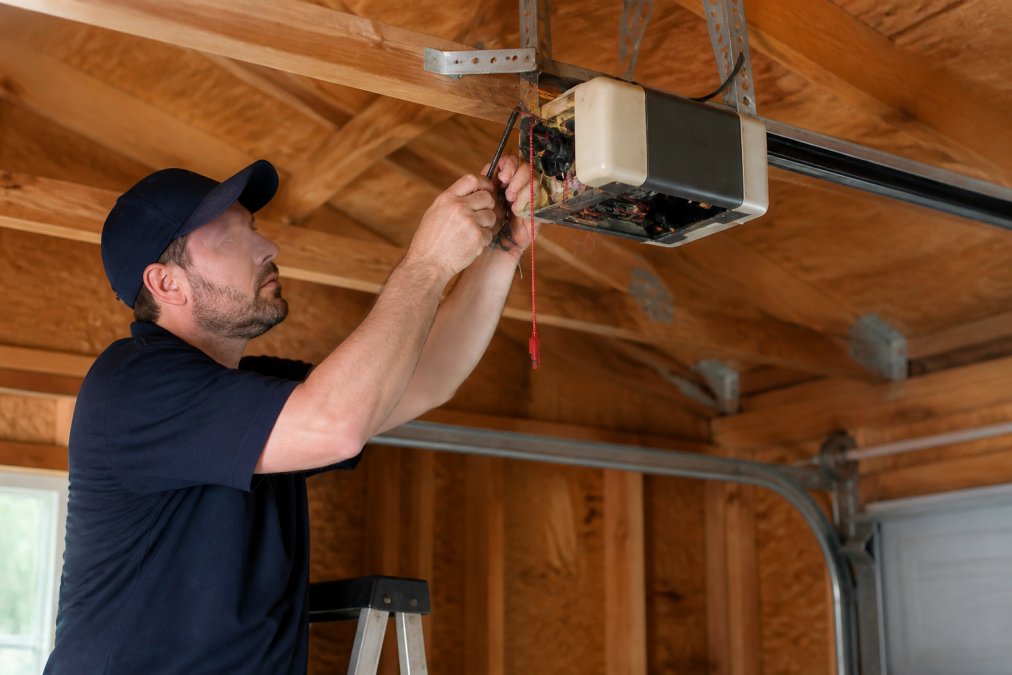
Circuit board or logic board replacement. Opening the motor housing exposes live electrical components. A misdiagnosis can lead to further damage, and incorrect handling can cause electrical shock. Circuit board replacement also requires matching the exact board model, which is a job for a professional who can verify compatibility.
-
Drive rail or gear assembly replacement. These repairs require disassembling the opener unit and recalibrating the travel limits and force settings afterward. Incorrect reassembly can cause the door to operate erratically or fail to reverse on obstruction.
-
Motor unit replacement. If the motor itself has failed, the entire opener head needs to be swapped out. This involves disconnecting the drive rail, wiring the new unit, and programming the remotes and keypad. Professional installation ensures the unit is properly grounded and code-compliant.
The Cost of DIY Mistakes
A common pattern we see is a homeowner attempting a repair, making it worse, and then calling us. A misaligned sensor becomes a damaged sensor; an over-tightened force setting becomes a door that slams shut; a botched gear replacement becomes a full opener replacement.
When to Call a Professional
Call a professional if the door does not reverse when it meets an obstruction, the motor runs but the door does not move, the door operates erratically or stops mid-cycle, you see frayed wires or burn marks near the opener, or the opener is more than 10 years old and requires any repair beyond sensor alignment or lubrication.
A professional technician will diagnose the root cause, confirm parts availability, and give a clear recommendation on repair versus replacement. The diagnostic fee is money well spent.
Smart Home Integration: Why Your Old Opener May Be Outdated
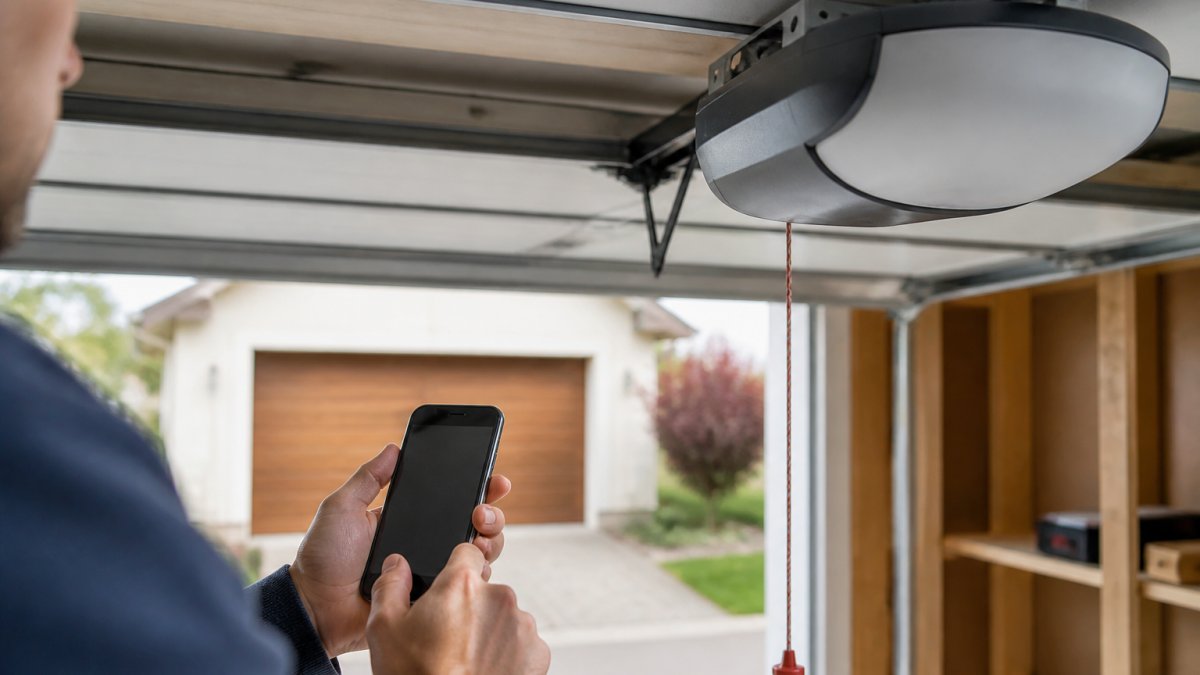
Even if your old opener works reliably, it likely lacks the connectivity modern homeowners expect. Most units manufactured before 2015 predate widespread smart home integration.
Modern openers include rolling code technology, which changes the access code each time the remote is used, preventing code theft. They also integrate with smart home platforms, allowing you to check whether the door is closed from anywhere and receive alerts if it is left open. Older units with fixed-code remotes are vulnerable to code grabbing.
Finding a Reliable Garage Door Fix Near Me
When you search for a garage door fix near me, you want a provider who handles both residential and commercial systems and offers honest advice on repair versus replacement.
For homeowners in Greeley and Evans, American Eagle Garage Doors LLC provides expert repair and installation for both residential and commercial garage doors. Our team specializes in opener repairs and spring replacements, and we back our work with prompt, professional service. Contact American Eagle Garage Doors LLC today to schedule a service visit and get your garage door operating safely and reliably.
Frequently Asked Questions
What is the average lifespan of a garage door opener?
Most garage door openers last between 10 and 15 years with regular use. If your opener is approaching this age and experiencing problems, you'll want to weigh the cost of repairs against the investment in a new unit. Newer models also come with safety features and smart home compatibility that older units lack, which can factor into your decision.
Are parts still available for garage door openers over 20 years old?
Finding parts for openers over 20 years old can be difficult. Manufacturers often discontinue support for older models, especially for circuit boards and gear assemblies. While some universal parts exist, sourcing exact replacements for obsolete units may be costly or impossible. When parts become hard to find, replacement is often the more practical choice.
When is it safer to replace a garage door opener rather than repair it?
Safety is the top reason to replace an older opener. If your unit predates the UL 325 safety standard update requiring photo eyes and auto-reverse mechanisms, it should be replaced. Also, if the motor fails, the circuit board is damaged, or the gear assembly is stripped, repair costs can approach half the price of a new opener, making replacement the safer and more economical option.
The decision to repair or replace an old opener comes down to age, parts availability, and safety compliance. If the unit is young and the part is available, repair is often the smart financial choice. If the opener is outdated, lacks modern safety features, or needs an obsolete part, replacement gives you peace of mind and a warranty. Call American Eagle Garage Doors LLC for a free estimate and let our team help you choose the right path for your home or business.