 how-to
Garage Door Repair and Service: A Step-by-Step Guide
Table of Contents
- Identifying Common Garage Door Problems
- Garage Door Opener Troubleshooting Steps
- DIY vs. Professional Risk Assessment
- Garage Door Spring Replacement Cost and Process
- Garage Door Maintenance Checklist for Long-Term Care
- Residential vs. Commercial Garage Door Service
- When to Repair vs. Replace Your Garage Door
- Getting Same-Day Emergency Repair Service
- Frequently Asked Questions
Last Updated: September 20, 2026
Identifying Common Garage Door Problems
Your garage door is a complex system requiring professional garage door repair and service, with springs, cables, pulleys, and electronic components. When one part fails, the entire mechanism can become unsafe or inoperable.
Common issues include spring failures, opener malfunctions, and alignment problems, each requiring different repair approaches, and some genuinely dangerous to tackle alone.
Broken Torsion and Extension Springs
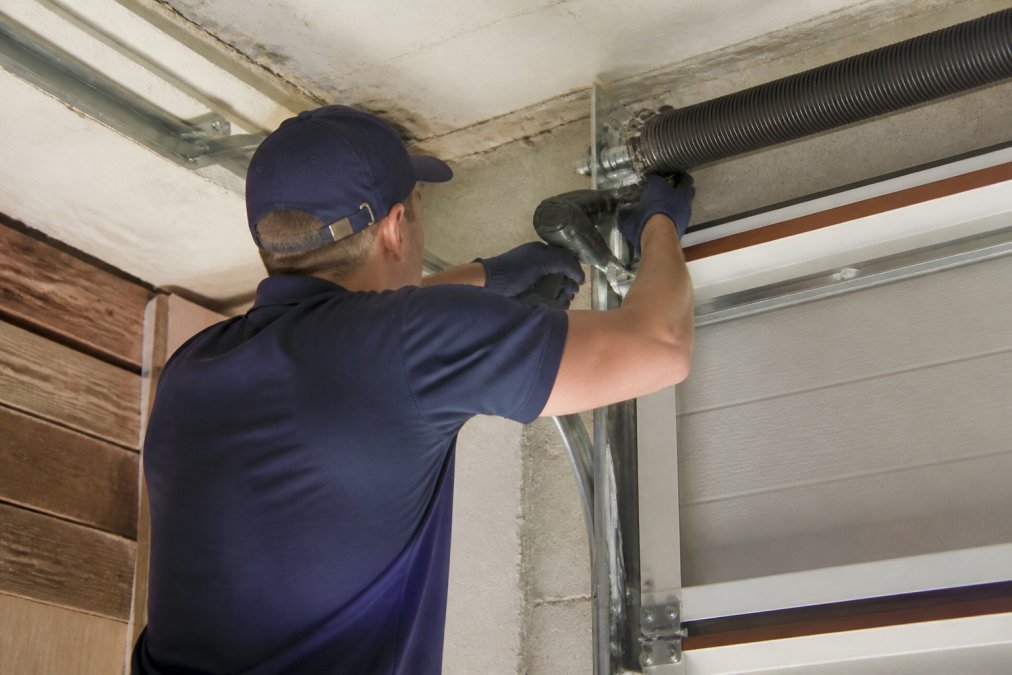
Torsion springs and extension springs carry the full weight of your garage door, which can exceed 400 pounds. When these springs break, the door becomes extremely heavy and potentially dangerous to operate.
Torsion springs run horizontally above the door opening; extension springs run vertically on either side. Both wear out over time, making the door feel immensely heavy or causing the opener to struggle and shut off.
Never attempt to replace a spring yourself. The tension is enormous and can cause serious injury. This is one repair where professional service is genuinely necessary for safety. American Eagle Garage Doors LLC specializes in spring replacement and can diagnose whether your springs are failing or already broken.
Garage Door Opener Failures
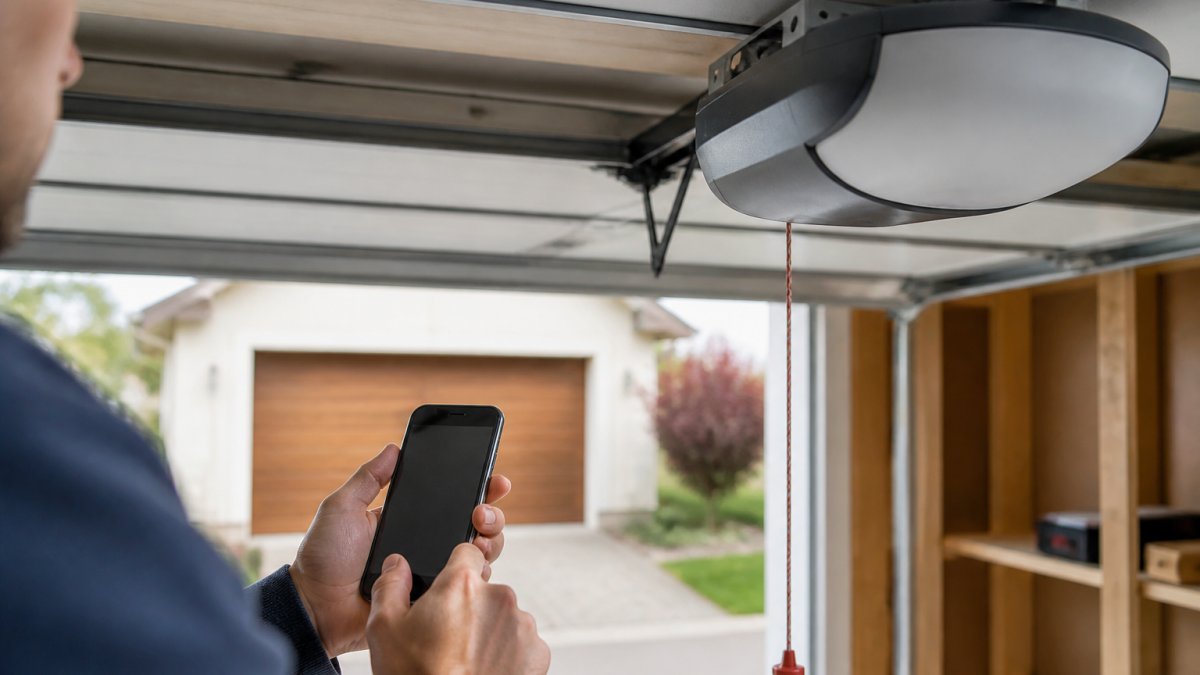
Your garage door opener is an electric motor that lifts the door using a chain, belt, or screw drive mechanism. When it fails, the door won't respond to the remote, wall button, or smart home commands.
Common opener problems include worn gears, burned-out motors, broken limit switches, and electrical failures. The age of your opener matters significantly, older units may be more cost-effective to replace than repair.
If your opener is more than 15 years old, repair costs often approach replacement costs, and newer models offer better safety features, quieter operation, and smart home integration.
Off-Track Doors and Misaligned Sensors
An off-track door has jumped its guide rails and no longer rolls smoothly, typically after impact or roller wear. The door may stick, hang unevenly, or refuse to close completely.
Safety sensors near the bottom of each door side detect obstructions and prevent closing if something blocks the path. Misaligned sensors cause the door to reverse unexpectedly or refuse to close. Realigning sensors is straightforward, but off-track doors require professional service.
Garage Door Opener Troubleshooting Steps
Try these troubleshooting steps before calling for service, many issues resolve without a technician. However, if any step involves the opener motor, springs, or electrical components beyond what's listed here, stop and contact a professional.
Remote Programming and Keypad Reset
If your remote doesn't work, replace the batteries first. If a new battery doesn't help, the remote itself may be faulty.
Most openers have a learn button on the motor unit. Press and hold it until the light blinks, then press any button on the remote within 30 seconds. The opener should accept the signal and the light will stop blinking.
Keypad entry systems work similarly. If your keypad stops responding, locate the learn button and repeat the same process. If it still doesn't work after reprogramming, the keypad unit may have failed.
Safety Sensor Alignment and Testing
Locate the small sensors on each side of the door, about six inches from the ground. They should have a clear line of sight to each other. Even a small obstruction blocks the infrared beam.
Clean both sensors with a soft cloth, dust accumulation is a common culprit. If they still don't work after cleaning, they may need replacement.
To test sensor function, try closing the door. If it reverses immediately, the sensors are detecting an obstruction even though nothing is there. This usually means the sensors need realignment or replacement.
Door Reversal and Force Adjustment Issues
If your door closes partway and then reverses, the problem is usually misaligned safety sensors, an obstruction in the door's path, or the opener's force-limit setting is too sensitive.
First, clear any visible obstructions from the door's path. Next, inspect the safety sensors for dirt, damage, or misalignment.
If sensors are clean and aligned but the door still reverses, the opener's force-limit adjustment may be the issue. Adjusting force limits requires accessing the opener's control board and turning a calibration dial or screw. Consult your opener's manual for the exact location and procedure, which varies by manufacturer. If you're uncomfortable with this adjustment, a technician can handle it in minutes.
Limit Switch Problems
Limit switches tell the opener when the door is fully open or fully closed. If the door doesn't stop at the correct position, hanging open or not closing all the way, a limit switch may be out of adjustment.
On most openers, two small screws or dials on the motor unit control the open and close limits. Make small adjustments, a quarter turn at a time, and test the door after each adjustment.
If the door still won't stop at the right position after limit adjustment, the limit switch itself may be faulty and require professional replacement.
Noise Diagnosis
Strange sounds indicate wear before complete failure. Squeaking usually means the chain or belt drive needs lubrication. Grinding or popping suggests worn gears, damaged rollers, or a bent track. Rattling indicates loose hardware or a worn chain.
If you hear squeaking, apply silicone-based lubricant to the chain or belt and roller wheels. Do not use WD-40 or grease. If the noise persists or you hear grinding or popping, professional service is needed.
DIY vs. Professional Risk Assessment
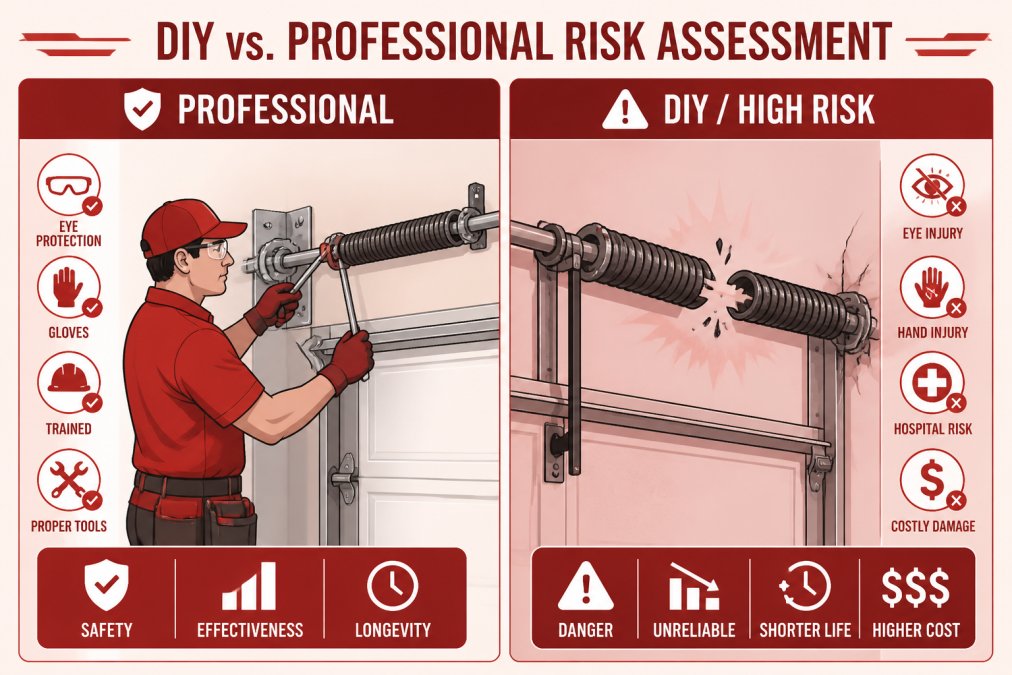
The decision to repair your garage door yourself depends on the specific problem and your comfort level. Understanding the real risks, both physical and financial, is essential.
What Is Safe to DIY
Simple tasks like remote battery replacement, sensor cleaning, keypad reprogramming, and applying lubricant to rollers and hinges are safe DIY jobs. You need no special tools.
Lubrication is the most valuable DIY maintenance task.
What Is Dangerous to DIY
Torsion and Extension Springs: Springs are under extreme tension, often 200-400 pounds of force per spring. A broken spring can snap with enough force to cause serious lacerations, broken bones, or death. The tools required (spring winding bars, specialized wrenches) are not standard household items, and improper technique is the most common cause of spring-related injuries. Professional technicians are trained to release tension safely and have liability insurance.
Warranty and Insurance Implications
Most garage door manufacturers include a warranty on springs, openers, and panels. DIY repairs almost always void this warranty.
The Cost-Benefit Reality
Professional service is far less expensive than the risk.
Attempting a repair yourself and causing electrical damage could require replacing the entire unit, negating any savings.
Garage Door Spring Replacement Cost and Process
A professional technician removes tension from the existing spring, unscrews it from the mounting brackets, and installs the new spring. The entire process typically takes one to two hours.
Garage Door Maintenance Checklist for Long-Term Care
Regular maintenance prevents many common problems and extends the lifespan of your garage door system. A few simple tasks each month and season keep everything operating smoothly.
Monthly and Seasonal Inspection Tasks
Check the door's balance monthly by opening it halfway and releasing it. If it falls or rises, the springs need adjustment.
Lubrication and Hardware Maintenance
Apply silicone-based lubricant to rollers, hinges, and the chain or belt drive. Do not use WD-40 or grease, which attract dust and gum up the mechanism. Silicone lubricant is clean and effective.
Residential vs. Commercial Garage Door Service
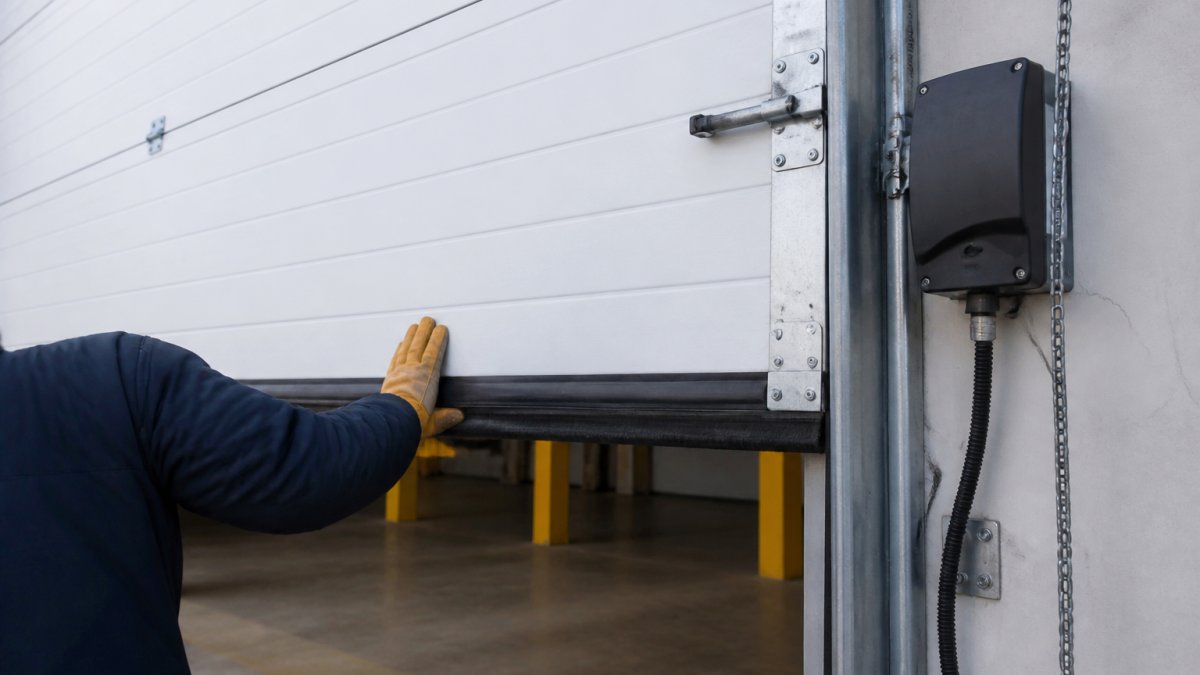
Residential doors typically weigh 300-400 pounds and cycle a few times daily. Commercial doors weigh 500-800 pounds and cycle dozens of times daily, experiencing far greater wear and demanding heavier-duty components.
When to Repair vs. Replace Your Garage Door
The decision to repair or replace depends on the door's age, the cost of repair, and the severity of damage.
Getting Same-Day Emergency Repair Service
When your garage door fails unexpectedly, you need fast response. A stuck door can trap a car inside, block access, or create a security vulnerability.
Frequently Asked Questions
How can I tell if my garage door spring is broken?
A broken spring is one of the most common garage door problems. Signs include a loud bang or snap sound, the door falling unevenly, the opener running but the door not moving, or visible gaps in the spring. Torsion springs and extension springs both wear over time. Do not attempt to repair a broken spring yourself, the tension is extremely dangerous and requires professional service. Call for immediate assistance if you hear a spring break or notice these symptoms.
What is the average cost of professional garage door repair?
Garage door repair costs vary based on the specific problem, your door type, and whether you need emergency service. For an accurate estimate tailored to your situation, contact a local professional who can assess your door and provide a free quote. Many providers offer same-day or next-day service, so you won't be without access to your garage for long.
Is it safe to perform DIY garage door repairs?
Some minor maintenance tasks like lubrication and visual inspection are safe for homeowners. However, repairs involving springs, cables, pulleys, openers, and structural adjustments should only be handled by trained technicians. Garage door springs are under extreme tension and can cause serious injury. Improper repairs can compromise safety sensors and door balance, creating hazards. Professional technicians have the proper tools to work safely and ensure your door operates correctly.
How often should I schedule professional garage door maintenance?
Annual safety inspections and preventative maintenance help extend your garage door's lifespan and catch problems early. A professional technician will check springs, cables, pulleys, rollers, hinges, the bottom seal, and safety sensors. They'll lubricate moving parts and test door balance. If you use your garage door frequently or notice any issues, schedule service sooner. Regular maintenance prevents emergency repairs and keeps your door operating safely and smoothly.